
Your headlamp design already uses both top and side straps, and now you need to decide whether they should share one webbing specification or be developed separately. Using the same webbing may be practical, but only when it works for both strap positions.
Headlamp top and side straps can use the same webbing or different webbing. Use the same webbing when one construction can meet the width, stretch and resistance, thickness, and hardware requirements of both positions. Use different webbing when one position needs a specification that would make the other too wide, too thick, too easy or difficult to stretch, or incompatible with its hardware.
The following sections show which webbing requirements to compare before you make that decision.
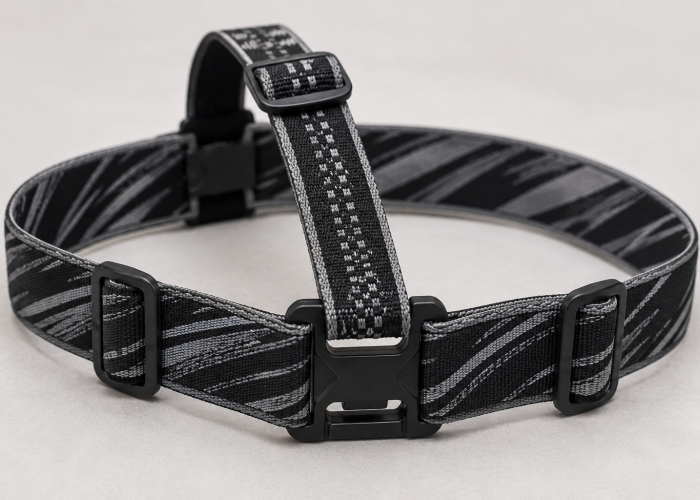

Webbing manufacturing expert with 15+ years of experience helping product developers build high-performance straps for industrial, medical, and outdoor use.
No. The top strap does not need to match the side-strap width because width should be confirmed together with the elastic resistance and hardware at each strap position, not copied from one position to the other.
Start with your actual hardware. If the side strap is 25 mm and the top attachment is designed around 20 mm, make the top-strap sample at 20 mm rather than keeping 25 mm simply to share one dimension. Then check what that width change has done to the webbing performance.
This is where we normally look beyond the number on the drawing. When an elastic webbing is made narrower, there is less space across the width for the yarn and elastic arrangement. Keeping a similar material and weave does not guarantee that the narrower sample will give you the same resistance. Woven elastic manufacturers adjust elastic content, yarn selection, and construction to achieve different modulus and recovery targets, so width and elastic performance need to be checked together.
When you receive the narrower top-strap sample, put it through its actual hardware first. Then extend it to the working length you need. If the width fits correctly but the strap becomes too easy to extend, keep the 20 mm width and rebalance the elastic construction before going back to 25 mm. The sample has already shown you that the width works with the hardware; it is the resistance that still needs development.
That distinction matters. Don’t change a dimension that already passes just to correct another specification.
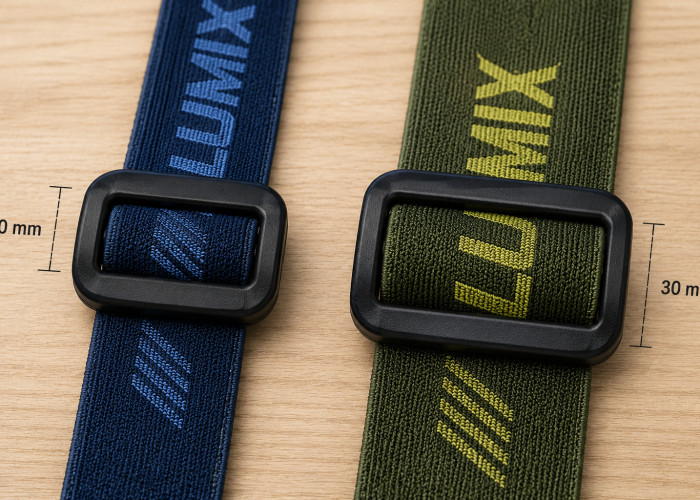
Yes. The same webbing construction direction can be developed at two different widths because the material and general weave can remain similar while the yarn and elastic arrangement are rebuilt for the new width.
Suppose your approved side strap is 25 mm and you now need a 20 mm top strap. Don’t treat the request as simply removing 5 mm from the existing webbing. When we develop a narrower version from an existing elastic webbing, the useful starting point is to separate what you want to preserve from what has to be rebuilt: keep the material, surface appearance, hand feel, and general weave direction where possible, then set the yarn and elastic arrangement for the new width.
There is a manufacturing reason for doing this. A woven elastic specification can define width together with warp ends, elastomer ends, picks, thickness, and the force required to reach a specified elongation. In other words, the visible width is only one part of the construction that produces the finished elastic behavior. Force at a specified elongation is also a recognized way of measuring elastic resistance, rather than judging an elastic only by how far it can stretch.
So when the 20 mm sample arrives, don’t approve it because it looks like a narrower version of the 25 mm strap. Extend both samples to their required working lengths and compare the resistance, recovery, thickness, and edge stability.
If the 20 mm version looks right but extends too easily, keep the construction direction and rebalance the elastic arrangement first. If restoring the required resistance makes the narrower strap too thick, too firm, or unsuitable for its hardware, that is evidence that the two widths need more separate construction development.
Confirm the construction direction before developing separate top and side strap samples.
Not necessarily. A narrower top strap can use the same elastic resistance as the side straps when both positions need similar tension, while a different working requirement can justify developing the top strap to a different resistance.
Don’t decide this from width alone. Put the narrower top-strap sample into the assembled headlamp and look at what each strap is being asked to do. Headlamp designs use the circumferential elastic band to create radial holding pressure, while top straps can provide additional support within the headband system. That means there is no manufacturing reason to copy the side-strap resistance automatically just because both pieces are elastic webbing.
If your side strap already gives you the holding tension you need and the narrower top strap works correctly at a lower resistance, keep that as a separate target. If you need the top strap to maintain similar tension through its working extension, then develop the narrower webbing around that resistance instead.
This is where we normally separate the performance target from the width change. Take both samples to their actual working extensions. If the 20 mm top strap reaches its working length much more easily than you want, keep the 20 mm width that already fits the product and adjust the elastic construction next. Woven elastic resistance can be changed through the elastic content and overall construction; you don’t need to widen the strap simply to make it harder to extend.
The sample should tell you which direction to take: first decide what resistance each strap position needs, then build that resistance into the width that already works.
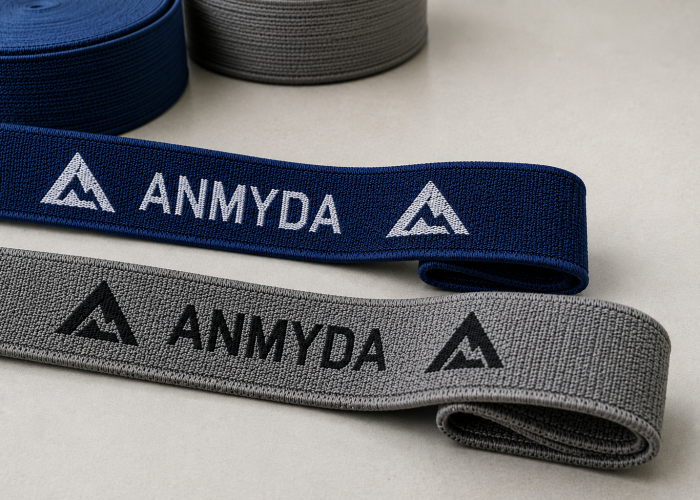
Different hardware can force the top and side straps to use different webbing dimensions because the finished width and thickness have to move correctly through each adjuster or attachment. If you want one webbing for both positions, put both pieces of hardware on the table before you approve the webbing specification.
Take your proposed webbing and feed it through the top-strap hardware first, then through the side-strap hardware. Don’t stop at “20 mm webbing with a 20 mm adjuster.” What matters in the sample is the actual clearance after the finished webbing width and thickness are inside the hardware.
If the webbing gives you the right stretch and resistance but bunches or binds in the top adjuster, leave the elastic performance alone first. Check the finished width and thickness against that hardware. This is a distinction we make repeatedly during strap development: when the elastic behavior already passes and the hardware interface fails, change the variable causing the fit problem rather than reopening specifications that already work.
Try the corrected sample in both pieces of hardware again. If making it slightly narrower gives clean movement through the top adjuster and it still works correctly in the side hardware, you can continue with one webbing direction.
If solving the top-hardware fit makes the side strap too narrow for its attachment, allows unwanted movement, or forces another construction change to maintain its required elastic performance, you now have physical evidence for separating the specifications.
Let the actual webbing-and-hardware combination make that decision—not the nominal dimensions on the drawing alone.
Check width and thickness compatibility before you freeze the strap specification.
No. Top and side straps do not need the same material because each webbing can keep or change its textile yarn according to the surface, durability, and construction requirements of that strap position.
If your side strap is already developed in polyester, start the top strap from the same material rather than changing it simply because the strap position is different. This is normally the cleaner development route: keep what already works, then see whether the new width, hardware, and elastic requirements can still be achieved around it.
The important point is what happens when the top-strap sample fails. If the polyester sample fits the hardware and the surface is acceptable, but the stretch or recovery is wrong, don’t blame the polyester first. Stretch, resistance at extension, and recovery are separate elastic properties, and textile testing shows that elastomer content and construction influence those behaviors. In development, that means a stretch problem gives you a reason to review the elastic construction before it gives you a reason to replace a textile material that is already acceptable.
So keep the same material for the next sample when the material itself is not causing the problem. Adjust the elastic arrangement or construction for the requirement that failed, then compare again. Change the material when you have a material-related reason—such as a surface, environmental, abrasion, dyeing, or other product requirement that the current yarn direction cannot satisfy. This way, if the two straps eventually use different materials, you know why you separated them rather than creating a second material specification unnecessarily.
Yes. Top and side straps can have different stretch because their elastic construction can be developed to different extension requirements even when both straps use the same textile material.
If your side strap is already approved, don’t give its stretch specification to the top strap automatically. Put the top-strap sample into the headlamp and extend it through the range that position actually needs. If it reaches the required working length too easily, or you have to pull it farther than you want before it provides useful resistance, you have something specific to correct.
This is why we don’t use “same polyester” as evidence that two elastic webbings should stretch the same way. In elastic-textile testing, elongation, force required for elongation, and recovery are evaluated separately. Changes in elastomeric content and construction also produce measurable differences in elastic behavior. So two straps can stay within the same material direction while their elastic constructions are adjusted for different working requirements.
For your next sample, keep the material, width, and surface requirements that already pass. Change the elastic construction around the top strap’s stretch target, then test the revised sample at its actual working extension. Compare how far it extends, the resistance you feel at that extension, and how it returns after release. If those three behaviors now work for the top position, there is no reason to copy the side strap’s stretch simply to make the specifications identical. If achieving that different stretch starts forcing unacceptable thickness, hand feel, or hardware fit, then you have evidence that the two webbings need more separate construction development.
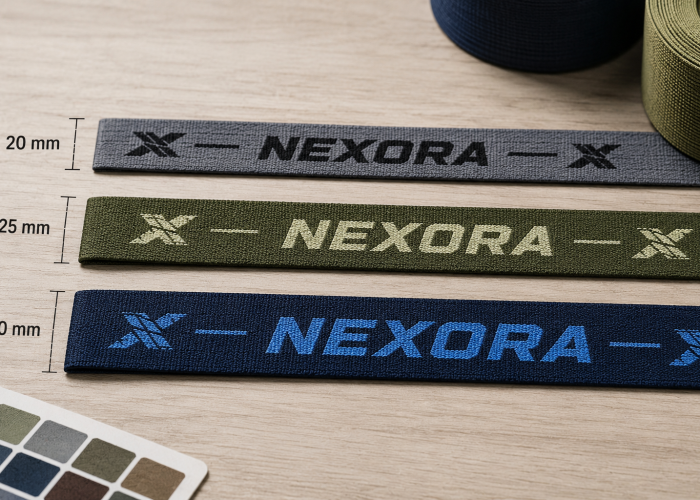
Yes. Top and side straps can have different stretch when each strap needs a different amount of extension to cover its actual adjustment range.
If your side strap is already approved, use its stretch as a reference for the top strap, not a specification you automatically copy. Start with the top strap’s relaxed length and the adjustment range you need in the assembled headlamp. Then check where the longest required setting sits within the sample’s usable extension.
This is what we look at before changing the elastic construction. If the top strap reaches its full adjustment range without being pushed close to the limit of its intended extension, its stretch may already be suitable. If normal adjustment requires most of the available extension, you have little room left beyond the working range. At the other extreme, if the product uses only a small part of the available extension, copying the side strap’s higher stretch may not be giving the top strap anything useful.
For the next sample, keep the width, material, and hardware fit that already pass. Give the factory the relaxed length and the working adjustment range you actually need rather than simply asking them to “match the side strap” or “reduce the stretch.” The elastic construction can then be adjusted around that range.
Once the revised sample covers the required adjustment range, check resistance and recovery again before approval. Those are separate performance checks. If the top strap covers its required range and still gives you acceptable resistance and recovery, its stretch does not need to match the side strap.
Identify which differences require separate development and which can stay common.
Use different webbing when solving a requirement for one strap repeatedly causes a requirement that already works for the other strap to fail. That conflict is a stronger reason to separate the specifications than the fact that the straps sit in different positions.
If your side strap is already approved, use it as the starting point for the top strap and change only what the top position requires. You might reduce the width for its hardware, rebalance the resistance after narrowing it, or give it a different stretch range. After each change, check whether the construction still works for both positions.
The sample progression usually makes the decision clearer. Say the narrower top strap now fits its hardware, but rebuilding the resistance you need makes it too thick for the adjuster. Or you change the elastic construction for the top strap’s working range and can no longer maintain a requirement already approved for the side strap. If correcting one position keeps creating a new problem in the other, continuing with one specification is no longer simplifying the project. You are trading one passed requirement for another.
At that point, keep the approved side strap and develop the top strap separately around the requirement causing the conflict. Separate specifications don’t mean the two straps have to look unrelated. You can still keep the same yarn color, material direction, surface appearance, or jacquard design while changing the width, elastic arrangement, thickness, or stretch where necessary.
For your final decision, look at the sample history. If one construction can pass both positions, keep one webbing specification. If fixing one repeatedly causes the other to fail, separate the specifications while keeping the visual elements that can still remain common.
Start with one webbing when your top and side strap requirements are close enough to share it. If sample adjustments for width, hardware, resistance, or stretch repeatedly create a conflict between the two positions, separate only the specifications that need to change while keeping the others consistent.
If you’re deciding whether your headlamp straps can share one webbing construction, send us your strap requirements or current sample. We can review the specification direction with you before sampling.
We will contact you within 1 working day, please pay attention to the email with the suffix “@anmyda.com”.