
When a sports bra strap needs to feel firmer or more stable, changing the weave construction may be one way to achieve it—but only if the strap’s stretch and recovery are already where they need to be.
A tighter weave can make a sports bra strap feel firmer and more compact without necessarily reducing its required stretch. If the strap already stretches and recovers as intended but feels too soft, weave construction is one of the first specifications worth reviewing. If the strap also stretches too easily or recovers poorly, changing weave density alone is unlikely to solve the problem—the elastic construction needs to be reviewed as well.
This article explains how weave density influences strap firmness, how it interacts with other specifications, and when changing the weave is—or is not—the right adjustment during development.
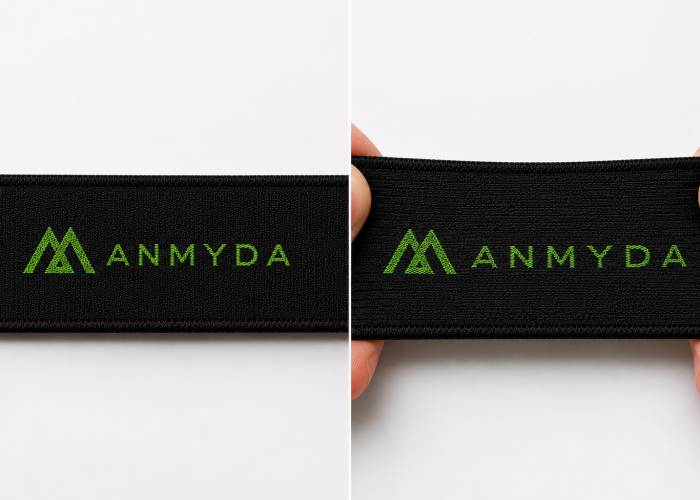

Webbing manufacturing expert with 15+ years of experience helping product developers build high-performance straps for industrial, medical, and outdoor use.
A tighter weave generally makes a sports bra strap feel firmer and more compact because the yarns are packed more closely and have less freedom to move within the woven structure. A looser construction allows more yarn movement, which generally gives the strap a softer, more flexible handfeel.
For sports bra development, this makes weave density a useful adjustment when the strap already meets its stretch and recovery targets but still feels too soft. Instead of immediately reducing stretch, the manufacturer can first adjust how tightly the webbing is constructed and see whether that produces the required firmness.
The comparison works best when the rest of the construction stays similar. If the yarn size, material, elastic arrangement, and weave structure all change at the same time, it becomes difficult to tell what actually caused the difference in firmness. You may get a firmer strap, but its stretch, recovery, or flexibility may also change when those properties were already acceptable.
When a sample has the right stretch and recovery but needs more firmness, keep the approved width and stretch/recovery targets unchanged. Keep the same material and yarn construction where possible, and ask the manufacturer to trial a tighter construction. Compare that sample directly with the current version before changing other specifications. This makes it much easier to confirm whether weave density is actually the right adjustment.
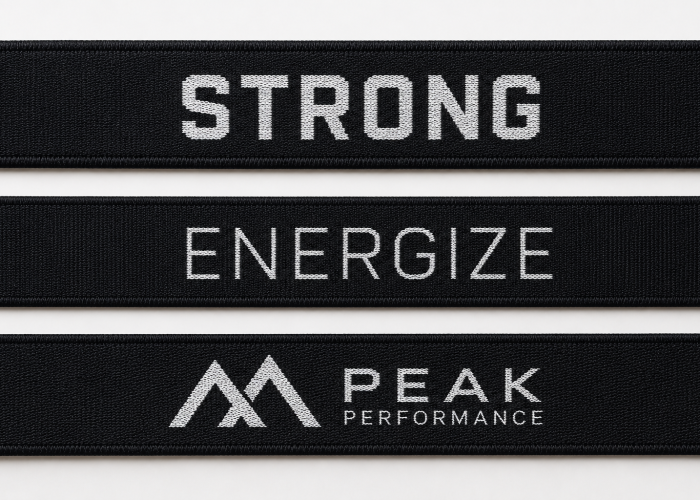
Higher weave density generally increases strap firmness when the yarn and overall construction remain comparable, but the same density change can produce a different result when yarn size, weave structure, or elastic construction changes. A denser construction is therefore one way to adjust firmness, not a stand-alone specification that guarantees a particular feel.
Packing more yarns into a comparable structure can increase compactness and restrict movement within the webbing. However, firmness also comes from the yarns themselves and how they are interlaced. A different yarn size or weave structure can therefore change how the strap responds even when the weave is made tighter. This is why simply asking for “higher density” does not define how firm the finished strap will feel.
Requesting the highest possible density is not a useful development target either. The goal is to make the construction compact enough to reach the desired firmness while maintaining the required stretch and recovery. Once the target feel is reached, making the weave tighter again may change flexibility or other properties without giving the developer a useful improvement.
Do not use a higher density number as the sample acceptance standard. Request the target firmness while keeping already-approved requirements unchanged. Compare the revised sample with the current one for firmness, then confirm that stretch and recovery still meet the target. Approve the resulting strap performance, not simply the higher weave density.
If the stretch is already right, changing it may not be the answer. Let us review the construction before your next sample.
Two sports bra straps with the same weave density can still feel different in firmness because density describes only one part of the woven construction. If the yarn size, material, weave structure, or elastic arrangement changes, keeping the same density does not guarantee the same finished feel.
This becomes important when matching an approved strap or developing the same strap with a changed construction. If the original yarn has to be replaced, for example, simply carrying the old density into the new sample may not reproduce the original firmness. The first sample may come out softer or firmer even though the density specification has not changed.
During sampling, the approved strap should therefore be treated as the performance reference, not just the old density number. Keep the material, yarn, and construction details consistent where possible. When one of them has to change, the manufacturer may need to adjust the weave as well to bring the firmness back toward the reference. Insisting that density remain unchanged can actually make matching the original feel more difficult.
For a revised sample, compare it side by side with the approved strap under the same conditions and judge whether the firmness matches before locking the construction. Then check that stretch and recovery still meet their targets. If the firmness matches only after the density changes, approve the construction that produces the required result rather than forcing the new strap to keep the original density number.
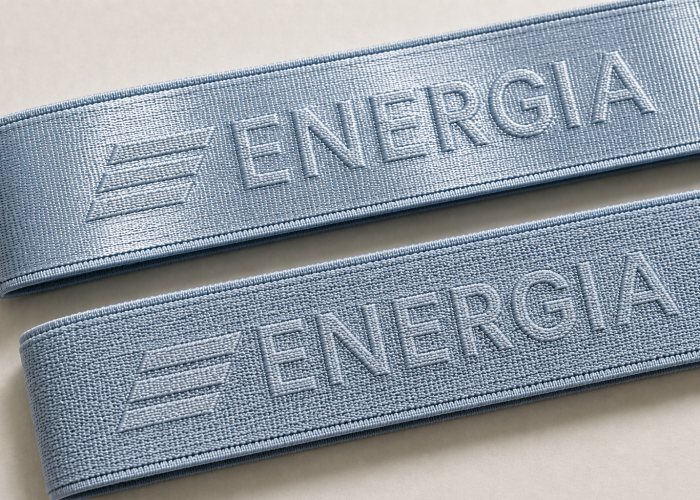
Strap firmness can often be increased while maintaining a similar stretch target because firmness and stretch do not need to be adjusted together. When a sports bra strap already stretches and recovers correctly but feels too soft, the woven construction can be adjusted first while the existing stretch requirement stays fixed.
During sampling, this means the manufacturer does not need to start by reducing the amount of stretch. The current stretch and recovery targets can remain as control points while a tighter construction is trialed for a firmer handfeel. The revised sample is then compared with the current version for firmness and measured again against the same stretch requirements.
The result of that comparison determines the next adjustment. If the strap becomes firmer and still meets its stretch and recovery targets, there is no reason to change an already-acceptable stretch specification. If the tighter construction reaches the desired firmness but starts moving stretch or recovery outside the target, continuing to increase density is not the right next step. At that point, the manufacturer needs to review the weave together with the elastic yarn arrangement rather than continuing to tighten the construction.
For the next sample, define the firmness change you want while keeping the approved stretch and recovery targets unchanged. Only reconsider those targets if the application itself requires different stretch—not simply because a firmer handfeel is needed.
Send the target sample and tell us what needs to stay the same. We can evaluate the construction needed to reproduce the required feel.
Increasing weave density too far can make a sports bra strap firmer and less flexible than the application requires. The target should be the required firmness and flexibility, not the highest density the construction can accommodate.
During sampling, a tighter construction may be the right adjustment when the current strap feels too soft. But once the revised sample reaches the target firmness, another density increase should not be automatic. Compare each revision with the approved reference or target feel and watch for other properties beginning to change.
There are several practical signals that the adjustment has gone far enough. The strap may already have the required firmness but feel noticeably less flexible, or its stretch and recovery may begin moving away from the approved targets. Another signal is when the firmness feels correct but the developer still wants “more support.” In that case, making the weave tighter again may be addressing the wrong requirement because firmness and support are not interchangeable.
When reviewing samples, stop increasing density once the required firmness is reached and verify that flexibility, stretch, and recovery are still acceptable. If the strap needs different support or extension behavior after its firmness is already correct, define that requirement separately and let the manufacturer review the relevant construction instead of continuing to increase weave density.
Specify the firmness and performance you want rather than prescribing a weave-density number unless an approved construction already requires one. Weave density is a manufacturing variable used to reach the target strap feel; it is not the finished result the sports bra developer needs to control.
For an RFQ or sample revision, communicate the required result in relation to something the manufacturer can develop against. Instructions such as “match this reference,” “make it slightly firmer than this reference,” or “keep the same stretch but increase firmness” are more useful than simply requesting a higher weave density. If a physical reference sample is available, it can provide an even clearer target for comparing the revised construction.
The other requirements that should not change need to be identified as well. If width, stretch, recovery, material, or another specification is already approved, tell the manufacturer which ones need to remain fixed. That makes it possible to evaluate weave construction as one adjustment without unnecessarily changing requirements that already work.
If a weave-density specification already exists, provide it as part of the construction information rather than using it alone to define firmness. During sampling, judge the revised strap against the requested feel and the requirements that were held constant. The construction can then be approved for the result it produces, not simply because it reaches a particular density number.
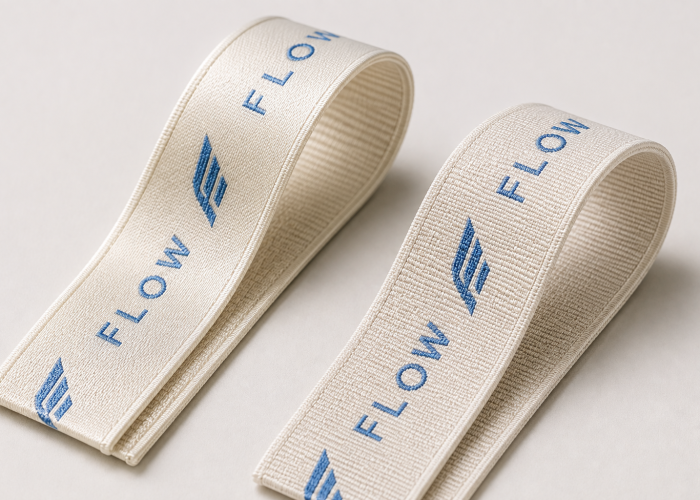
A reference sample can be used to develop a sports bra strap toward the same firmness even when its original weave-density specification is unavailable. The manufacturer can use the physical strap as the target and evaluate its firmness together with measurable requirements such as width, thickness, stretch, and recovery before developing the new construction.
The reference should be treated as the result to reproduce, not as a construction that can be copied from one visible feature. During the first evaluation, the manufacturer can check which characteristics need to stay close to the original and which ones are allowed to change. This matters because a new project may require the same firmness but a different width, material, stretch target, or other specification.
When one of those requirements changes, copying the reference weave as closely as possible may not reproduce the same feel. The new yarn or elastic arrangement may require a different density or weave construction to bring the finished strap back toward the reference firmness. This is why not knowing the original density does not prevent development, but the first sample may still require adjustment.
Provide a representative reference strap in good condition where possible and identify what needs to match—for example, “same firmness and stretch” or “same firmness with a different width.” The manufacturer can then develop against those priorities. Compare the resulting sample side by side with the reference for firmness, and verify the measurable requirements separately before approving the construction.
Avoid changing another specification blindly. Share the current sample requirements and the result you still need to improve.
Compare strap firmness side by side under the same conditions, using the approved reference or current sample as the control. Firmness should be judged together with the specifications that need to remain unchanged, especially stretch and recovery, so a firmer-feeling sample is not approved simply because another property has changed.
During development, label each sample revision clearly and compare it against the same reference rather than relying on memory of how the previous version felt. If several revisions are being reviewed, keep their identities clear so the firmness decision can be traced back to the exact construction that produced the preferred result.
Once a sample has the right firmness and still meets the required stretch, recovery, width, and other fixed specifications, that exact version should become the approved standard. Record the sample or version identification together with its measurable specifications rather than recording only its weave density. This links the subjective handfeel decision to a specific physical sample and a defined set of requirements.
Keep a representative approved sample as the firmness reference for the next production stage. When production material is reviewed, compare its handfeel against that approved sample while checking the measurable specifications separately. This reduces the risk of a production strap meeting a density number but feeling noticeably different from the sample the developer actually approved.
Weave density can help adjust sports bra strap firmness, but the right construction is the one that reaches the target feel without unnecessarily changing stretch, recovery, or other approved requirements. During development, define the firmness you need and let the sample result guide the construction adjustment.
If you’re developing a sports bra strap and need help translating the target feel into a workable webbing construction, contact Anmyda to discuss your requirements.
We will contact you within 1 working day, please pay attention to the email with the suffix “@anmyda.com”.