
When developing a sports bra strap, thickness may look like a straightforward specification to define. But before approving it, you need to understand what changing the thickness will actually do to the strap and its comfort.
Sports bra strap thickness affects comfort by changing how the strap bends and sits against the body: thicker straps tend to feel more substantial and less flexible, while thinner straps tend to feel lighter and more flexible. Material, construction, width and stretch can change these effects, so thickness should be evaluated with these specifications and confirmed through sampling.
Read on to see how thickness interacts with other strap specifications, when changing it may improve comfort, and what to evaluate before approving your sports bra strap.

Webbing manufacturing expert with 15+ years of experience helping product developers build high-performance straps for industrial, medical, and outdoor use.
A thicker strap usually feels more substantial and bends less easily, while a thinner strap feels lighter and follows the body more easily. But thickness alone cannot predict comfort—a thicker strap made with softer materials or a more flexible construction can still bend more easily than a thinner, tightly woven strap.
This is why the thickness number should not be compared alone during sampling. Two straps can both measure around 2 mm but behave differently when bent or stretched because the material, yarn combination and construction used to reach that thickness are different. The difference may become even clearer under tension: one strap may remain flexible while another becomes noticeably firmer.
Compare the samples in the same way they will be used. Bend them around a curved surface, apply similar tension and check whether they still follow the shape easily. If a thicker sample has the profile you want and remains flexible, there is little reason to make it thinner just for comfort.
If the sample is both too bulky and too firm, reducing thickness is a reasonable first adjustment. If the thickness looks right but the strap is too firm, keep the target thickness and first discuss a softer material or more flexible construction. If firmness mainly appears when the strap is stretched, review its stretch behaviour as well. This helps you change the specification causing the problem instead of reducing thickness by default.
A thicker strap can become uncomfortable when the extra thickness also makes it harder to bend or creates unwanted bulk, especially where the strap follows the shoulder, folds back on itself or passes through an adjuster. If the strap remains flexible at the required thickness, reducing thickness may not improve comfort.
The location of the problem can tell you whether thickness is actually the right specification to change. If the straight strap feels comfortable but becomes bulky where two layers overlap or fold through an adjuster, physical thickness is likely part of the problem. A small reduction can matter more in these areas because the thickness is effectively stacked.
If the strap feels too firm along its whole length, however, thickness may only be part of the cause. A firmer material or tighter construction can make a relatively thin strap resist bending, while a more flexible construction can allow a thicker strap to follow the body more easily.
So adjust according to what you see in the sample. Reduce thickness when excess bulk or the strap profile is the problem. If the profile is acceptable but flexibility is not, try changing material or construction before reducing thickness. Then recheck stretch, recovery and hardware fit, because improving one comfort characteristic should not unintentionally move an already acceptable requirement.
Send us your sports bra strap sample or specifications. We’ll help you identify whether thickness or another strap requirement should be adjusted first.
Different strap thicknesses can provide similar comfort when their material and construction give them similar flexibility and stretch behaviour. A thicker strap does not always need to be reduced just because your comfortable reference strap is thinner.
For example, your reference may be 1.5 mm and bend easily, while the new design needs a 2 mm profile. Simply making the original construction thicker may make the new strap firmer. A softer yarn combination or a construction that bends more easily can help the 2 mm strap stay closer to the flexibility of the thinner reference. The opposite can also happen: a thinner strap with a firm construction may not feel any more comfortable than the thicker sample it replaces.
If the 2 mm profile is required, keep that thickness as the target and develop the comfort around it rather than immediately reducing it. Compare the new sample with your reference at a similar level of stretch. Check whether both bend around the shoulder easily and whether the thicker sample becomes noticeably firmer under tension. If the 2 mm sample is still too firm, adjust the material or construction and sample again while keeping the thickness target.
Once the flexibility is close, check the 2 mm strap through the actual adjuster and at folded or overlapping areas. Similar comfort does not make two thicknesses interchangeable if the thicker profile creates too much bulk or affects hardware fit.
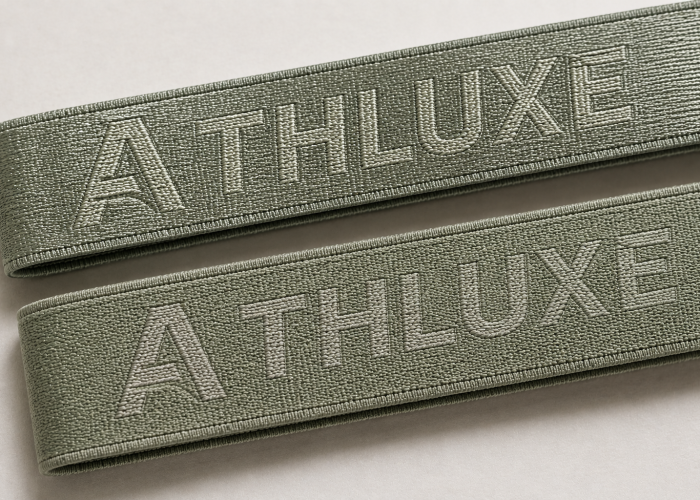
Straps at the same thickness can have different comfort because thickness controls the physical profile, not how the strap bends or behaves under tension. Different materials, yarn combinations, constructions and stretch properties can make two 2 mm straps behave very differently.
This becomes clear when supplier samples are compared side by side. They may measure almost the same with a calliper, yet one bends easily while the other stays noticeably firmer. They may also behave differently when stretched: one remains flexible while the other becomes much firmer under tension.
If both samples are already 2 mm, keep thickness fixed while you look for the difference. First compare them relaxed. If one is already much firmer, look at its material and construction before changing the thickness. If they feel similar when relaxed but one becomes much firmer when stretched, compare their stretch behaviour and elastic construction first.
Develop the next sample at the same 2 mm target so you can see whether that adjustment actually improves flexibility. Only reconsider thickness if the required behaviour cannot be reached at 2 mm without compromising another requirement.
This avoids changing a specification that may already be correct. Reducing the strap to 1.5 mm could change its profile, folded bulk or hardware fit while leaving the real cause of the comfort difference unresolved.
Share your reference and new design requirements. We’ll help you determine what needs to match—and what doesn’t need to be copied.
Consider thickness together with width, material, construction and stretch, because each one changes how the strap behaves on the body. A thickness that works well in one strap combination may give a different result when one of these requirements changes.
Width changes how much area the strap contacts, while material and construction affect how easily the strap bends. Stretch adds another variable because the strap may behave differently once tension is applied. This means two samples with different thicknesses are difficult to compare fairly if their width, stretch or construction has also changed.
For example, suppose your new sample is thicker than the reference but also wider and less stretchy. If it feels different, the thickness difference alone cannot tell you why. The sample can show you which version you prefer, but not which specification created the difference.
When possible, keep already acceptable requirements consistent between comparison samples. If you want to evaluate a thickness change, keep the width and target stretch the same first. If you need to compare a material or construction change next, keep the thickness target consistent. Changing one main variable at a time makes the result easier to interpret.
Not every specification needs to copy the reference exactly. First decide which requirements are fixed by your design—such as width, hardware fit or visual profile—and which still have room to change. This gives you and your manufacturer a clearer basis for comparing samples without blaming thickness for a difference caused elsewhere.
Reduce thickness first when bulk is the problem; adjust material or construction first when the strap is difficult to bend; review the skin-contact yarn when the surface feels harsh; and compare stretch behaviour first when discomfort mainly appears under tension. These differences help identify which specification is most relevant before changing a thickness that may already be correct.
Start by checking the strap relaxed and then under the extension expected in the garment. If it bends comfortably when relaxed but becomes much firmer when stretched, compare its stretch behaviour with your reference before changing thickness. If the difference mainly appears under tension, the elastic construction may be a more relevant adjustment than simply making the strap thinner.
If the strap is already difficult to bend when relaxed, compare its material and construction. A softer yarn combination or a construction that bends more easily may improve flexibility while keeping the required thickness. If the strap already bends well but its surface feels harsh against the skin, changing the skin-contact yarn or surface construction is a more direct place to start.
Thickness becomes the clearer adjustment when the problem is physical bulk—for example, where the strap folds through an adjuster or several layers overlap. Reducing thickness can address that bulk directly, but the new sample should still be checked for stretch, recovery and hardware fit because the construction used to achieve the thinner profile may affect these requirements too.
Keep the requirements that already work and change the variable most closely connected to what does not. This makes the next sample easier to judge and reduces the risk of solving one comfort problem by creating another.
If you have a comfortable reference strap, send it and tell the manufacturer exactly what you want to match. Specify an exact thickness only when thickness itself is a fixed design requirement, such as hardware fit, folded bulk or the required strap profile.
A reference sample gives the manufacturer more than a thickness number. It shows how the strap bends, stretches and feels against the skin. But sending a reference does not mean every detail should be copied. You may want its flexibility and surface feel while needing a different width, stretch, colour or appearance for your new sports bra.
Make that distinction clear during development. For example, you could ask the manufacturer to match the reference flexibility and surface feel, keep your new 20 mm width and target stretch, and allow some flexibility in thickness. This gives the manufacturer room to find a suitable material and construction instead of forcing every requirement to follow the reference.
If thickness cannot change because the strap must work with a specific adjuster or folded assembly, treat it as a fixed requirement. Provide the hardware where practical, or give the relevant dimensions, and ask the manufacturer to develop the required comfort within that thickness limit.
Do not lock an exact thickness simply because your reference measures 1.5 mm. If 1.5 mm is not important to the design, copying that number can unnecessarily limit other ways to reach the comfort you want. Use the reference to show the result you want, and use an exact thickness to define a physical limit only when that limit actually matters.
Tell us what you want to improve and which requirements are already approved. We’ll help you review the adjustment before the next sample.
Approve the strap only after checking it relaxed, under the intended stretch and in the finished bra or a representative assembly. A loose webbing sample alone cannot show how thickness, tension, hardware and folded areas will work together in use.
Start with the loose strap. Compare its thickness, surface and flexibility with your target or reference, then stretch both to a similar level and check whether their behaviour changes. If the new strap is already too firm, harsh or bulky at this stage, resolve that difference before garment assembly adds more variables.
Next, test the strap with the actual hardware and folds used in the design. Pass it through the adjuster, check how easily the adjuster moves, and inspect areas where the strap doubles back or several layers overlap. A small thickness difference that looks unimportant on flat webbing can become much more noticeable when the layers stack.
The final comfort check belongs in the garment or a representative assembly under the intended fit and tension. If the loose strap performs as expected but discomfort appears only after assembly, do not automatically request another webbing change. First check whether strap tension, adjustment, positioning or garment fit is creating the difference.
If the problem follows the webbing through each stage, return to the relevant strap specification and resample. If it appears only after assembly, changing otherwise acceptable webbing may create a new problem without fixing the real cause. Approve the strap when its own requirements are met and it also works correctly with the hardware and finished garment configuration.
Sports bra strap thickness can influence comfort, but it works together with material, construction, width and stretch. During development, focus on the comfort issue you can actually observe, then adjust the specification most closely connected to it while protecting requirements that already work.
If you’re developing or comparing sports bra straps, Anmyda can review your requirements or reference sample and help you identify the right adjustment direction.
We will contact you within 1 working day, please pay attention to the email with the suffix “@anmyda.com”.