
Silicone printing may work reliably on one webbing but start peeling or lifting when the same logo is applied to another waterproof or coated webbing. This can happen even when both are specified as the same base material, such as polyester.
Silicone logos fail on waterproof or coated webbing because a printing process that bonds reliably to standard webbing may not bond reliably after the surface is coated or treated. Even two “waterproof polyester” webbings can present different printing surfaces, so a process proven on one should not automatically be approved for the other.
Read on to learn how to identify the actual coated surface and failure interface, judge whether a proposed bonding solution is reasonable, and validate the silicone-webbing combination before production.

Webbing manufacturing expert with 15+ years of experience helping product developers build high-performance straps for industrial, medical, and outdoor use.
Silicone logos peel off coated or waterproof webbing because the bond at the printed surface—or another interface underneath it—is not durable enough for the strap’s actual use. Where the layers separate tells you which interface should be investigated first.
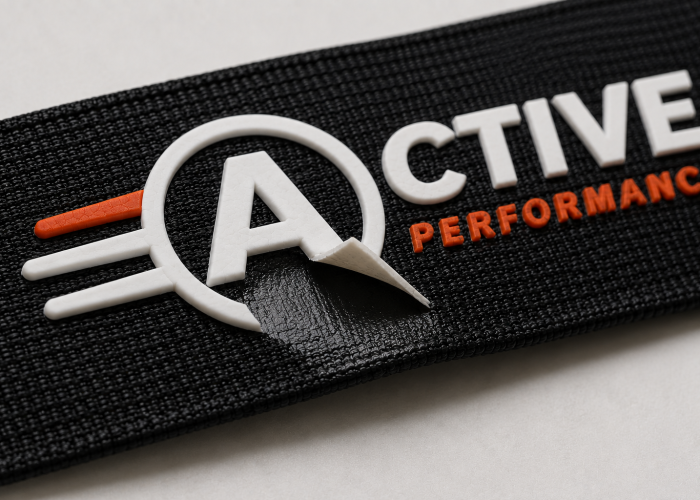
Take a silicone logo printed on PU-coated polyester webbing. If the silicone peels away but the PU coating remains firmly on the webbing, the weak point is at the silicone-to-PU surface. If part of the PU coating comes away with the silicone, improving silicone adhesion alone may not solve the problem because the PU-to-webbing bond may be failing instead. If the silicone stays firmly attached but cracks through the logo, that is a different failure pattern and should not automatically be treated as poor adhesion.
Bending, stretching, and rubbing often expose these differences during use. A logo can therefore look secure while the sample is flat but begin lifting once the strap repeatedly moves. The useful evidence is not simply that “the logo peeled,” but what remained on the webbing and what came away with the logo.
If peeling appears, keep the failed sample where possible and inspect the separated surfaces before approving a proposed fix. A failed sample can tell the supplier more than a photo of the peeled logo alone. Don’t automatically accept more primer, a different silicone, or new webbing. The first adjustment should address the interface that actually failed, followed by the same use test on the revised sample. If the coating itself is separating from the webbing, changing only the silicone-printing process may never solve the underlying problem.
The coating is more likely to be causing the problem if the silicone holds on the same webbing before coating but starts peeling after the coating or treatment is added. But “waterproof” or “coated” alone is not enough to blame the coating.
For example, you may specify 100% polyester webbing, waterproof performance, and a silicone logo. Those requirements describe the base material, function, and branding, but they still may not tell the manufacturer what finished surface the silicone will actually be printed onto. Waterproof performance could come from a coating or surface treatment, and different finished surfaces can interact differently with the same silicone-printing process. Even DWR treatment does not automatically mean poor logo adhesion; some water-repellent systems are specifically designed to retain logo printability.
Where possible, compare the same or a comparable webbing before and after treatment while keeping the logo and printing conditions consistent. If the untreated version holds but the treated version repeatedly peels, focus on what changed at the finished surface first. If both versions fail similarly, the coating is less likely to explain the difference. And if the coating comes away with the silicone, the coating-to-webbing bond deserves attention instead.
Before changing the webbing, confirm what creates the waterproof or coated surface and which interface actually failed. If waterproof performance, strength, stretch, or hand feel is already a fixed product requirement, don’t remove the treatment or change the base material simply to make logo printing easier. First determine whether the supplier can adapt the printing solution to the required finished surface. If that combination still cannot produce a repeatable result, then decide which requirement—surface treatment, silicone branding, or another specification—is actually negotiable.
Send us the failed sample—we’ll help identify what should be checked before you change the webbing or logo.
PU, TPU, and DWR affect silicone logo adhesion differently because each creates a different finished surface for the silicone-printing process. Their names alone, however, are not enough to predict which one will provide better adhesion.
For example, you may have three polyester webbings with the same width, similar construction, and the same silicone logo requirement. One has a PU coating, another uses a TPU layer, and the third has a DWR treatment. Although the base webbing is still polyester, the silicone is interacting with three different finished surfaces. Even within the same category, the formulation and finished surface can differ, so a silicone process proven on one “DWR polyester” should not automatically be approved for another.
The useful comparison is how the actual finished webbings perform under the same test, not whether PU, TPU, or DWR is generally considered easier to print. If silicone separates from one surface while remaining bonded to another, that specific surface and printing combination needs attention. If the coating itself comes away with the logo, the weak point may instead be between the coating and webbing. If all three remain reliably bonded, there is no reason to reject one simply because of its coating type.
Before approving silicone printing, give the supplier the actual finished webbing whenever possible rather than relying only on “PU,” “TPU,” or “DWR” in the specification. If waterproof performance is fixed, preserve that requirement first and validate a suitable printing solution on the required surface. Only consider changing the coating when the required waterproof surface and silicone branding cannot achieve a repeatable result together.
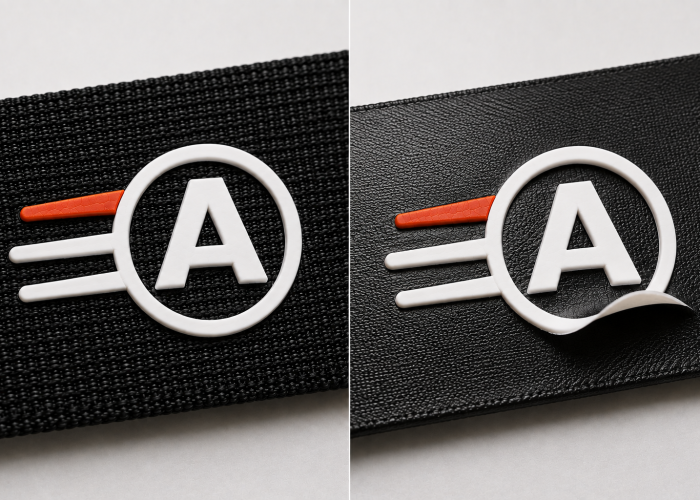
Silicone logo printing is difficult on silicone-coated webbing because the logo has to bond to an already cured silicone surface, which can require a specifically compatible bonding process. Using silicone for both the coating and logo does not mean the two layers will automatically form a durable bond.
For example, you may select silicone-coated polyester webbing for grip or another functional requirement and then specify a silicone logo. Although both contain silicone, the logo is not being printed directly onto the polyester—it is being applied to the finished, cured silicone coating. Cured silicone is generally a difficult surface for secondary bonding, so the supplier may need a compatible bonding system or surface preparation to achieve reliable adhesion.
The failed sample helps determine whether that interface is actually responsible. If the printed logo separates while the silicone coating remains firmly attached, investigate the logo-to-coating bond first. If the coating comes away together with the logo, improving the logo’s adhesion to the coating may not solve the problem because the weaker point is underneath. If the logo remains firmly bonded but cracks during movement, stronger adhesion is unlikely to be the first solution.
If silicone coating is a fixed functional requirement, don’t remove it simply to make logo printing easier. Give the supplier the actual coated webbing and require the proposed logo solution to be validated on that finished surface. The buyer does not need to specify whether the manufacturer should use primer, surface activation, or another process; the supplier should select and prove the appropriate solution. If the required coating and silicone logo still cannot produce a repeatable passing result, preserve the functional coating and consider another branding method rather than redesigning the strap around the printing process.
Send us the proposed fix—we’ll help check whether it actually addresses the adhesion failure.
Silicone printing needs primer or surface treatment when direct printing cannot achieve durable, repeatable adhesion on the actual coated webbing. The need should be proven by the performance of that specific webbing and printing combination, not assumed simply because the webbing is waterproof or coated.
You may already have a silicone logo that performs reliably on one coated polyester webbing, then use another coated polyester webbing for a new product. If the second webbing shows clean peeling under the required use test, the supplier may recommend additional surface preparation. That recommendation can be reasonable, but previous success without treatment—or previous use of treatment—does not prove what the new webbing requires. Adhesion methods vary with the actual surface, and some silicone systems are specifically designed to bond without primer.
The useful evidence is the difference between treated and untreated samples on the same finished webbing. If direct printing repeatedly peels but the treated version remains bonded under the same test, the treatment is solving an observable problem. If both versions perform equally well, adding another process may provide little practical benefit. If the coating itself comes away with the logo, however, stronger silicone-to-coating adhesion does not fix the weaker bond underneath.
If your supplier recommends primer or surface treatment, ask what observed failure it is intended to solve and what comparison proves the improvement. You don’t need to prescribe the bonding process yourself. Keep the required coated surface and use conditions clear, then compare the proposed solution under the same test. If it gives a repeatable improvement, it can become part of the approved printing requirement. If it does not, reassess the failing interface rather than continuing to add treatments.
Thicker silicone printing does not fix weak adhesion between the logo and coated webbing because adding more silicone above a weak interface does not strengthen that interface. Thickness should only be changed when the failure shows that logo thickness itself is contributing.
A 0.4 mm silicone logo that peels cleanly from coated polyester webbing already points you toward the bonding interface first. Increasing the finished logo height to 1.0 mm changes the logo construction and appearance, but it does not by itself repair the interface underneath. These thicknesses are comparison examples, not universal limits. Silicone textile inks can have high elongation—Dow, for instance, reports 550–700% for one textile printing system—so a thicker print should not automatically be classified as stronger or less flexible either.
The failure pattern tells you whether changing thickness is relevant. If the whole logo peels cleanly from the coated surface, investigate adhesion first. If a 0.4 mm and 1.0 mm version both peel from the same interface under the same test, increasing thickness clearly has not solved the problem. But if the silicone remains firmly attached and one thickness cracks while the other survives the required movement, thickness and logo construction become relevant variables instead.
If peeling is the problem, prove reliable bonding before changing an approved logo height. Keep the required 3D appearance where possible and ask the supplier to make the printing solution work with the actual coated webbing. Only negotiate logo height when a controlled comparison shows that height itself changes durability. This prevents the buyer from sacrificing a branding requirement to solve a failure that is actually occurring underneath the logo.
Silicone logos can still fail after sample approval because a sample that passes visual approval has not necessarily proved that the logo will stay bonded under the product’s actual use conditions. Appearance and adhesion durability need to be evaluated separately.
A sample may have the correct colour, clean logo edges, and no visible lifting when it arrives. But if the strap will repeatedly bend around an adjuster, stretch during use, or rub against another component, checking the logo while the sample is flat tells you little about how that bond will behave after repeated movement. This matters even more when a previously approved silicone process is moved onto a new coated webbing. Silicone textile inks can provide high elongation and good durability, but those material properties do not prove adhesion on every finished surface.
The test should therefore follow what the strap actually does. If an elastic webbing reaches 30% stretch in the application, test the printed area at that required stretch. If the logo repeatedly bends around an adjustment point, reproduce that movement and watch where lifting begins. There is no universal cycle count that proves durability for every strap; the test duration and acceptance condition should come from the product requirement or an agreed development test.
Before production, approve the silicone logo together with the actual finished webbing and required use condition—not appearance alone. Test comparable samples under the same agreed condition. If they give inconsistent results, investigate that variation before approval rather than relying on the best-performing sample. And when changing to a new coated webbing, don’t carry over the previous logo approval automatically; validate the new combination.
Share your finished webbing and use conditions—we’ll help identify what should be validated before approval.
Silicone logos should be avoided when the required coated webbing cannot achieve repeatable logo adhesion under the required use conditions without compromising a more important product requirement. Being waterproof or coated alone is not a reason to reject silicone printing; some water-repellent textile treatments are specifically designed to retain logo printability.
The decision becomes clearer when you separate functional requirements from negotiable branding requirements. A strap may require waterproof performance, a particular strength, and 30% working stretch to function correctly, while the silicone logo provides the branding. If the logo continues peeling on the required finished webbing, removing the coating or reducing functional stretch may make the printing problem easier—but it also changes the product you originally needed.
Look at what development has already proved before deciding. If an adjusted printing solution gives consistent passing samples on the required coated webbing, there is no reason to abandon silicone. If revised samples still cannot meet the agreed durability requirement, determine whether another reasonable printing solution remains to be evaluated. Previous experience with another “waterproof polyester” is useful, but it does not replace validation on this finished webbing.
When further changes would start compromising fixed product requirements, decide which requirement has priority. Protect the waterproofing, strength, stretch, or other functional specifications when they are essential to the application. If silicone branding is the more flexible requirement, consider another branding method and validate it on the same finished webbing. Don’t redesign a functional strap simply to preserve a logo process that cannot meet the required use condition.
Silicone logo failure on coated webbing should not be diagnosed from the words “waterproof,” “PU,” “TPU,” or “DWR” alone. What matters is the actual finished surface, where the failure occurs, and whether the proposed printing solution performs reliably under the required use conditions.
If your silicone logo is peeling from coated webbing, send us the finished webbing and failure details. We can help identify what should be evaluated before changing an approved product requirement.
We will contact you within 1 working day, please pay attention to the email with the suffix “@anmyda.com”.