
If you are defining a headlamp strap before sending an RFQ, material is one of the first specifications to settle. Polyester, nylon, and different elastic combinations may all be available, so the question is which material gives you the right starting point for your headlamp strap.
Polyester with elastane/spandex is the best starting material for most elastic headlamp straps because it combines a stable outer surface with the stretch and recovery needed to hold the lamp securely. For headlamp strap development, material should be specified together with stretch, thickness, and strap construction: changing the elastic ratio or construction can make two polyester straps feel and perform very differently.
Read on to see how to choose and specify the right material for your headlamp strap.

Webbing manufacturing expert with 15+ years of experience helping product developers build high-performance straps for industrial, medical, and outdoor use.
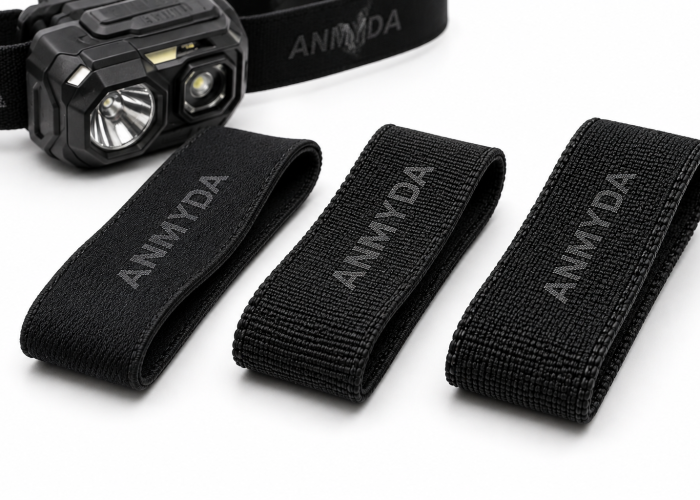
Polyester is usually a better starting choice than nylon for elastic headlamp straps, especially when the strap needs consistent stretch, a stable woven surface, and repeatable sizing. The important point during development is that polyester is normally the face yarn, not the part that determines the strap’s elasticity. The required stretch comes from the elastic yarn and how it is built into the webbing, so changing from polyester to nylon is rarely the first adjustment when a headlamp strap needs more or less stretch.
This becomes clear when comparing elastic webbing samples made with the same polyester and elastane combination. One can stretch quite easily, while another feels noticeably firmer. The polyester face yarn is the same; what has changed is the elastic construction, along with factors such as weave density and strap thickness. Pulling both samples from the same starting length gives a simple way to see that the material name alone does not determine how the finished strap behaves.
For a new headlamp strap, keep polyester as the starting face yarn and define the required stretch before considering nylon. If the first sample feels too loose or too firm, adjust the elastic construction first and compare the revised sample under the same conditions. A different face material becomes worth considering when the headlamp project has another requirement that polyester does not meet.
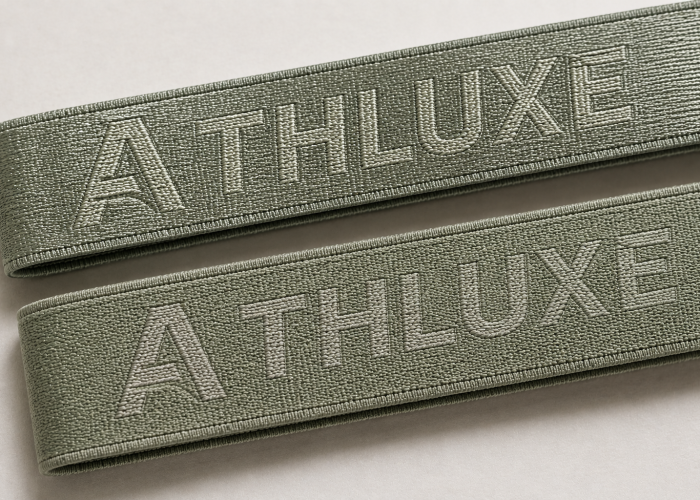
Polyester and elastane can cover most elastic headlamp strap requirements, although the construction should change when the lamp and wearing requirements change. A lightweight headlamp may work with a thinner, more flexible elastic webbing, while a heavier lamp may need more resistance to extension and a firmer construction to control movement. In both cases, polyester and elastane can remain the same material combination—the manufacturing decision is often how those materials are built into the strap rather than whether a different fiber is needed.
This is easy to see when comparing finished webbing samples. Two polyester and elastane straps can feel and stretch differently even when the basic material combination is the same. A thinner, more flexible construction may extend more easily, while a firmer construction can give the headlamp more support. That difference comes from the finished webbing structure, which is why choosing the fiber combination alone does not complete the material decision.
For headlamp strap development, keep polyester and elastane as the baseline, then define the support and stretch needed for the actual headlamp. Develop the construction and thickness around those requirements and compare physical samples before locking the specification. Change the base material when there is a clear product requirement for doing so, rather than using a material change as the first way to adjust strap performance.
Send us your strap requirements and we can review the material and elastic construction before sampling.
Yes. Recycled polyester can replace virgin polyester as the face yarn in an elastic headlamp strap, with elastane still providing the stretch. If recycled polyester is already required for the project, use it from the first sample. Developing the strap with virgin polyester first and changing the yarn after approval only creates another variable that needs to be checked again.
For example, suppose the first strap has already been approved for width, thickness, stretch, and logo appearance. Changing the face yarn to recycled polyester does not mean those approved results should simply be assumed to stay the same. The yarn specification has changed, while it still has to work with the same elastic yarn and woven construction. A sample made with the actual recycled yarn shows whether the strap still reaches the required width and thickness, stretches as expected, and gives the same surface needed for the logo. That comparison is much more useful than approving recycled content from a material sheet alone.
If recycled polyester is required, include the recycled content and certification requirement before sampling and keep the required width, thickness, stretch, and logo result as the approval targets. The supplier can then develop the yarn and elastic construction around those targets. Approve the material only when the recycled-polyester sample meets the strap requirements, rather than approving the recycled yarn separately from the finished webbing.
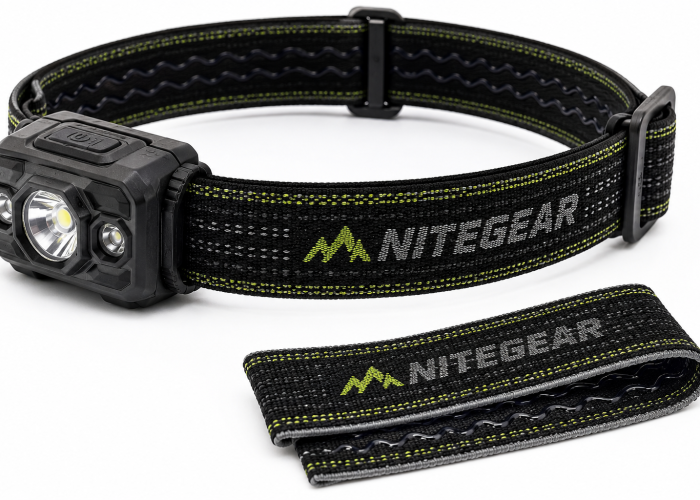
Usually, no. For a headlamp strap, specifying the required stretch is more useful than choosing an elastane percentage first. Two straps can both be described as polyester and elastane, yet still feel completely different when stretched because the elastic yarn is not necessarily used in the same way inside the webbing.
This becomes obvious when elastic webbing samples are put side by side. One strap may extend easily with a light pull, while another needs noticeably more force to reach the same length. Looking only at the fiber percentages would not explain that difference. The number of elastic yarns, how they are arranged through the webbing, and how tightly the strap is woven all contribute to the finished result. This is why adding more elastane is not automatically the right correction when a headlamp strap feels too loose.
Before sampling, define the finished stretch required from the headlamp strap rather than a preset elastane percentage. For example, the requirement can state how far a fixed reference length should extend under an agreed test condition. The supplier can develop the elastic construction toward that target. If the sample stretches too easily or feels too firm, adjust the construction and compare the revised sample using the same reference length and test condition. Once the required performance is approved, record the resulting material composition in the final specification if needed.
Share your stretch target, width, and application requirements to develop the elastic webbing around the required result.
No. Material alone does not determine how much a headlamp strap stretches. Polyester and elastane tell the supplier what fibers are being used, while the finished stretch also depends on how the elastic yarn is arranged and held in the woven structure. This is why two headlamp straps made from the same material combination can still stretch very differently.
The difference becomes clear when samples are compared from the same starting length. One polyester and elastane strap may reach the target extension easily, while another needs noticeably more force to reach the same length. The material combination has not changed; the elastic arrangement, weave density, and overall construction have.
There is another distinction worth making during development. When a sample is described as needing “more stretch,” that can mean it needs to extend farther, extend more easily, or simply feel less firm when pulled. Those are not always the same adjustment. Changing the material or adding more elastane before clarifying the required result can send the next sample in the wrong direction.
Keep material and finished stretch as two connected specifications. Define the required extension and how the strap should behave when reaching it, then compare samples under the same condition. If the result is wrong, adjust the elastic construction toward that requirement before considering a different material.
For a heavier headlamp, a good starting point is a tightly woven elastic strap around 25–30 mm wide and approximately 1.5–2.0 mm thick, with controlled stretch rather than a soft, high-extension construction. If the lamp still tends to move during wear, silicone grip lines can be added to the inside surface. These are development starting points rather than fixed dimensions—the headlamp body, adjuster, and required fit still set the final limits.
The weaving method matters as much as the dimensions. For this type of strap, a tighter woven structure with the elastic yarn held firmly through the construction gives a better starting point than simply adding thickness. A thick strap with an easy, loose extension can still allow the lamp to move. A slightly thinner strap with a denser weave and better-controlled extension may support the same lamp more effectively. This is why thickness should not be used alone to judge whether the webbing is strong enough for the application.
Width also has a practical limit. Moving from a narrow strap toward 25–30 mm gives more contact area and allows a more substantial elastic construction, yet increasing width or thickness after the headlamp hardware is fixed can create problems through the adjuster. Check those dimensions against the actual buckle and lamp attachment before sampling.
For a heavier headlamp, start the sample around 25–30 mm wide, 1.5–2.0 mm thick, with a tighter woven elastic construction. Test it with the actual lamp at the intended adjustment. If movement remains a problem while the elastic support already feels right, try silicone grip on the inside before making the strap tighter or substantially thicker.
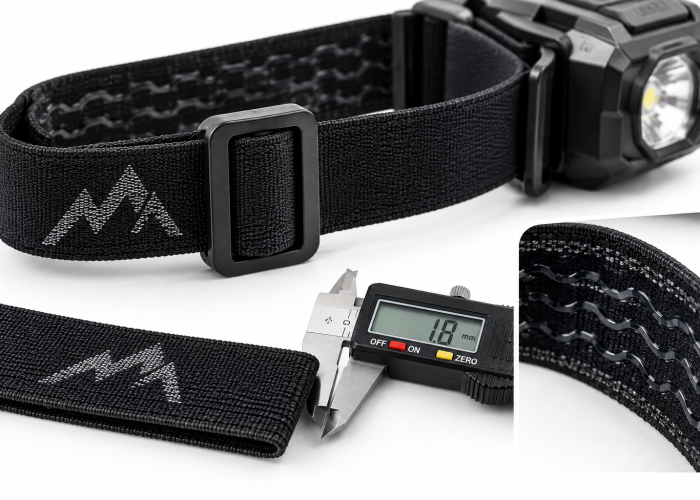
Yes. If the headlamp adjuster has already been selected, its internal width and clearance set practical limits for the finished webbing width and thickness, while its shape and grip surface affect how the strap moves and holds its position. The elastic webbing should therefore be developed around the actual adjuster rather than finalizing the strap construction first and checking the hardware afterward.
This becomes important when changing the webbing during development. Increasing thickness to make a strap firmer may improve support, yet the thicker webbing still needs to pass smoothly through the adjuster. Surface treatment creates another interaction. Silicone grip can help reduce movement against the head, while placing it across an area that repeatedly passes through the adjuster may add unwanted friction. The position of the treatment therefore matters as much as whether it is added.
If the adjuster is already selected, provide an actual piece with the sampling request whenever possible. If that is not available, provide its internal width, slot clearance, and strap-routing information. Develop the webbing within those limits, then test the finished sample through the actual hardware. It should move smoothly when the length is intentionally adjusted and hold its position afterward. If it does not, check thickness, surface, and webbing construction together before changing the polyester and elastane material combination.
Send the hardware details with your strap requirements so the webbing can be developed and sampled around the actual assembly.
Before sampling, define the finished requirements that affect how the headlamp strap needs to fit and perform: material, width, target thickness, finished stretch, headlamp load, adjuster compatibility, surface treatment, and any logo or recycled-content requirements. The supplier can then develop the internal elastic and woven construction around those targets rather than requiring the developer to specify every manufacturing detail.
For example, the RFQ can state polyester and elastane as the material direction, the required finished width, an acceptable thickness or thickness range, and how far a fixed length of strap should extend under an agreed test condition. Include the actual headlamp or its relevant load information and provide the selected adjuster or its dimensions. If silicone grip, a jacquard logo, recycled polyester, or certification is required, include those requirements before the first sample as well. They can affect the construction or material that needs to be developed.
The elastane percentage, elastic-yarn arrangement, weave density, and other internal construction details do not need to be predetermined by the developer. These can be developed by the supplier to reach the required finished result.
Once the sample arrives, evaluate it with the actual headlamp and hardware. Check stretch, lamp stability, adjustment, thickness through the adjuster, surface grip, and logo appearance. The approved sample can then become the reference for locking the final material, construction, and finished specifications.
Polyester and elastane are a practical starting combination for most elastic headlamp straps, while the final performance depends on stretch, width, thickness, woven construction, and hardware compatibility. Define the finished requirements before sampling and use physical samples to confirm how these specifications work together.
If you are developing a custom headlamp strap, send us your strap requirements or existing hardware. We can review the specifications and manufacture samples for evaluation.
We will contact you within 1 working day, please pay attention to the email with the suffix “@anmyda.com”.