
When a headlamp strap needs more support, increasing the webbing width can look like the obvious next change. The problem is that insufficient support can come from the strap being too narrow or from an elastic construction that extends too easily. Changing the width before separating those two problems can send the next sample in the wrong direction.
Yes. A wider headlamp strap can provide more elastic support when the current webbing already has suitable elastic resistance and the development needs a broader supporting construction. Check your current sample before increasing the width: if it holds its resistance under the intended headlamp load and you need more support across the strap, test a wider construction. If the webbing itself extends too easily, increasing the width is not the first change to make—adjust the elastic construction and compare the support again.
Read on to see how headlamp strap width interacts with stretch, thickness, hardware, silicone grip, and woven logo requirements before you finalize the webbing specification.
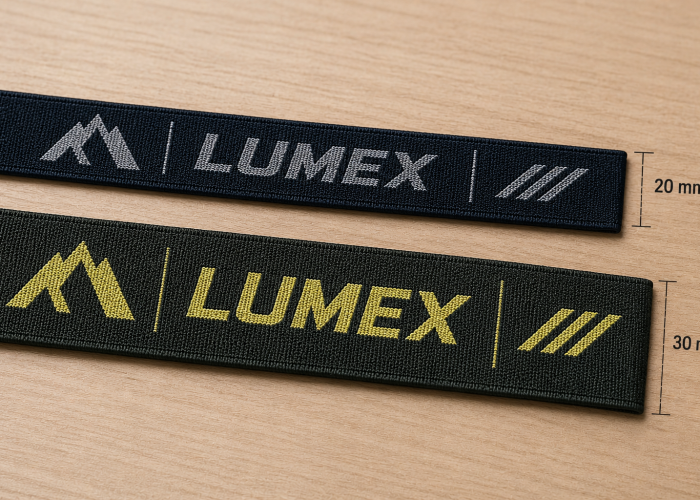

Webbing manufacturing expert with 15+ years of experience helping product developers build high-performance straps for industrial, medical, and outdoor use.
No. If your current headlamp strap becomes too long under load because the webbing extends too easily, making the same type of construction wider is not the first correction to make. Test the sample with the intended headlamp load and watch what the webbing actually does. If the elastic resistance is already suitable and you still need a broader supporting strap, width is worth testing. If the webbing itself keeps extending more than required, correct that behavior first.
The important distinction is whether you are missing width or elastic resistance. You can see this by comparing samples without changing both at once. If a narrower strap already gives the resistance you want as it extends, keep that elastic behavior as the target when you develop the wider version. If the wider sample then gives you the support you were looking for, you have evidence that width contributed to the improvement. If both widths still extend too easily, adding more width is not giving you the answer—the elastic construction still needs work.
This also prevents the next sample from giving you a misleading result. If you increase the width and make the elastic firmer at the same time, the new strap may perform better, but you will not know which change actually solved the support problem. That becomes important if the wider strap later conflicts with your adjuster, logo area, or another fixed dimension and you need to move back to the original width.
For your next sample, keep one side of the comparison stable. If you are testing width, hold the elastic behavior as close as practical. If you are correcting excessive extension, hold the width. That gives you evidence for which specification should stay in the final headlamp strap instead of assuming that more width always means more support.
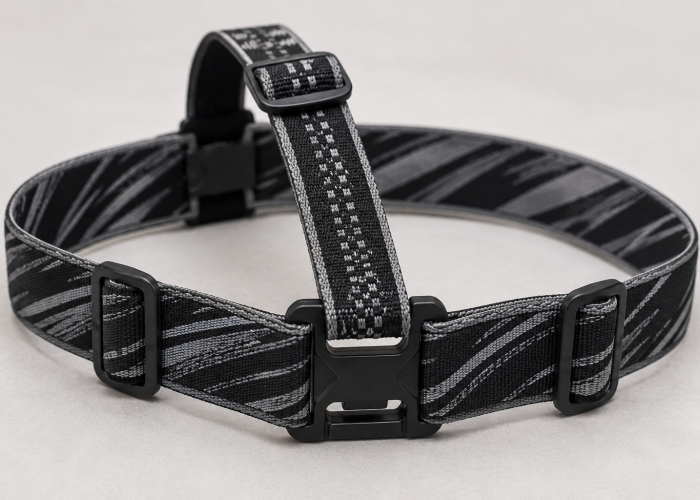
Yes. If your current headlamp strap width already works with the adjuster and assembly, you can keep that dimension while changing how the elastic webbing stretches. Width does not lock the strap into one elastic behavior. The useful question is whether your current sample reaches the required extension with the resistance you want. If it does not, that elastic behavior can be redeveloped without automatically reopening a width that already works with the product.
For example, suppose your current width passes the hardware fit and gives you enough space for the intended strap construction, but the sample extends too easily under the headlamp load. Making the strap wider changes another part of the specification without proving that width was wrong. Instead, keep the width and compare another elastic construction. Look at the resistance as both samples reach the same intended extension, then check how they return afterward. The difference gives you evidence about the elastic construction without hardware fit changing at the same time.
This is also why specifying only a stretch percentage is not always enough for development. Two samples can reach the same extension while requiring different force to get there. If support is the issue, you need to look at how the strap behaves on the way to that extension, not only whether both samples can eventually stretch by the requested percentage.
If the revised construction gives you the required resistance and recovery at the existing width, keep that width in the specification. When a dimension already works with the headlamp assembly, preserve it and correct the elastic behavior separately. Change the width only when the sample gives you evidence that width itself is limiting the development.
Find out which webbing specification is worth changing before you develop another sample.
Yes. Your headlamp strap width can stay the same when the lamp weight changes if the existing width still works with the assembly and the elastic construction can be adjusted to provide the required support. A heavier lamp does not automatically mean you need wider webbing. First check what changes in your current sample under the new load: if the strap fits the hardware correctly but extends too easily, the elastic construction is the first specification to review.
This matters because increasing the width and changing the elastic resistance at the same time makes it difficult to know which change the heavier lamp actually required. You may end up developing a wider strap even though the original width was never the limiting specification.
A more useful comparison is to keep the existing width when it already fits your adjuster and attachment points, then test whether a revised elastic construction can control the additional load. Compare the original and revised samples at the extension your headlamp actually requires. Look at how much resistance they provide there and whether they return as required after repeated extension. If the revised construction supports the new load at the existing width, you have a reason to keep that dimension.
If you still cannot reach the required support without making the webbing excessively firm, thick, or difficult to integrate with the rest of the strap, then width becomes worth reopening. The manufacturing decision is not “heavier lamp equals wider strap.” It is whether the additional load can be managed within the width that already works before you change another part of the headlamp assembly.
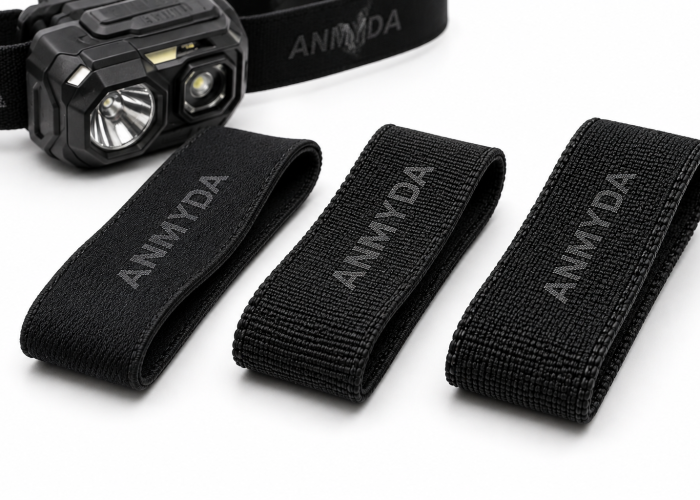
Yes. A wider headlamp strap can be developed with a thinner profile when you need more width without adding unnecessary bulk through the adjuster or attachment area. The important point is to decide what must remain unchanged before asking for a thinner sample. If the wider strap already gives you the elastic support you need, treat that performance as a requirement rather than assuming the additional width will compensate for whatever changes when the webbing becomes thinner.
This matters because reducing thickness is not simply removing material from an otherwise identical strap. The manufacturer may need to change yarn size, yarn arrangement, elastic content, or weave density to reach the thinner profile. Those construction changes can also change how the webbing extends and how much resistance it provides. Published elastic-webbing specifications reflect this separation: width and thickness are controlled alongside elongation and the load required to reach a defined extension rather than being treated as interchangeable measurements.
So if your wider sample works well but is too bulky for the headlamp hardware, don’t restart the whole strap specification. Keep the width and required elastic behavior as your reference, then ask for a thinner construction. Compare the two samples at the same extension and check whether the thinner version still gives you the required resistance and recovery. Also run both through the actual adjuster and attachment path rather than approving thickness from a caliper measurement alone.
If the thinner sample passes the hardware more cleanly but loses too much elastic resistance, you have evidence that the thickness reduction changed more than the profile. At that point, adjust the construction rather than adding even more width. A wider, thinner strap is a valid development direction when you preserve the performance that already works and use thickness to solve the profile problem—not as a substitute for elastic support.
Check the webbing width, tolerance, and hardware interface before you finalize the strap specification.
Your headlamp strap width tolerance should be tight enough that the widest and narrowest acceptable webbing still work correctly with the intended hardware, rather than being copied from a generic webbing tolerance. There is no single tolerance that is right for every headlamp strap. If your adjuster has limited clearance, the acceptable width range may need to be tighter. If the hardware has more clearance, specifying an unnecessarily tight tolerance gives you little functional benefit.
Start with your nominal width and actual hardware. If you are developing a 25 mm strap, for example, don’t immediately put ±0.5 mm or another familiar number on the drawing. Measure several positions along your webbing samples, then thread the wider and narrower conditions through the actual adjuster. You are looking for the point where additional width begins to compress the edges, prevent the webbing from lying flat, or make adjustment inconsistent. On the other side, check whether a narrower condition creates excessive lateral movement in the hardware.
That functional range gives you something useful to discuss with your webbing manufacturer. The manufacturer can then confirm whether the required range is realistic for the proposed yarns, weave, elastic construction, and production process. Published elastic-webbing specifications use different width tolerances, which is another reason not to assume one standard number applies to every construction.
Once you agree on the tolerance, don’t validate it from one short sample. Check multiple positions on production-representative webbing and run the acceptable width range through the intended hardware.
Set the width tolerance from the range your headlamp assembly can actually accept, then confirm that the webbing process can consistently stay inside that range. Don’t start with an arbitrary tolerance and hope the hardware accepts it.
Yes. Headlamp strap width affects adjuster compatibility because the finished webbing has to match the usable width of the hardware and still move correctly through its complete adjustment path. If you increase the strap width for more support, don’t approve the change by laying the new webbing beside the adjuster or checking whether one loose end passes through the slot. Assemble it using the same routing you intend to use on the headlamp.
This distinction matters because an adjuster is not simply a hole that the webbing has to fit through. The strap may pass around a center bar, return through another opening, or create a doubled section depending on the hardware design. Width determines whether the edges have enough lateral clearance, while thickness and the available slot height affect how those layers pass through the adjuster. Surface and weave characteristics can also influence how easily the strap moves and holds its adjusted position.
For your sample check, thread the production-representative webbing through the actual adjuster in the intended routing. Move it through the expected adjustment range and apply the intended strap tension. Watch the edges: they should not fold, curl, or become heavily compressed against the hardware. Check whether the webbing remains flat through the routing path and whether adjustment remains consistent rather than becoming noticeably harder at one position.
If the wider sample gives you the elastic support you want but starts bunching or binding in the existing adjuster, don’t immediately make the webbing thinner or change its edges to force it through. You first need to decide which requirement has priority: the existing hardware or the wider strap. If the hardware is already fixed, reconsider the width. If the wider construction is important to the headlamp design, evaluate an adjuster with suitable internal width and clearance.
A wider webbing sample has not passed your headlamp development just because it fits through the adjuster. It has passed when the complete routed strap can be adjusted and held as intended without the webbing being distorted by the hardware.
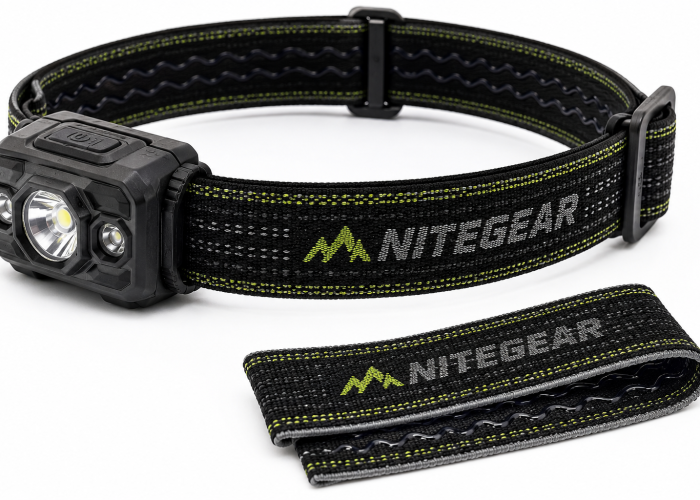
Yes. A wider headlamp strap can give your woven logo more usable space, which can help when the current width is forcing small letters, thin lines, or tight spacing into a limited weaving area. The extra width is useful when lack of space is actually limiting the artwork. It does not automatically make the logo sharper, because the finished result still depends on how the artwork is translated into the jacquard construction and how that construction behaves when the elastic strap stretches.
You can usually see which problem you have from the first jacquard sample. If small letters are merging, gaps are closing, or important shapes have been simplified because they cannot be reproduced clearly within the available area, test whether giving the artwork more space improves the woven result. Compare the logo in the relaxed strap and again at the extension expected in the headlamp assembly. A logo that looks clean only while the webbing is lying flat on the table has not answered the development question.
If the wider sample still shows soft edges or distorted details, don’t keep adding width. The limiting variable may now be the artwork, yarn arrangement, weave construction, or elastic behavior rather than the available logo area. That is the point to work with the jacquard construction or simplify details instead of changing another product dimension.
This is also why you should not increase a headlamp strap from 25 mm to 30 mm only because the logo supplier asks for more room. Width may already be tied to your adjuster, support requirement, and overall strap construction. Ask first which part of the artwork cannot be reproduced at the current width and compare that specific detail in the next sample.
Use additional width to solve a demonstrated lack of weaving space. If the logo problem remains after enough space is available, keep the headlamp width decision separate and correct the jacquard variable that is actually limiting the result.
Check the webbing width, tolerance, and hardware interface before you finalize the strap specification.
Yes. Headlamp strap width affects the elastic construction you should evaluate because changing the width changes the space available for yarns and elastic elements across the webbing, while your finished strap still has to meet its stretch, resistance, thickness, recovery, edge, and hardware requirements. When you move to a different width, don’t assume the previous construction can simply be scaled up or down and produce the same finished behavior.
This becomes important when your first headlamp sample is already close to approval. Suppose the elastic resistance and recovery work at 25 mm, but you decide to test 30 mm for more support or logo space. The useful instruction to the manufacturer is not simply “make the same webbing at 30 mm.” Treat the approved 25 mm sample as your performance reference and compare what construction is required to reproduce the properties you want at the new width.
During sampling, check the finished webbing rather than judging whether the internal construction looks similar. Compare the original and new widths at the same intended extension. Check the resistance, recovery, thickness, edge stability, and how each sample behaves through the headlamp hardware. If it is jacquard elastic, check the woven logo under the same extension as well. A wider sample that reaches the nominal width but changes several of these behaviors has not reproduced the original strap simply because the materials look similar.
The same judgment applies when you reduce width. Don’t automatically remove yarns or elastic elements from an approved construction and expect the narrower version to behave proportionally. Width, stretch range, thickness, material, and construction are independently controlled specifications in commercial elastic webbing; changing one can require the others to be rebalanced.
When headlamp strap width changes, use the approved sample as the performance reference—not as a construction recipe to scale. Preserve the requirements that already work, then let the new width prove which parts of the elastic construction need to change.
Headlamp strap width affects more than the size of the webbing. It interacts with elastic support, stretch, thickness, hardware fit, and woven logo requirements. Before changing width, identify what your current sample is actually failing and preserve the specifications that already work.
If you are developing a custom elastic or jacquard headlamp strap, send us your target width, stretch requirement, hardware details, and artwork. We can review the webbing requirements with you before sampling.
We will contact you within 1 working day, please pay attention to the email with the suffix “@anmyda.com”.