
Selecting the right waistband webbing can define your underwear product’s success in the market. Our 15+ years developing custom webbing solutions has shown that material choice directly impacts comfort, durability, and brand perception—factors critical to product developers and brand manufacturers seeking competitive advantage.
The most effective underwear waistband webbing uses spandex-blended synthetic materials in knitted or woven elastic structures, providing 150–300% stretch with strong recovery. Nylon-polyester-spandex blends offer durability, while knit construction enhances comfort. Fold-over elastic and silicone grippers add premium fit and function.
We’ll cover material properties, manufacturing methods, design options, and key selection factors based on your product needs, audience, and budget.
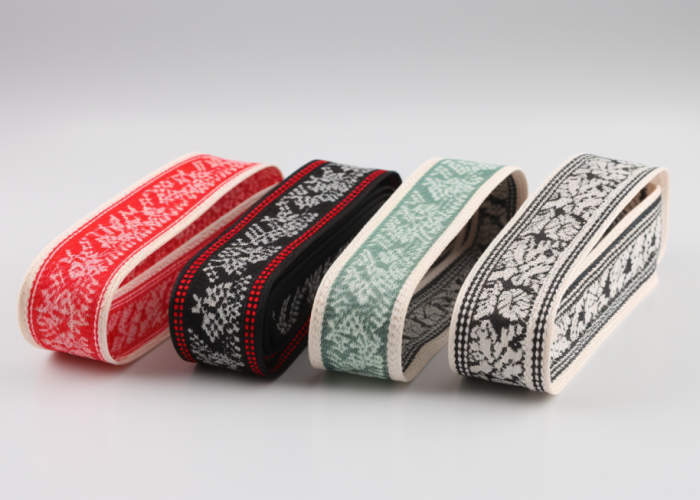

Webbing manufacturing expert with 15+ years of experience helping product developers build high-performance straps for industrial, medical, and outdoor use.
Nylon-polyester-spandex blends offer the best performance for underwear waistbands, delivering 150–300% stretch, strong recovery, and long-term durability through repeated washing.
Lab tests show spandex-blended synthetics retain 90%+ elasticity after 100 washes, while cotton and hemp lose 35–40%.
Premium underwear brands favor this blend for its comfort and resilience. Bamboo blends offer antimicrobial benefits but often require chemical treatments (e.g., ISO 20743-compliant finishes).
In our production, spandex below 12% leads to stretch loss after 30+ washes. Compression garments use up to 25% spandex—but need strong nylon support to prevent deformation.
OEKO-TEX® Standard 100 and REACH compliance ensure skin-contact safety, especially for children’s or European markets.
Design Takeaway:
Specify 70–75% nylon, 10–15% polyester, and 15–20% spandex.
Ensure certifications and verify elasticity through 100-wash testing for best long-term performance.
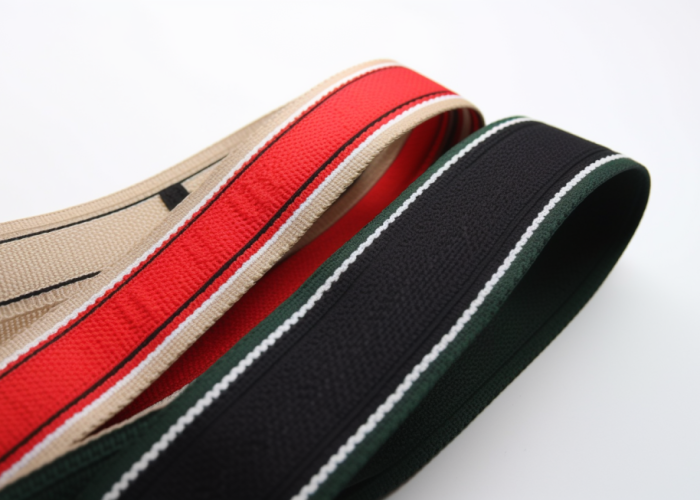
Knitted elastic offers the greatest comfort and flexibility for underwear waistbands, with 200–300% stretch capacity and soft, multidirectional elasticity. Woven elastic delivers higher tensile strength and structural control, but with lower stretch range (100–150%). Braided elastic provides a middle ground—balanced stretch (150–200%) and better dimensional consistency under tension.
Performance Overview:
Design Takeaway:
Choose knitted elastic for comfort-intensive products like luxury underwear, woven elastic for structured garments like shapewear or medical supports, and braided elastic for sportswear or outdoor products where moderate stretch and durability are both critical.
Fold-over elastic (FOE) enhances product quality by simplifying the edge finishing process, creating smooth, enclosed seams that improve comfort, aesthetics, and manufacturing efficiency. It’s especially useful in lingerie, underwear, and children’s garments where exposed edges can cause discomfort or irritation.
Key Characteristics:
Advanced FOE variants may include silicone strips for added grip in activewear or low-rise designs, maintaining placement during wear.
Design Takeaway:
Specify FOE to reduce production steps while enhancing fit and comfort—especially beneficial for high-volume runs or brands seeking premium aesthetics. Combine with color-matched thread and edge-lock stitching for top-tier finish quality.
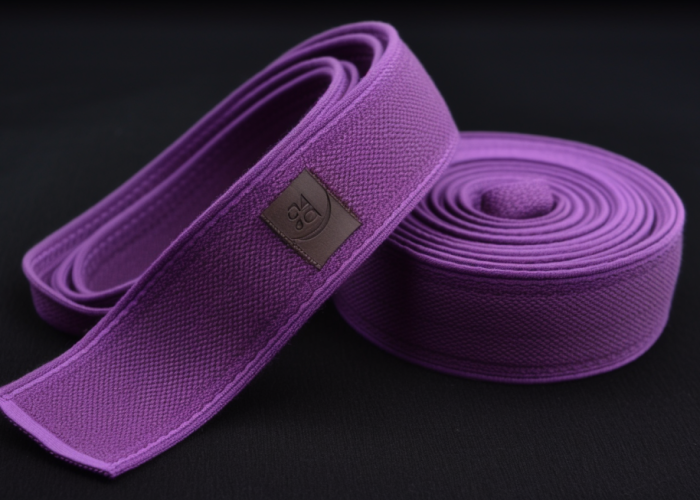
Underwear waistbands demand 150–300% stretch with at least 85–95% recovery to ensure long-term comfort, garment shape retention, and customer satisfaction. Performance varies based on garment type, target demographic, and style.
Stretch Capacity by Application:
Technical Requirements:
High-quality waistband webbing uses nylon-polyester blends with 15–20% spandex to balance durability, moisture resistance, and elasticity. OEKO-TEX Standard 100 and REACH compliance ensure materials are skin-safe, especially important for intimate wear.
Design Takeaway:
Match stretch specs to function: lower ranges for classic fit, higher ranges for performance or compression applications. Always test recovery at body temperature and under realistic loading conditions to ensure consistency throughout the product lifecycle.
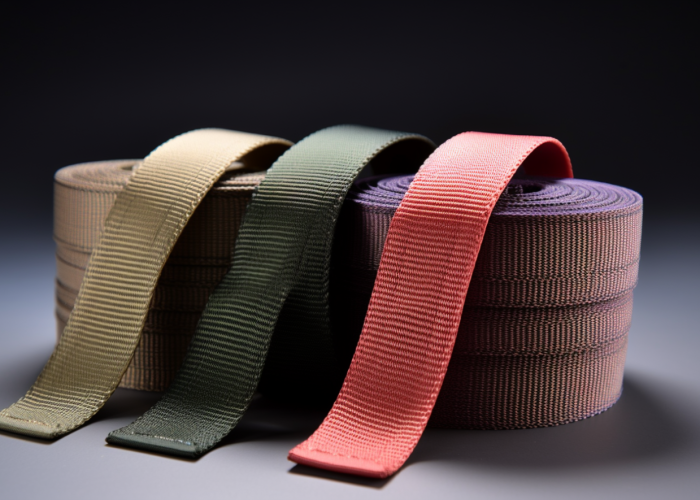
Spandex-polyester blends are ideal for underwear waistbands that demand high wash durability, colorfastness, and stable stretch performance across temperature and humidity variations. These blends outperform nylon-spandex in moisture management and heat resistance, making them especially suitable for activewear and everyday performance underwear.
Laboratory data confirms that polyester-spandex retains up to 95% of its original stretch after 200 washes at 40°C, compared to 85–88% retention for nylon-spandex under the same conditions. Polyester also wicks moisture more effectively and dries faster than nylon, enhancing wearer comfort during extended or high-intensity use.
From a manufacturing perspective, these blends offer better dye uptake, improved color retention, and minimal shrinkage. An 80–85% polyester / 15–20% spandex ratio balances elasticity, durability, and fit. Increasing spandex improves stretch but reduces fabric longevity and production stability.
Cost-wise, polyester-spandex materials are typically 15–20% more economical than nylon-spandex, particularly in large-scale runs. This makes them attractive for brands balancing performance with price sensitivity in mass-market or activewear segments.
Design Takeaway: Choose polyester-spandex for high-volume production requiring durable stretch, fast drying, and strong colorfastness. Ideal for activewear, performance underwear, and budget-sensitive programs where nylon is cost-prohibitive.
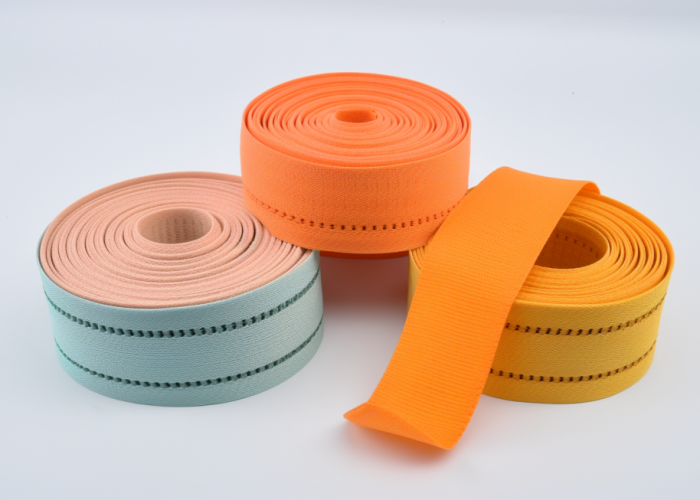
Silicone grippers improve waistband stability by increasing surface friction, reducing slippage and rolling in low-rise underwear, shapewear, and high-movement garments. This functional enhancement is critical in applications where traditional waistband heights lack anchoring effectiveness.
Silicone can be applied in dots, stripes, or continuous beads to the inner waistband during finishing. Testing shows these additions reduce waistband movement by 60–75%, with dot patterns offering the best comfort-to-grip ratio. Continuous stripes provide firmer hold but may leave skin impressions in sensitive users.
Key manufacturing factors include medical-grade silicone selection, curing temperature, and adhesion method. High-grade silicones retain grip through 100+ wash cycles, while lower-cost variants lose adhesion after 20–30 washes. Proper surface preparation and bonding techniques are essential for long-term durability.
Beyond function, silicone applications can be custom-colored or patterned, offering both grip and branding benefits. This opens opportunities for differentiation in premium product lines, adding both visual appeal and utility.
Design Takeaway: Use silicone grippers for performance-enhancing waistbands in activewear and shapewear. Prioritize medical-grade silicone and validated bonding processes to ensure wash durability and comfort over the product lifecycle.
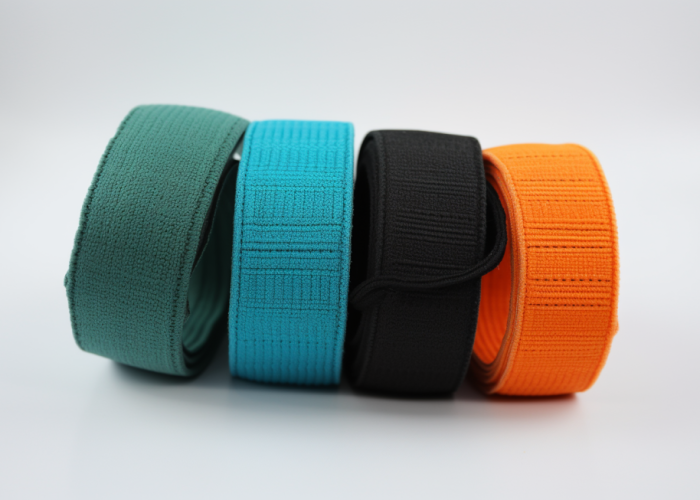
Spandex-blended synthetic materials with knitted structures provide optimal underwear waistband performance, delivering superior stretch, recovery, and durability. Polyester-spandex combinations offer the best balance of cost-effectiveness and wash resistance for most applications. Contact us to explore manufacturing solutions tailored to your underwear waistband requirements.
Custom underwear waistband webbing typically requires 3,000-10,000 meter minimums for specialized blends like nylon-polyester-spandex combinations. Silicone gripper integration or jacquard patterns increase minimums to 5,000+ meters due to specialized manufacturing setup and material sourcing requirements for intimate apparel applications.
Brief styles require 150-200% stretch capacity, boxer briefs need 200-250%, and shapewear demands 250-300% with 90%+ recovery. From our manufacturing experience, brands testing below these ranges experience customer complaints about restriction, while excessive stretch causes rolling and loss of support during wear.
Organic cotton-spandex blends achieve 70-80% recovery versus 90-95% for polyester-spandex combinations, requiring 25% spandex content compared to 15-20% for synthetics. We’ve manufactured both options – cotton works for eco-conscious brands accepting 30-40% shorter lifespan and higher material costs.
OEKO-TEX Standard 100 Class I (baby/skin contact) certification is essential for intimate apparel waistbands. Testing covers 100+ harmful substances including formaldehyde, heavy metals, and banned dyes. European markets require additional REACH compliance, while US brands often specify CPSIA lead testing for comprehensive safety validation.
Wider webbing (30-40mm) distributes pressure better and reduces rolling but requires 15-20% higher stretch capacity. Manufacturing costs increase approximately 25-30% for widths above 35mm due to specialized knitting equipment requirements. We recommend 25-30mm width for optimal comfort-cost balance in most underwear applications.
Common scaling challenges include stretch consistency (±5% tolerance), silicone grip adhesion failures, and color matching across production lots. From our production experience, implementing pre-stretch testing at 200% elongation and recovery validation prevents 80% of quality issues during high-volume manufacturing runs.
We will contact you within 1 working day, please pay attention to the email with the suffix “@anmyda.com”.