
Choosing the right webbing material for jacquard logos looks simple at first — nylon or polyester. But in real projects, this is where many issues start. The same logo can look sharp on one material and slightly soft or inconsistent on another, even with the same design and colors.
Polyester usually holds jacquard logos clearer and more stable, while nylon tends to look slightly softer but offers better flexibility and feel.
The difference shows up after sampling and even more during production and real use. Logos can lose definition, stretch unevenly, or wear differently depending on the material. The sections below break down how each material behaves — and how to choose the right one based on your product, not just the artwork.
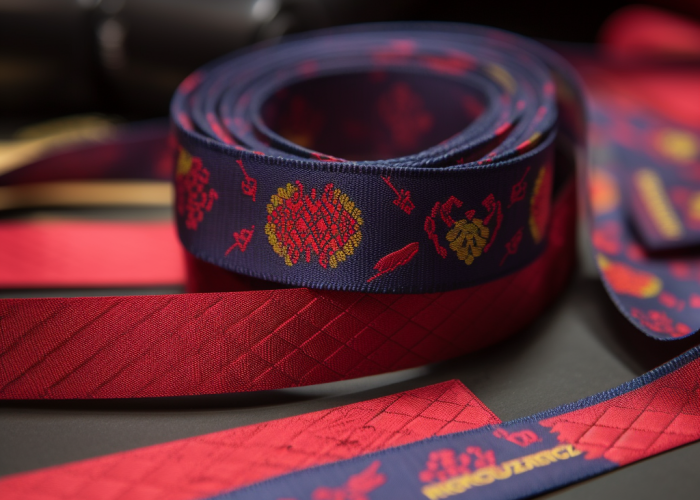

Webbing manufacturing expert with 15+ years of experience helping product developers build high-performance straps for industrial, medical, and outdoor use.
There’s no single “best” material—polyester holds jacquard logos clearer and more stable, while nylon feels softer and more flexible but shows less definition on fine details.
In our sampling stage, both materials can look acceptable with the same artwork. The difference starts showing when preparing for production. Polyester holds yarns more tightly, so edges stay cleaner and shapes remain defined. Nylon has a softer structure, so edges tend to soften slightly, especially on thin lines or small text. This isn’t a defect—it’s how the material behaves.
Most failures we see happen when moving into production. When running 200–300 meters continuously, nylon logos that looked sharp in sampling begin to lose edge definition, and small details become less consistent across rolls. Polyester holds closer to the original look, which makes it more reliable for branding.
If your logo relies on fine edges or small details, nylon is usually the wrong choice. Polyester is the safer option for clarity.
If branding is critical, start with polyester. If using nylon, simplify the logo and ask your supplier to compare both materials with the same design before sampling.
A good jacquard logo stays clear, stable, and consistent across the full production run, not just in a clean sample.
Most teams judge too early. A short sample almost always looks better than what you’ll get in production. It’s made slower, with more adjustment, so small issues don’t show. That’s why many designs get approved when they’re already close to failing.
This is where things start going wrong. Once production runs 200–300 meters continuously, weak points show up. Edges soften slightly, small gaps begin closing, and fine details don’t hold the same way from start to finish. You may not notice it on one piece, but across rolls, the inconsistency becomes obvious.
We see this a lot with branding-focused products. The logo looks sharp in the sample, but once used on bags or straps, it doesn’t read as clearly anymore. Decorative designs can tolerate this. Branding cannot.
A good jacquard result is not the sharpest version—it’s the one that holds under real production conditions.
Before approving, don’t just look at one sample section. Ask if the same result can be maintained across a full run. If that answer is unclear, simplify the design or adjust the material before moving forward.
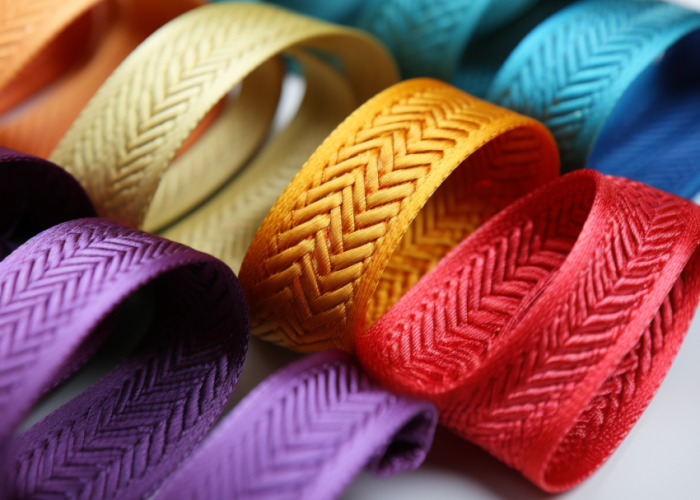
Polyester keeps jacquard logos sharper and more defined, while nylon tends to soften edges—especially once the design includes fine details.
At first glance, both materials can look similar. This is why many teams assume the choice doesn’t matter. But once the logo includes small text, tight shapes, or high contrast edges, the difference starts to show. Polyester holds the structure tighter, so edges stay clean. Nylon allows slight movement, which softens those edges.
This is where people get misled. The sample looks acceptable, so they move forward. Then production runs 200–300 meters, and the logo starts looking different. Edges are no longer as crisp, and small details don’t hold consistently across the batch. Polyester stays closer to the original design, while nylon begins to drift slightly.
For decorative use, this is usually fine. For branding, it becomes a problem quickly—because logos need to be read clearly, not inspected closely.
If the design depends on sharp edges or fine detail, polyester is the safer choice. Nylon works better when feel matters more than precision.
If you’re unsure, test both materials with the same logo. If nylon already looks softer in sampling, it will be more obvious in production.
Send it over. We’ll tell you if the material will cause clarity or distortion issues before sampling.
Jacquard logos look softer on nylon because the material allows slight movement in the yarn structure, which reduces edge sharpness.
Think of it this way: nylon is more flexible, so it feels better in hand—but that flexibility also means the yarns don’t lock as tightly in place. When forming shapes, especially small ones, edges don’t stay as crisp as they would on polyester. Instead, they appear slightly rounded.
This usually doesn’t raise concern during sampling. A short piece can still look clean, especially under controlled conditions. But once production starts running continuously, the difference becomes consistent. After a few hundred meters, edges begin to look less defined, and small details lose precision across the batch.
This is where expectations break. Many teams expect the sample result to hold exactly, but the material behavior becomes more visible at scale.
For decorative webbing, this softer look can work. It can even feel more natural. But for branding, it reduces clarity and impact, especially when viewed at normal distance.
If your logo relies on sharp edges or small text, nylon is usually not the right choice. If nylon is required, simplify the design early—because this softness cannot be fixed later.
Polyester keeps jacquard logos more defined when the design depends on sharp edges, small details, or strong contrast for branding visibility.
You’ll notice this most when comparing materials side by side. Polyester holds the yarn structure tighter, so edges stay cleaner and shapes don’t “bleed” into each other. Nylon can still show the same design, but it tends to look slightly softer, especially where details are tight or spacing is limited.
Most failures we see happen when logos are approved on nylon because the sample “looks good enough.” Once production starts running 200–300 meters, that small softness becomes consistent. Edges are no longer as crisp, and across rolls, the logo starts to feel less precise. It’s not a defect—it’s the material showing its behavior at scale.
Then it becomes more obvious in real use. On products like pet leashes or bags, where branding is seen quickly, polyester logos remain readable. Nylon versions may still look fine up close, but lose impact from a distance.
For decorative use, this difference may not matter. For branding, it does.
If the logo needs to be recognized quickly—not inspected—polyester is usually the safer choice. If the sample already looks slightly soft on nylon, expect that gap to increase in production.
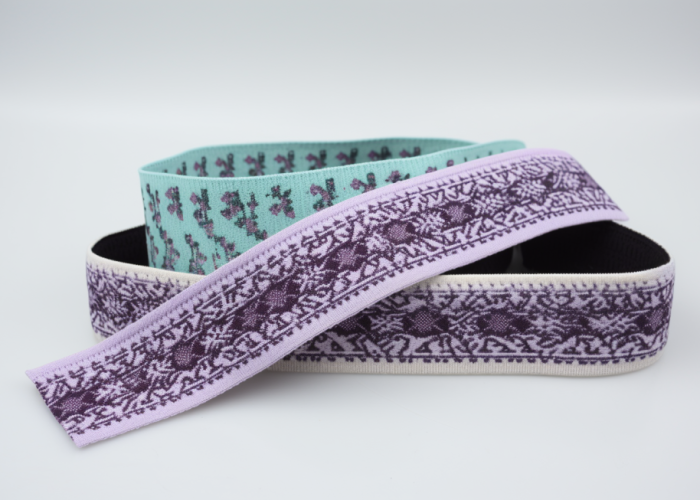
Jacquard logos on polyester stay more stable over time, while nylon logos gradually lose edge definition with repeated use.
This doesn’t show up immediately, which is why it often gets missed. Both materials can pass sampling and even initial inspection. But once the product goes into real use—bending, pulling, and handling repeatedly—the difference becomes visible.
Most failures we see happen after repeated use cycles. Nylon fibers relax slightly over time, which affects how tightly the woven structure holds the logo. Edges begin to soften, and small details look less defined compared to the original sample. Polyester holds its structure better, so the logo stays closer to its original appearance.
This is especially noticeable on products used daily. A logo that looked sharp at delivery can start looking less precise after regular use, particularly on nylon webbing.
For decorative straps, this gradual change may be acceptable. For branding, it creates inconsistency between new and used products.
If long-term appearance matters, polyester is the safer choice. If using nylon, avoid designs that rely on fine detail staying sharp after repeated bending and tension cycles.
Stretch affects jacquard logos by pulling the woven structure, which can distort shapes and reduce clarity under load.
Even standard webbing stretches slightly during use. When tension is applied, yarns shift, spacing changes, and the logo stretches along with the material. This affects how the design looks—not just in shape, but in sharpness.
Nylon reacts more to this than polyester. Because it’s more flexible, it stretches more under load, which makes logos appear slightly elongated and edges less defined. Polyester resists this better, so the logo stays more consistent between relaxed and tension states.
This is where many designs fail. Logos are usually evaluated flat, but not checked under load. In real use—like pet leashes or straps under tension—the logo can look different depending on how the product is used.
Most failures we see happen when this difference is ignored. The logo looks fine when relaxed, but stretched, it becomes harder to read or slightly distorted.
If the product will be under regular tension, always check how the logo looks when stretched. Polyester gives more stability, while nylon requires simpler designs to stay readable under load.
We’ll point out the risk and what to fix—before you waste time on revisions or samples.
On elastic webbing, jacquard logos stretch, compress, and recover constantly—so the design is never static during use.
This is very different from standard webbing. The logo is always moving with the material. When stretched, shapes elongate and spacing increases. When relaxed, the design returns—but not always perfectly, especially after repeated cycles.
Most failures we see happen when a normal jacquard design is applied directly to elastic webbing. The sample may look fine when flat, but once used, the logo stretches out and becomes harder to read. Small details disappear, and spacing becomes uneven.
This gap between flat sample and real use is where most mistakes happen. Designers approve based on how it looks on the table, not how it behaves in motion.
Over time, repeated stretching also affects consistency. Logos may not return to the exact same shape after many cycles, which impacts appearance.
Material choice matters, but design matters more here.
If using elastic webbing, design for movement—not for a static logo. Keep shapes simple, allow spacing, and always review the logo under stretch before approving production.
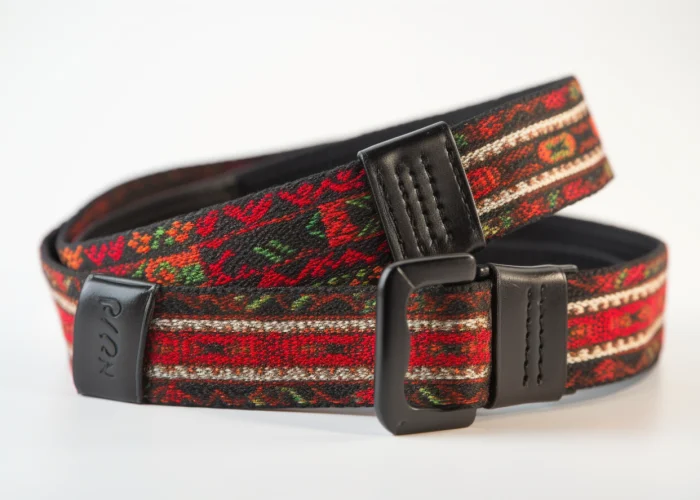
Yes—jacquard logos typically distort more on elastic nylon than elastic polyester, because nylon stretches more and recovers less consistently over time.
At first, both can look acceptable. In a relaxed state, the logo appears clean, and this is where many teams stop checking. But elastic webbing isn’t used flat—it’s used under stretch. Once tension is applied, the difference becomes clear.
Nylon stretches more easily, so logos elongate more under load. Small shapes widen, spacing increases, and edges lose definition. Polyester elastic resists this slightly better, so distortion is still there—but more controlled.
Most failures we see happen when this isn’t tested early. A logo is approved based on a flat sample, then in actual use—like straps worn or pulled—the design becomes harder to read. Over time, repeated stretching makes this worse. Nylon may not fully return to its original shape, so the logo gradually looks less consistent.
For decorative use, this may be acceptable. For branding, especially where readability matters, it becomes a problem.
If using elastic nylon, simplify the design and allow more spacing. If clarity under stretch matters, polyester elastic is usually the safer option—but always test the logo under real tension before approval.
Nylon is the better choice when comfort, flexibility, or hand feel matters more than sharp logo definition.
This usually comes up in products that are handled often—pet leashes, wearable straps, or anything that touches skin. Nylon feels softer and more flexible, which improves user experience. Polyester can feel stiffer in comparison.
Where people go wrong is expecting nylon to deliver the same visual sharpness as polyester. It won’t. Logos on nylon tend to look slightly softer, especially if the design includes fine details or tight edges. This is not a production issue—it’s material behavior.
Most failures we see happen when branding expectations are too high for nylon. The sample may look acceptable, but once the product is in use, the logo doesn’t stand out as clearly as expected. This becomes more noticeable under tension or after repeated use.
That said, nylon works well for simpler designs. Bold shapes, larger elements, and clear spacing hold much better.
So the decision is not about “good or bad”—it’s about fit.
If the product is touch-driven and comfort matters, nylon is a strong choice. But adjust the logo—keep it simple and avoid fine details, or you’ll lose clarity in real use.
Polyester is the better choice when logo clarity, consistency, and long-term appearance matter more than softness.
This is why most branding-focused products use polyester. It holds yarns tighter, so edges stay clean and shapes remain defined. Logos are easier to read, especially from a distance or at a quick glance.
Where this becomes critical is in production and use. Polyester maintains consistency across long runs, so the logo looks the same from start to finish. It also holds its structure better over time, so the appearance doesn’t change as quickly with repeated use.
Most failures we see happen when polyester is avoided for cost or feel reasons, but the design still requires high clarity. Teams switch to nylon but keep the same detailed logo—and then find the result doesn’t match expectations.
Polyester is less forgiving in feel, but more reliable visually.
For decorative webbing, the difference may not matter. For branding, it usually does—especially when logos need to be recognized quickly.
If the logo must stay sharp and consistent across production and use, polyester is the safer choice. If switching away from polyester, adjust the design—not just the material.
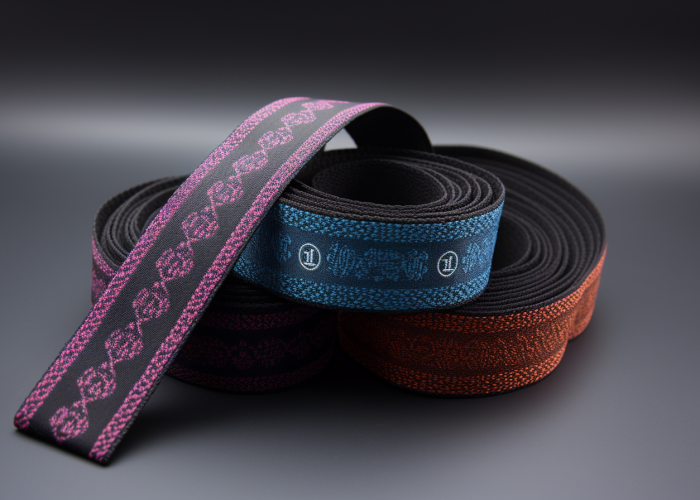
Using the wrong webbing material leads to logos that look fine in sampling but fail in production or real use.
This usually doesn’t show up immediately. The sample looks acceptable, so everything moves forward. But once production starts—or worse, once the product is in use—the problems appear.
Most common issue is loss of clarity. Logos that looked sharp become softer, especially on nylon with detailed designs. Small text becomes harder to read, edges lose definition, and the overall look feels less precise.
Another issue is inconsistency. Across longer production runs, logos may not look exactly the same from roll to roll. This creates problems for branding, especially when products are compared side by side.
Then there’s performance under use. On elastic or stretch-heavy applications, logos distort, spacing changes, and details become harder to recognize.
Most failures we see come from treating material choice as a secondary decision. It’s not. The same design behaves very differently depending on the material.
If the material doesn’t match the design requirements, the result won’t hold—no matter how good the sample looks. Always match material to logo complexity and product use before approving production.
Jacquard logos don’t fail because of weaving—they fail because the material and design don’t match. Polyester gives clarity, nylon gives comfort. If you push detail on the wrong material, it won’t hold in production or use. Make the decision early, or fix it later at a higher cost.
Yes. Thicker webbing can make logos look slightly bulkier and less crisp, especially on detailed designs. Thinner constructions usually give cleaner visual results.
Not always. For highly detailed or multi-color logos, printing often gives better clarity than jacquard on nylon.
Yes. Always check logos under tension, bending, or wear conditions. Flat samples don’t reveal how the logo behaves in actual use.
Yes. Coatings like silicone or anti-slip backing can slightly compress or change how the webbing sits, which may affect how the logo appears.
Not always. The same design can look sharper on polyester and softer on nylon. Adjustments are usually needed to maintain clarity across materials.
Yes. Polyester holds shape and color better under UV and washing. Nylon may soften visually over time, especially with frequent use and exposure.
We will contact you within 1 working day, please pay attention to the email with the suffix “@anmyda.com”.