
Lanyard webbing shouldn’t be hard to quote — but once your spec gets rejected, the project stalls, deadlines compress, and every supplier gives you a different explanation. Most rejections aren’t about your idea being wrong. They happen because critical details in the spec don’t match real manufacturing limits, testing requirements, or available material constructions.
Your lanyard webbing specification is rejected because its strength, width, material, or durability requirements fall outside what standard webbing mills can safely produce or certify. Suppliers decline specs that can’t meet load testing, weave constraints, coating compatibility, or MOQ limits.
Read on — each section shows the exact supplier limitations behind these rejections, what to fix in your spec, and when switching to a specialist saves your deadline and safety compliance.
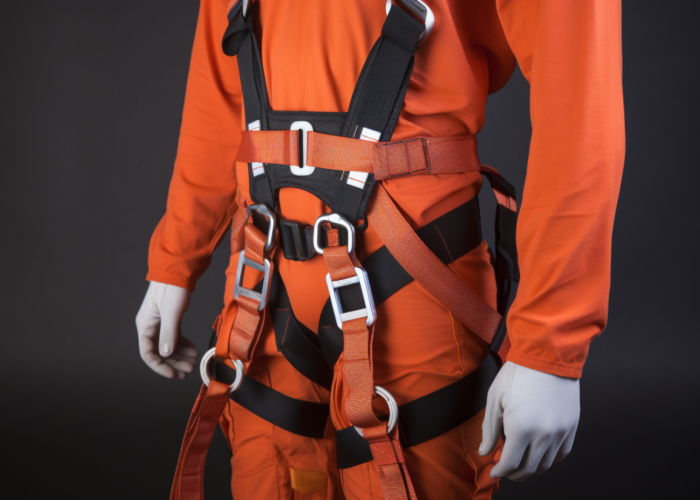

Webbing manufacturing expert with 15+ years of experience helping product developers build high-performance straps for industrial, medical, and outdoor use.
Your lanyard webbing spec gets rejected when key details make it impossible to weave, stitch, or certify consistently at production scale. Most rejections come from missing tolerances, incompatible material-strength combinations, or a construction request that standard looms simply can’t achieve.
Many engineers assume their spec is clear, but small gaps—like not defining minimum breaking strength, calling out a width no supplier has tooling for, or requesting coatings that don’t bond to the chosen yarn—immediately trigger a “not manufacturable” response. General suppliers also reject specs with safety-critical elements because they lack the testing equipment to guarantee repeatable performance.
When we review a rejected spec, the first step is checking whether the design can realistically run on available looms and whether the requested performance aligns with the material. If the issue is construction, we adjust weave density or yarn selection to meet the functional requirement. If the issue is strength, we calculate whether the load path, thickness, and stitching pattern can actually achieve your requirement. If the issue is coating or colorfastness, we match the request to finishes proven to bond reliably.
Design takeaway: A spec becomes “acceptable” when it matches real loom capabilities, material behavior, and certifiable strength paths. Tighten these three areas before resubmitting your RFQ, and you’ll avoid 90% of automatic rejections.
Breaking-strength specs get rejected when the load requirement exceeds what the requested width, weave, yarn type, or safety factor can realistically deliver in production.
Most engineers only see the final number they need to hit—15kN, 22kN, 28kN, etc.—but suppliers see the chain of constraints behind it. A narrow width can’t physically achieve a high kN rating without moving to a thicker yarn, a lower-elongation weave, or a wider construction. And if the spec requires special coatings, flame retardants, or colorfast dyes, these can further reduce strength and trigger another rejection.
A more reliable process is to share the load case first: static, dynamic, fall-arrest, or cyclic fatigue. That lets a manufacturer match the strength requirement with feasible width, denier, weave density, and finishing methods—rather than trying to force an over-stressed spec into an under-sized strap.
Design takeaway: Confirm strength, width, cycle loading, and finishing are aligned before sending your RFQ—so your next quote comes back approved instead of declined.
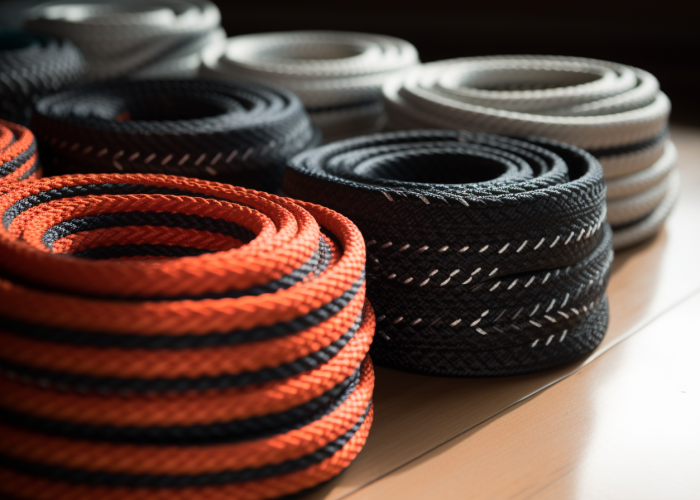
A webbing width becomes “not manufacturable” when the loom cannot hold that width stable, or when the specified strength, elongation, or edge profile cannot be achieved within that dimension.
Narrow widths (8–15 mm) struggle with high breaking strength or low elongation because they cannot carry enough yarn bundles. Ultra-wide widths (55–65 mm and above) get rejected when the loom cannot stabilize the edges or maintain consistent pick density. And if the spec includes strict edge-softness, integrated loops, or reflective tracers, some widths simply cannot support those constructions without distortion.
Teams that avoid this issue start by defining function (load, stiffness, MBS, edge type) and allow the width to flex within a manufacturable range. From there, the manufacturer can propose the closest stable width—often saving weeks of back-and-forth.
Design takeaway: Treat width as a performance outcome, not a fixed assumption. Matching it to load, weave, and loom capability eliminates most “not manufacturable” rejections.
Upload your lanyard spec for a fast feasibility review—catch hidden issues before quoting delays
UV- or chemical-resistant lanyard specs get rejected when the required resistance level exceeds what the chosen fiber or coating system can deliver without compromising strength, colorfastness, or manufacturability.
Most suppliers decline these RFQs because the spec mixes incompatible requirements—for example:
Or the spec may demand marine-grade UV resistance plus very low elongation, which requires fibers and coatings that cannot coexist in the same construction.
Teams that consistently get approvals share the exact exposure environment—sun, salt, chlorine, sweat, oils, solvents, or industrial chemicals—so the manufacturer can match fiber + coating combinations that genuinely survive that setting.
Design takeaway: UV and chemical resistance are material-system choices, not add-ons. Define the environment first, and the right fiber/coating pair becomes clear.
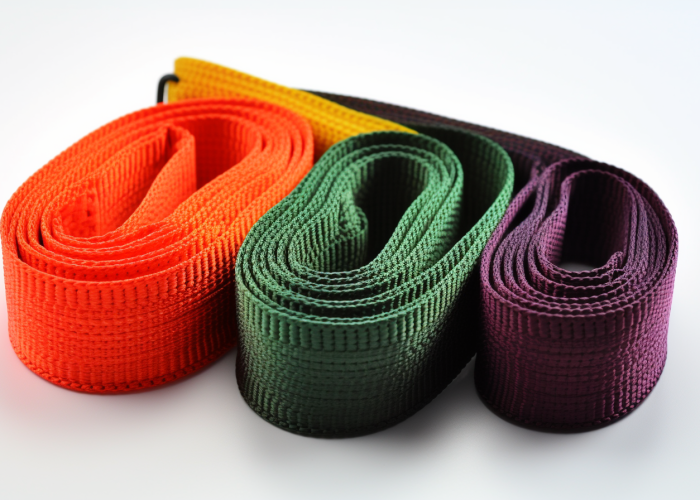
Low-MOQ safety lanyard orders are often rejected because the required testing, setup, and certification steps cost more than the small batch itself. Safety-rated webbing—especially anything for fall-arrest, restraint, or load-bearing use—requires yarn qualification, loom setup, finishing calibration, and destructive testing before the first usable meter is produced.
For a small run, a supplier still has to commit to full tensile tests, batch traceability, and stitch-pattern qualification. Those steps don’t shrink just because the order quantity is small. This is why some suppliers insist on minimums or decline entirely—they simply cannot amortize the required quality-control workload across only a few pieces.
Teams that handle low-volume safety production typically standardise their strongest performing constructions, so the initial development work is already done. If your spec sits far outside these standards—unique widths, special coatings, or custom colours—the supplier may decline not because it’s impossible, but because the setup cost would exceed the batch value.
What helps: share intended load, certification needs, and whether you can begin with an off-the-shelf construction. Many safety engineers start this way, validate performance, then customise once loads and fit-ups are proven.
Fall-arrest webbing quotes vary widely because suppliers interpret your safety requirements differently—especially the target breaking strength, required certification level, environmental exposure, and stitching geometry. A webbing built to hold 18kN in a dry lab test is very different from one intended to survive repeated UV cycles, sweat, oils, or saltwater while maintaining that same rating.
Another major driver is construction choice. Two identical-looking lanyards may use different yarn grades (standard polyester vs. high-tenacity vs. solution-dyed), different loom densities, or different edge bindings—all of which dramatically shift cost. Stitching patterns are an equally large variable: bartack count, thread type, and pattern geometry can swing labour cost by 30–50%.
Pricing also changes when suppliers include full compliance testing while others quote only the webbing without stitch qualification. Some quotes include dynamic testing; some don’t. Some quote based on long-term production; others quote sample-only pricing. This mismatch—rather than the material itself—creates the wide price gap engineers see.
What helps: clarify breaking strength method (minimum vs. average), environmental requirements, stitching expectations, and whether you need certification or only functional testing. Once those are standardised, quotes cluster tightly.
After a lanyard webbing rejection, the fastest next step is to verify exactly which part of the spec failed—width, strength, construction, coating, stitching, or certification. Most engineers discover that the rejection wasn’t about the overall design but a single element the original supplier couldn’t manufacture or certify.
Check whether your spec requires equipment the supplier doesn’t own (e.g., jacquard looms, wider shuttle looms, hot-melt coating, solution-dyed yarns, ultra-high-tenacity polyester, or specialised bartack capability). If so, the design may still be valid—it just needs a shop with the right setup.
Next, confirm the constraints:
Once each point is isolated, you can decide whether to revise the spec slightly (width, yarn grade, coating type) or send the same requirements to a shop with matching capabilities. Most rejected lanyard projects are resolved by adjusting one variable—not by redesigning the full assembly.
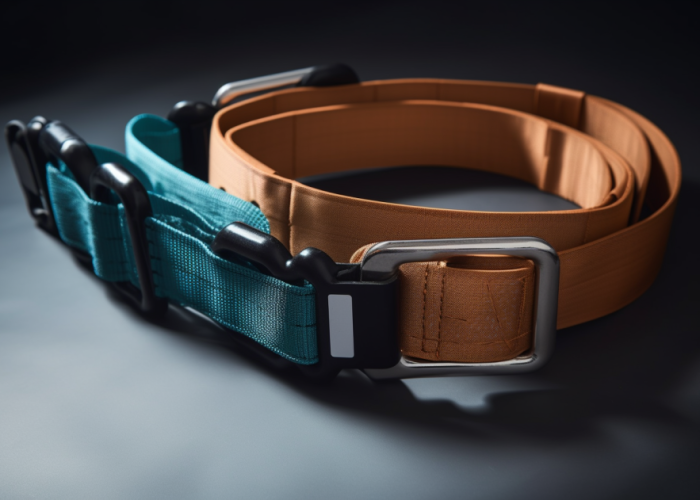
You should confirm three things before sending a webbing RFQ: the load path, the failure mode you need to prevent, and the specific test standard the strap must pass.
These three items determine every manufacturability decision a supplier will make—webbing width, fibre type, coatings, sewing patterns, and MOQ feasibility.
Most rejections happen because buyers send only a “final” spec (width + strength) without explaining the intended use. When the function is unclear, suppliers must guess, and they reject to avoid liability—especially for safety categories like lanyards, tool tethers, and fall-arrest components.
Experienced manufacturers first look for:
If any of these are missing, the quote is high-risk—and most suppliers decline.
Design takeaway: Before sending your RFQ, attach function, load path, test standard, and environment. A clear RFQ gets accepted faster and prevents unnecessary rejections.
Send your load requirements and we’ll confirm matching webbing, construction, and stitching options
Yes—most lanyard and safety-webbing deadlines can still be met if the issue is identified early and the spec is corrected rather than rebuilt.
In most cases, the rejection comes from one of three fixable gaps: incorrect breaking strength, incompatible width, or missing validation details.
Deadlines slip when buyers try to force the supplier to accept the original spec instead of adjusting the design. A small change—such as switching from 21 mm to 25 mm, or from standard polyester to high-tenacity—often restores manufacturability without changing overall performance.
Fast-moving manufacturers typically:
This avoids restarting the entire sourcing cycle.
Design takeaway: If you act immediately and correct the limiting parameter, your project timeline can still hold—even after a rejection.
A rejected lanyard webbing spec can usually be reviewed within 24–48 hours when all functional details are provided.
What slows reviews is not the complexity of the strap—it’s the lack of load, environment, and test data. Without that, even skilled engineers can’t confirm whether the failure risk is strength-related, width-related, or stitch-related.
A quick review typically checks:
When these parameters are defined, an experienced manufacturer can quickly tell whether the original spec is feasible or needs a small adjustment.
Design takeaway: Provide intended use + load + testing method, and your rejected spec can usually be evaluated within two days.
You should get a second opinion when a supplier rejects your lanyard webbing spec without explaining why or offering alternatives. Clear, specific reasons are a basic expectation—when they’re missing, it usually means the shop is avoiding risk, not your design is impossible.
Most rejections happen because the first supplier works within narrow material, loom, or coating constraints. If they cannot weave that width, cannot hit that breaking strength, or cannot source a yarn that meets your UV or chemical target, the default answer becomes “not manufacturable.” A second manufacturer with broader tooling, access to different yarn suppliers, or more experience in safety-critical builds may find the exact same spec completely workable.
A second review is especially useful when:
A short, technical re-evaluation often reveals adjustment options that keep your original intent intact—sometimes as simple as shifting the weave density, selecting a different denier, or adjusting allowable tolerance.
Revise the spec when the performance target is valid but the exact dimensions or materials are too restrictive for most looms. Switch suppliers when the design is fully justified and the rejection comes from production limitations rather than true feasibility.
Not every “no-quote” means your design is wrong. Many refusals happen because a shop is set up for apparel-grade webbing, mass-market polyester straps, or fixed widths that don’t match safety or industrial requirements. In those cases, changing suppliers is the logical move—your spec isn’t the problem; their equipment range is.
But when the rejection is tied to a genuine engineering constraint—such as insufficient elongation margin for fall-arrest, unrealistic breaking strength per millimetre, or incompatible chemical-resistant coatings—then revision is the fastest path forward. These adjustments don’t weaken your safety targets; they realign them with what’s achievable across industrial-grade looms and yarn systems.
A practical approach is:
This helps you avoid unnecessary redesign while ensuring your project stays on schedule.
Lanyard webbing rejections usually trace back to mismatched specs, limited supplier capability, or missing test requirements. With clearer drawings, realistic performance ranges, and early manufacturability checks, most issues can be resolved quickly. Tight timelines are still achievable when the spec is reviewed early and corrected before re-quoting.
It can—if the yarn is certified and tested. Recycled PET meeting GRS or equivalent standards can achieve comparable strength to virgin polyester, but every lot must verify breaking strength, elongation, UV resistance, and dimensional stability. Some mills limit recycled content in fall-arrest applications because safety factors must remain extremely high.
Most mills hold ±0.10–0.20 mm on thickness for standard polyester or nylon lanyard webbing. Thicker safety webbing (≥2.5 mm) may vary slightly more due to loom tension and yarn bulk variation. If a project requires tighter control, mills stabilize the weave using tension adjustments, heat-setting, or denser picks.
Yes. Some mills weave lanyard webbing using inherently flame-retardant fibres such as modacrylic or aramid blends. These do not rely on post-treatments and maintain performance better after washing or outdoor exposure. Coating-based FR treatments work too, but they can stiffen the webbing or degrade with repeated flexing.
Slight shade variation happens when dye baths shift in temperature, pH, or yarn tension. Solution-dyed yarn avoids this entirely because the colour is embedded in the fibre before weaving. For consistency-critical lanyards, mills often run colour-control swatches every few hundred meters to stabilize output.
For load-bearing lanyards, the common options are bar-tack, box-X, and multi-row zigzag stitching. Bar-tacks give the highest local strength, while box-X distributes load over a larger area and improves fatigue life. Hardware choice, tape width, and required breaking strength determine the best stitch pattern.
Because yarn selection depends on the mill’s machinery and inventory. Two suppliers can meet the same breaking strength using different denier counts, filament types, or denier combinations. As long as the final mechanical performance, stretch, and hand-feel meet your requirement, this variation is normal and acceptable.
We will contact you within 1 working day, please pay attention to the email with the suffix “@anmyda.com”.