
Heavy-use lanyard webbing wears out faster than most engineers expect — and suppliers rarely give clear service-life numbers.
Most heavy-use lanyard webbings carry a manufacturer service life of about 5 years, with some rated up to 10 years, but real-world heavy use often reduces that to roughly 3 years or less. UV, abrasion, chemicals, and daily bending can require immediate removal if inspections show cuts, glazing, or stiffness.
Read on to see which factors shorten that 3–5-year window — and how to verify supplier lifespan claims before approving your spec.

Webbing manufacturing expert with 15+ years of experience helping product developers build high-performance straps for industrial, medical, and outdoor use.
Heavy-use lanyard webbing lifespan is determined by mechanical stress, environmental exposure, and material construction. Load cycles, bending, hardware abrasion, UV, moisture, chemicals, weave density, and coating durability decide how quickly the webbing loses safe working strength.
Most premature failures happen because suppliers only provide new-condition break strength and avoid long-term degradation testing. When a supplier doesn’t measure abrasion loss, UV retention, or coating breakdown, their “expected lifespan” becomes guesswork — and engineers discover the truth only when field failures appear.
Heavy-use lifespan becomes predictable only when a supplier can show how the webbing performs after stress, not before:
Without this data, any lifespan estimate is optimistic by default.
Specification Takeaway (Strong & Direct):
Never approve lanyard webbing without degradation data. Break strength alone is meaningless for heavy-use applications. Demand abrasion cycles, UV retention, and coating-wear results — otherwise the lifespan estimate cannot be trusted.
Higher usage frequency shortens lanyard webbing lifespan by accelerating fiber fatigue, bending damage, and abrasion at hardware contact points. Daily or multi-shift use degrades strength far faster than occasional use, even at the same workload.
Each use compresses, stretches, and bends the fibers, creating internal damage that isn’t visible early on. High-cycle wear flattens the webbing, stiffens the edges, and scrapes coatings off faster — dramatically speeding up degradation.
The problem: most suppliers only test a single pull to failure, so their “should last X years” estimate collapses as soon as the webbing enters a high-frequency workflow.
For applications involving daily connection, repositioning, or load-bearing cycles, cycle-fatigue data becomes more important than new-condition strength. If a supplier cannot show strength retention after repetitive loading, they cannot accurately predict lifespan under real use.
Specification Takeaway (Strong & Direct):
Do not rely on static break strength for heavy-use applications. Require cycle-fatigue testing (e.g., 500–1,000 load/bend cycles) before approving material. Suppliers that can’t provide it will always underestimate lifespan loss.
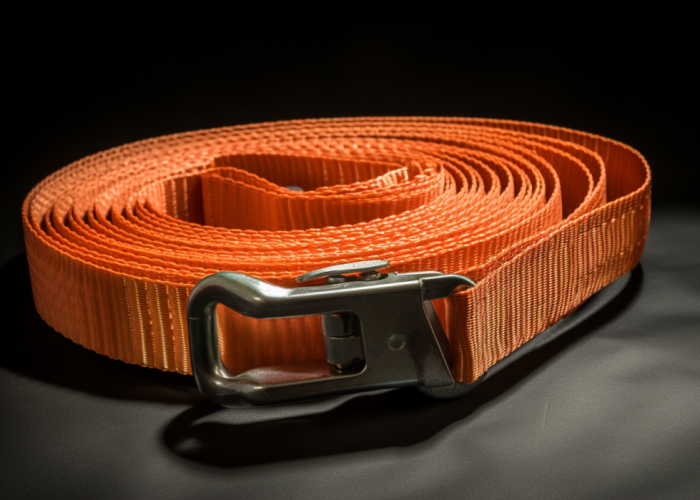
Yes — repeated bending weakens lanyard webbing quickly by breaking internal fibers and reducing strength at fold points. Daily flexing concentrates stress on the same small radius, which causes early stiffness, flattening, and fiber cracking long before the webbing shows visible wear.
In quote-stage reviews, bending fatigue is one of the easiest failure modes to overlook — and one of the most common reasons lifespan estimates collapse. Suppliers who skip bending-fatigue testing often overpromise durability because they only provide “new condition” break strength. When a supplier cannot show how the webbing performs after repetitive folds (50, 100, or 500 cycles), their lifespan number is guesswork.
How to evaluate a supplier at quote stage:
Supplier red flags:
Specification Takeaway (Strong & Direct):
Never approve lanyard webbing without repetitive-bend data. If a supplier cannot show strength-retention after bending cycles, they cannot predict lifespan for heavy-use applications — and are likely underquoting the real requirements.
Hardware contact points wear out faster because metal edges create high-pressure friction that cuts fibers and strips coatings with every movement. This concentrated abrasion removes strength far quicker than general wear across the rest of the strap.
During quoting, many suppliers underestimate hardware abrasion because they only test against flat surfaces. But real lanyards rub against D-rings, carabiners, and adjustment buckles — all of which create micro-cutting that rapidly thins the edges. If the supplier cannot simulate metal-on-webbing abrasion, their durability estimate is not realistic for heavy-use.
How to evaluate a supplier at quote stage:
Supplier red flags:
Specification Takeaway (Strong & Direct):
If your lanyard interacts with metal hardware, require abrasion testing against the actual hardware type. Suppliers who skip metal-edge tests consistently underestimate lifespan and cause premature fraying at contact points.
Yes — constant handling degrades lanyard webbing through surface abrasion, contamination, and fiber displacement even when it is not heavily loaded. Frequent gripping, adjusting, twisting, and coiling slowly erodes the fiber surface and weakens the edges.
In quote-stage discussions, handling wear is often dismissed as “cosmetic,” which is a major sourcing risk. Oils, sweat, dust, and metal particles transferred by hands get embedded into the fibers, accelerating stiffness, glazing, and small cuts. If a supplier does not test handling abrasion or fiber-surface wear, their lifespan estimate applies only to ideal conditions — not the real environment your product will live in.
How to evaluate a supplier at quote stage:
Supplier red flags:
Specification Takeaway (Strong & Direct):
If your lanyard will be handled frequently, require surface-abrasion or handling-wear testing. Webbing doesn’t need full load to degrade — and suppliers who ignore handling wear produce lifespan estimates that fail in actual use.
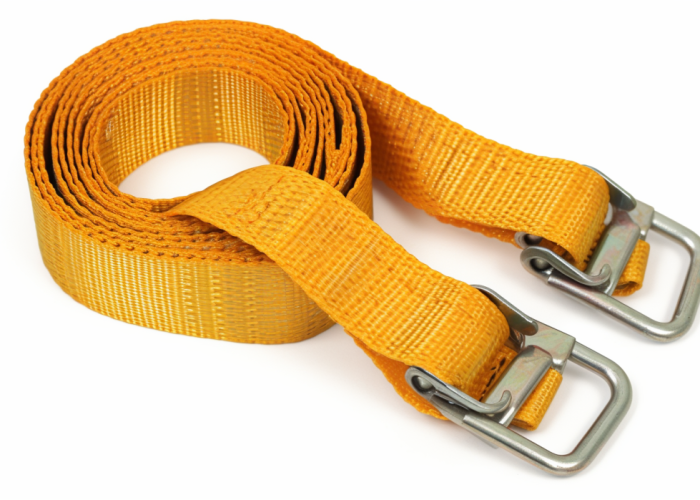
Yes — UV damage compounds with heavy-use wear because sunlight weakens fibers at the same time mechanical stress is breaking them down. When UV degradation and abrasion occur together, strength loss accelerates significantly faster than either factor alone.
In heavy-use lanyards, UV often acts invisibly at first. The fibers fade, dry out, and lose flexibility, which makes them more vulnerable to bending fatigue and hardware abrasion. By the time visible fading appears, tensile strength may already be heavily reduced. Suppliers who test UV in isolation — without combining UV + abrasion or UV + bending — often give lifespan estimates that look good on paper but collapse in field use.
For quote-stage evaluation, UV claims like “UV resistant” or “UV treated” mean nothing unless supported by strength-retention data. What matters is how much strength remains after exposure — not promotional wording.
Specification Takeaway:
If the lanyard will see sunlight daily, require UV + abrasion or UV + bending combined testing. UV alone is not a realistic indicator for heavy-use life, and suppliers who only provide standalone UV data routinely overestimate durability.
Yes — moisture accelerates wear by weakening fibers, swelling the weave, softening coatings, and increasing contamination retention. Wet or humid conditions make the webbing more vulnerable to abrasion, bending, and chemical interaction during heavy use.
Moisture exposure causes fibers to soften and stretch, which increases friction when they rub against hardware or clothing. In some materials, water creates stiffness after drying — a sign that fibers have swollen and contracted unevenly. Moisture also traps dirt and metal particles deeper into the weave, turning the webbing into its own abrasive surface over time.
Many suppliers underestimate humidity impact because they test webbing in dry, controlled environments. This is where quote-stage engineers often get misled. If your application sees sweat, rain, steam, or daily humidity swings, “dry lab” test data becomes nearly useless for predicting lifespan.
Specification Takeaway:
For humid or outdoor environments, insist on wet-condition testing or humidity-conditioned strength retention. Suppliers who only test dry webbing will give lifespan estimates that fail the moment the product enters real-world moisture cycles.
Chemicals, oils, and contaminants reduce lanyard webbing durability by breaking down fibers, weakening coatings, and increasing abrasion rates. Even small amounts of hydraulic fluid, sweat, fuel, metal dust, or cleaning agents can accelerate wear dramatically.
Chemical exposure disrupts fiber bonds and dries out coatings, which leads to cracking, stiffness, or glazing. Oils and lubricants may look harmless, but they attract grit and debris that turn the webbing into a high-friction surface. In heavy-use environments such as manufacturing lines, maintenance work, and construction sites, chemical contamination is often the real reason lifespan drops faster than expected.
During quoting, suppliers rarely test chemical interaction because it requires multiple conditioning steps. The risk is straightforward: if chemicals are present and the supplier didn’t test for them, their durability estimate does not apply to your application.
Specification Takeaway:
If your lanyard will encounter oils, fluids, sweat, dust, or cleaning chemicals, require chemical-exposure durability data. Even resistant fibers degrade under the wrong contaminants, and suppliers who skip chemical testing routinely underestimate lifespan.
Polyester usually lasts longer than nylon in heavy daily use because it resists UV, moisture, and abrasion better. Nylon performs well when conditions are dry and controlled, but it absorbs water, softens under humidity, and loses strength quickly in sunlight — all of which accelerate wear in real field environments.
At quote stage, a capable supplier should provide UV and humidity strength-retention data to justify material choice. If a supplier only shows new-condition tensile strength and recommends nylon without environmental testing, their lifespan estimate will not hold up.
If your lanyard will face sweat, moisture, sunlight, or daily handling, specify polyester and request degradation data to confirm performance.
Specification Takeaway:
Choose polyester for heavy daily use. Nylon is only suitable when conditions are dry, shaded, and controlled — and suppliers who skip environmental testing will overstate its lifespan.
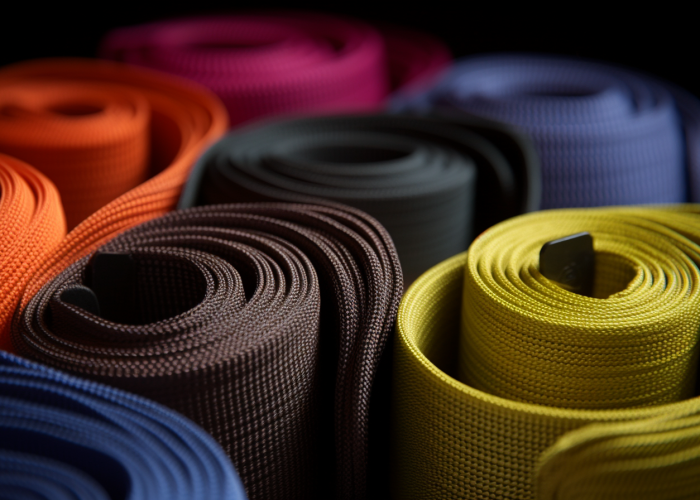
Higher weave density improves abrasion resistance because tightly packed fibers protect the structure from wear. Low-density weaves often look strong in initial tests but degrade quickly when sliding against metal hardware or bending repeatedly during daily use.
A supplier familiar with heavy-use demands should disclose weave density and provide abrasion-cycle results showing how the webbing performs after metal-on-webbing testing. If they avoid density numbers or rely solely on break strength, the weave is likely optimized for cost, not durability.
To avoid premature wear, require density documentation and evidence of abrasion performance in your quote evaluation.
Specification Takeaway:
Don’t approve heavy-use lanyard webbing without verified weave-density and abrasion-cycle data. Tensile strength alone hides how fast low-density weaves fail.
Coating durability strongly affects lifespan because once the coating breaks down, the underlying fibers wear out quickly. In heavy-use situations, coating failure usually happens before structural failure — cracking, peeling, or softening exposes the yarns to abrasion, moisture, and contaminants.
A qualified supplier should provide coating-thickness data and coating-wear results after bending and abrasion cycles. Suppliers who only claim “durable coating” without test evidence are typically using coatings optimized for appearance, not longevity.
To avoid accelerated field failure, require coating-retention data during quoting, especially if the lanyard will experience friction or chemical exposure.
Specification Takeaway:
Never rely on coating claims without durability testing. In heavy-use environments, coating breakdown is the first—and fastest—trigger for lifespan loss.
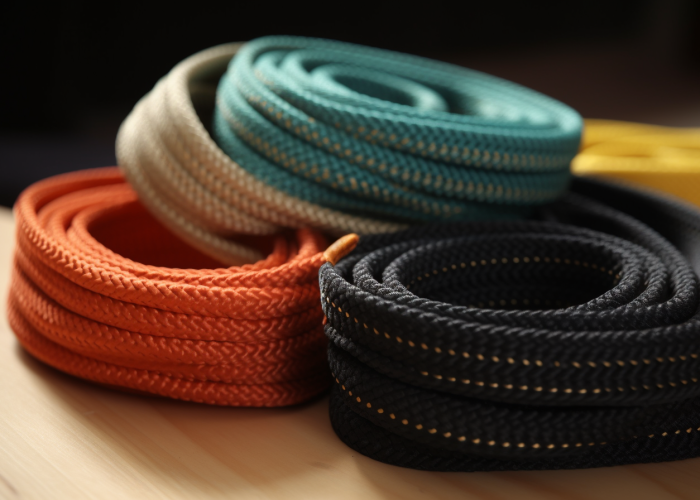
Batch variations affect heavy-use performance because small differences in yarn tension, coating thickness, or weave uniformity create major differences in how fast the webbing wears. Two batches may pass tensile tests when new, yet degrade at completely different speeds once exposed to bending, abrasion, or UV.
In sourcing, inconsistent batches usually signal that the supplier doesn’t maintain stable tension control, coating calibration, or process repeatability. A capable supplier can show consistent degradation trends across multiple runs; a weaker one can only show data from a “good batch.” If they avoid sharing cross-batch comparisons or can’t explain their process controls, you should expect unpredictable lifespan in the field.
To verify consistency during quoting, include a simple requirement in your RFQ: “Provide degradation or retention data from at least two recent production batches.” Any supplier who cannot produce this almost certainly lacks stable process control.
Specification Takeaway:
If a supplier cannot show multi-batch performance consistency, treat their lifespan estimate as unreliable. Heavy-use webbing requires proof of repeatability, not
You verify lifespan claims by asking for degradation data — not initial break strength — and checking whether the supplier tested the exact stresses your lanyard will face. Heavy-use lifespan is determined by what remains after abrasion, bending cycles, UV exposure, humidity, or chemical contact, so any meaningful claim must include strength-retention numbers, coating-wear results, or post-stress photos.
A qualified supplier can show how the webbing performs after stress, explain why certain degradation curves look the way they do, and provide testing tied to your weave, thickness, and hardware. A less capable supplier will rely on generic charts, unrelated samples, or broad phrases like “UV resistant” or “durable coating” without measurement. If they cannot produce post-stress data, their lifespan claim is only theoretical.
A clean way to evaluate this at quote stage is to ask for: “Strength-retention data after abrasion, bending, and UV exposure for this exact construction.” Suppliers who can’t provide this are not equipped to predict real lifespan.
Specification Takeaway:
Trust only lifespan claims backed by stress-retention data. If a supplier can’t show how the webbing performs after wear, their estimate should not influence your sourcing decision.
Heavy-use lanyard failures usually stem from supplier testing gaps, not design flaws. Choose suppliers who prove durability with stress-retention data, not break strength alone. Upload your specification and request degradation testing—it’s the fastest way to confirm manufacturability and get a reliable lifespan estimate
Most heavy-use lanyard webbings cannot be recycled through standard municipal systems because they contain blended fibers, coatings, or adhesives. Industrial recycling is possible only if the webbing is single-material polyester without coatings. In most cases, end-of-life disposal is the practical route.
Generally yes. Wider webbing distributes load and friction over a larger area, reducing localized stress at edges and hardware contact points. However, width alone doesn’t guarantee lifespan — weave density, material, and coating durability still matter more in heavy-use environments.
Heavy-use lanyard webbing should be visually inspected before every use and undergo a formal, documented inspection every 3 months. This aligns with common safety-equipment practices across industrial and fall-protection categories. Any signs of stiffness, glazing, fiber breaks, or coating loss should remove the lanyard from service immediately.
For heavy-use lanyards, stitched connections remain the most reliable because they maintain strength under repeated bending, moisture, and temperature changes. Ultrasonic welding and bonding can be strong initially but may degrade faster under abrasion, flexing, or chemical exposure.
Yes — gentle cleaning can slow wear by removing grit, sweat, and contaminants that accelerate abrasion. Use mild soap and water only; solvents, bleach, degreasers, and alcohol can weaken fibers or coatings. Proper drying (away from heat and sunlight) also prevents moisture-induced degradation.
Dye color doesn’t significantly affect baseline strength, but bright colors show UV fading sooner, helping engineers identify early degradation. Black often fades more slowly due to higher UV-absorber content, but its strength still decreases at similar rates unless the webbing is solution-dyed.
We will contact you within 1 working day, please pay attention to the email with the suffix “@anmyda.com”.