
Inspection schedules only become confusing when webbing ages unpredictably — usually because suppliers don’t document how their nylon or polyester reacts to UV, moisture, or chemicals.
Fall-arrest lanyard webbing must be inspected before each use/shift, and undergo a documented “competent person” inspection at least once per year, or more frequently if the environment is harsh.
Read on to see which webbing characteristics actually control inspection frequency and how to specify them so your lanyards age consistently in the field.

Webbing manufacturing expert with 15+ years of experience helping product developers build high-performance straps for industrial, medical, and outdoor use.
Inspection frequency is driven by fiber type, UV stability, weave density, coating durability, and the environment the lanyard operates in. These five variables dictate how quickly webbing loses strength, shows wear, or triggers early removal during safety checks.
The real issue is that many suppliers don’t provide aging data for these characteristics. When fiber absorption rates, UV hours, or flex-cycle behavior aren’t documented, safety teams can’t predict how the webbing will behave after six months in rotation. That’s why one batch lasts a year while another shows abrasion in month four — the material inputs were never consistent to begin with.
For predictable inspections, engineers need clarity on:
• Fiber type: Nylon vs polyester respond differently to humidity, heat, and sunlight.
• UV resistance: Determines how fast outdoor webbing loses tensile strength.
• Weave density: Controls abrasion resistance and long-term flexibility.
• Coatings & finishes: PU, PVC, and heat-set treatments age at different rates.
• Exposure conditions: Dust, oils, concrete edges, and cleaning agents accelerate wear.
When these parameters are known, inspection cycles stabilize because the webbing ages in a predictable pattern. When they’re unclear, safety managers compensate with overly frequent or inconsistent inspections.
Inspection Insight: Specify fiber type, weave density, UV rating, and coating details in your RFQ. Predictable inspection intervals only happen when material behavior is documented, not assumed.
Yes. Nylon generally requires more frequent inspection in humid or variable environments, while polyester supports more stable, predictable inspection intervals in outdoor and high-UV conditions.
Nylon absorbs moisture, which softens fibers, increases stretch under load, and accelerates abrasion when dust or grit is present. In practice, nylon lanyards used in coastal, industrial-washdown, or high-humidity settings often show early fraying or stiffness — forcing shorter inspection cycles. Nylon also loses strength faster when repeatedly wet and dried, making inspection records inconsistent unless the environment is tightly controlled.
Polyester behaves differently. It absorbs almost no moisture, maintains dimensional stability, and resists UV degradation more effectively. For outdoor fall-arrest systems, polyester typically produces steadier inspection trends — the webbing wears down at a slower, more predictable rate, even when exposed to sun, heat, and fluctuating temperatures.
The problem arises when suppliers switch fibers between batches or do not disclose the exact yarn type. This leads to field reports where two “identical” lanyards age completely differently, causing safety teams to shorten inspection intervals to stay compliant.
Inspection Insight: Choose polyester when your lanyards operate outdoors or in mixed-weather conditions. Choose nylon only for controlled environments — and request moisture-absorption and UV-aging data to avoid unpredictable inspection cycles.
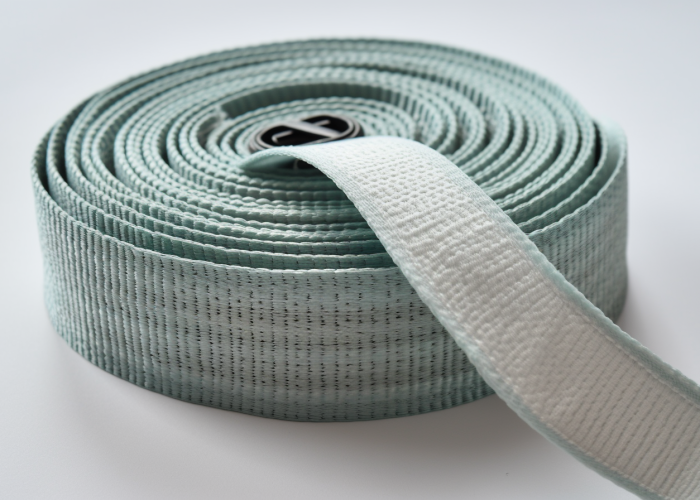
UV stabilization matters because it determines whether your outdoor lanyards age in a slow, trackable way or suddenly jump from “looks fine” to “failed inspection.” The frustrating part for most engineers is that suppliers often use the term “UV resistant” without specifying how the resistance was added — and that difference completely changes how often you need to inspect the webbing.
Solution-dyed yarns build UV protection into the fiber itself, so inspectors usually see predictable fading and wear patterns. Coated yarns behave differently: once the surface treatment rubs off at hardware contact points or edges, degradation accelerates fast, and inspections must tighten immediately. Untreated polyester will survive longer than nylon outdoors, but both can lose strength far earlier than expected if your site has constant sun exposure and high heat.
If inspection intervals on outdoor gear keep shrinking, it’s usually because the UV method wasn’t disclosed or wasn’t consistent across batches.
Inspection Insight: Ask your supplier one question: Is the UV protection built into the yarn or applied as a coating? That single detail tells you whether your outdoor inspection cycle will stay stable or collapse halfway through the lanyard’s service life.
Upload your current specs—we’ll flag hidden aging issues fast
In most fall-arrest applications, yes — high-tenacity yarns age in a way inspectors can actually track. Standard yarns tend to soften, fuzz, or lose strength unevenly, which creates inspection uncertainty. Two lanyards bought at the same time may age at completely different rates simply because the fiber consistency and twist quality weren’t tightly controlled.
High-tenacity yarns hold their structure better, especially around hardware, stitching transitions, and edge contact points. That means wear shows up gradually instead of all at once. Inspectors see early clues — slight flattening, small abrasion marks — instead of sudden weak spots that force immediate removal from service. For safety teams, that predictability is more valuable than the extra strength on paper.
If your inspection reports often say “unexpected fraying” or “uneven wear,” that’s a sign your current supplier is mixing fiber grades or using standard yarns with inconsistent finishing.
Inspection Insight: When you want inspections to remain consistent month to month, specify high-tenacity yarns. They don’t just perform better — they age in a way that gives inspectors reliable, early warning signals.
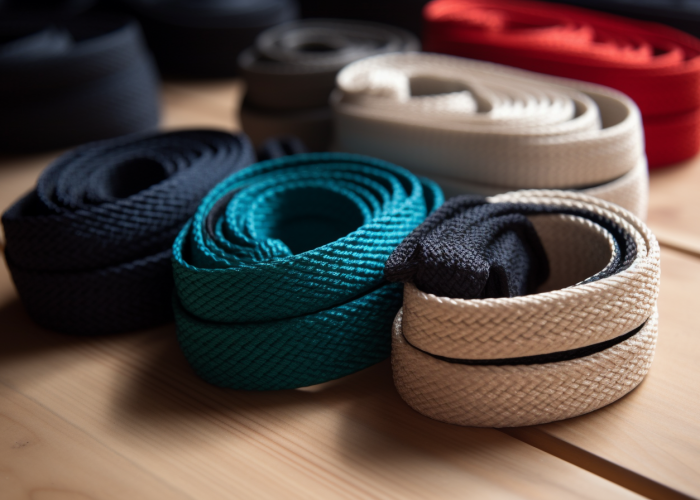
Outdoor UV exposure shortens inspection intervals because it accelerates every degradation mode at once — fading, stiffness, fiber brittleness, and wear at hardware contact points. But the real challenge for safety teams isn’t UV itself; it’s the inconsistent way UV damage shows up across different parts of the same lanyard.
The outer face may bleach first, while the edges stiffen, and the stitch lines weaken long before the main webbing looks compromised. This uneven aging forces inspectors to check more frequently, because they can’t rely on a single wear indicator. Storage practices add another layer of unpredictability: lanyards left in truck cabs or hung in direct sun often reach end-of-life months earlier than identical units stored properly.
If your outdoor crew reports that “lanyards don’t last as long anymore,” the problem is usually uncontrolled UV exposure combined with inconsistent fiber quality — not user error.
Inspection Insight: When lanyards live outdoors, assume the inspection cycle will tighten unless you have UV aging data for the exact yarn and coating used. Request exposure-hour performance so your inspection plan reflects how the webbing actually behaves in real conditions.
Moisture and humidity shorten inspection intervals mainly because they change the webbing’s behavior before they change its appearance — especially with nylon. A lanyard can look fine but feel slightly softer, heavier, or stretched, which makes inspections unpredictable. Polyester handles moisture better, but prolonged humidity still affects coatings, stitch threads, and how quickly the webbing dries after use.
What safety teams usually notice first isn’t visible damage but inconsistency: one unit feels “normal,” another from the same batch feels spongy or slightly elongated. That variation alone forces earlier inspections because aging can no longer be predicted reliably.
Field Indicators:
• Webbing feels heavier or slightly swollen
• Localized stretching near hardware
• Softened edges or reduced rebound when bent
• Stitch box stiffening while the webbing stays soft
Supplier Verification Question:
“What is the moisture-absorption rate of your exact yarn blend, and how does it affect strength after repeated wet/dry cycles?”
RFQ Specification Line:
“Webbing must maintain dimensional stability after repeated moisture exposure and provide documented moisture-absorption behavior for the exact yarn used.”
Inspection Insight: In humid or wet environments, you cannot rely on appearance alone. Predictability depends on knowing the yarn’s absorption behavior upfront — otherwise inspection cycles will tighten no matter how carefully the gear is used.
Chemical exposure often compresses inspection intervals faster than UV or abrasion because it undermines the webbing in ways that inspectors can’t immediately see. Oils soften coatings. Solvents attack stitching. Alkalis and degreasers can make fibers brittle over time. When multiple contaminants are present — common on industrial or maintenance sites — degradation becomes irregular, and inspectors shorten cycles simply to stay safe.
A major challenge is that chemical damage rarely looks uniform. One edge may stiffen, while the underside becomes slick or soft. Or the coating may break down only at high-contact touchpoints. That inconsistency makes inspection intervals unpredictable unless you know how the webbing reacts to specific contaminants.
Field Indicators:
• “Dry-but-soft” feel — coating breakdown
• Stiff stitch areas with soft webbing around them
• Oily sheen that doesn’t wash out
• Uneven discoloration or surface glazing
Supplier Verification Question:
“What chemicals, oils, and cleaning agents has this webbing been tested against, and what strength loss was recorded after exposure?”
RFQ Specification Line:
“Webbing must demonstrate resistance to common site contaminants (list specific chemicals) and provide documented post-exposure strength data.”
Inspection Insight: If your site uses oils or solvents, assume early inspections unless you have chemical-resistance data for the exact yarn and coating — not just the fiber category.
Tell us your environment; we’ll match a suitable webbing
Hardware abrasion is often the earliest and most honest indicator of whether your webbing was built for fall-arrest use or simply adapted from general-purpose textile stock. When yarn consistency or weave density isn’t controlled, the fiber collapses quickly at D-rings, adjusters, and anchor points — long before the rest of the lanyard shows wear. That forces inspectors to shorten intervals even if the central webbing still looks new.
What usually surprises engineers is that these abrasion marks reveal more about the supplier than the environment. Flattening near hardware, early fuzzing on one side of the webbing, or inconsistent wear between batches typically indicates variable yarn quality, poor heat-setting, or insufficient tension control during weaving.
Field Indicators:
• Flattened tracks where hardware rubs
• Early fuzzing on one edge only
• Abrasion isolated to stitch transitions
• Fiber pickup on metal components
Supplier Verification Question:
“What weave tension, denier consistency, and edge-reinforcement controls are used to prevent premature hardware abrasion?”
RFQ Specification Line:
“Webbing must use consistent yarn denier and controlled weave density suitable for repeated hardware contact, with documented abrasion-performance data.”
Inspection Insight: Hardware abrasion isn’t “normal aging.” It’s often the first sign that the webbing batch wasn’t built consistently — and it’s the exact place where inspectors should tighten intervals immediately.
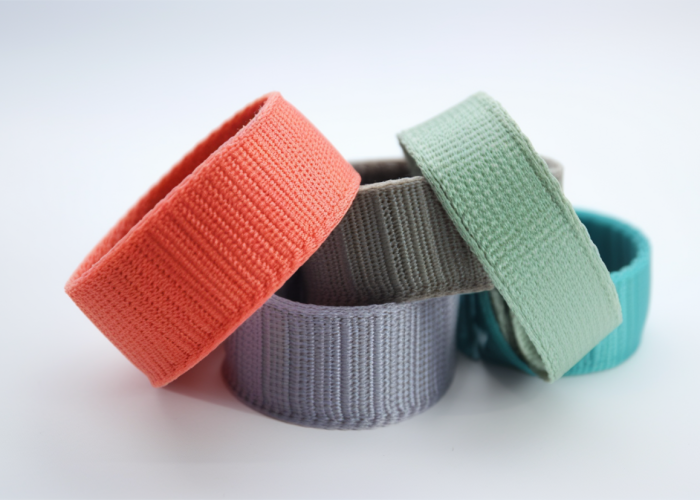
Flex fatigue is one of the quickest ways a lanyard’s inspection cycle becomes unpredictable because it exposes weaknesses that don’t show in tensile data or supplier spec sheets. If the yarn isn’t built to recover cleanly after repeated bending, the webbing won’t fail suddenly — it simply stops aging evenly. That’s when inspectors start flagging “soft areas here, stiff areas there,” which is a classic flex-fatigue signature.
The easiest way to diagnose it: look at high-movement zones. If the webbing near the connector or waist area feels creased, permanently flattened, or “mushy,” the internal filaments have already started breaking down. This has nothing to do with user misuse — it’s almost always linked to yarn selection, finishing, or inconsistent heat-setting.
What engineers often miss is that flex fatigue isn’t a surface problem. By the time abrasion shows up, the internal damage is already weeks ahead. That’s why inspection intervals shrink dramatically once early signs appear.
How to protect your next RFQ:
Specify that the webbing must maintain consistent hand-feel after repeated bending, and request flex-cycle behavior for the exact yarn used — not the fiber category. If the supplier cannot show how their yarn behaves after repeated folds, your future inspection intervals will always drift.
Contaminants don’t just “dirty” a lanyard — they fundamentally change how it ages. Concrete dust dries out fibers, abrasive grit works its way into the weave, and oils soften coatings until the surface feels slick or swollen. When you combine contaminants with movement, UV, and moisture, aging becomes irregular enough that no safety manager can rely on the original inspection plan.
The hardest part is that contaminated webbing often looks better than it performs. Inspectors usually notice subtle cues first: patches that stay stiff after cleaning, sections that turn glossy, or a gritty feel deep in the weave that won’t rinse out. These aren’t cosmetic. They mean the fibers are degrading internally.
If your site is messy enough that workers’ gloves look worn halfway through a shift, shorten the lanyard inspection cycle automatically — the environment is already deciding the timeline.
How to protect your next RFQ:
State which contaminant types the webbing must tolerate (dust, oils, solvents, metal particles, etc.) and request post-exposure performance data. Suppliers who rely on general-purpose coatings or undifferentiated polyester blends will avoid answering. That’s your signal that the material will age unpredictably in real use.
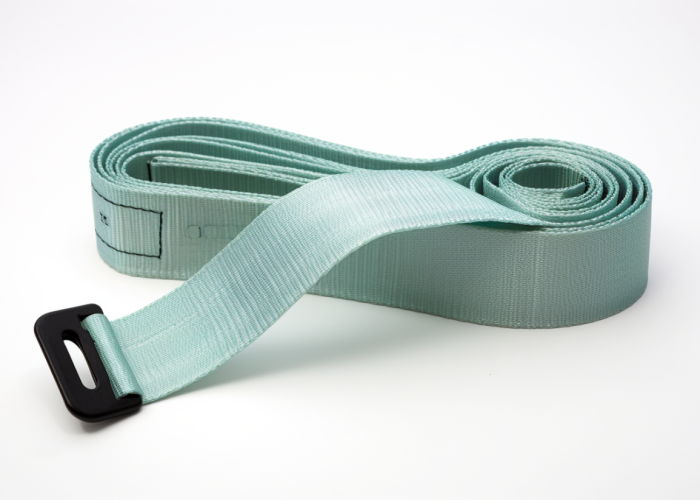
Weave density matters because it controls how evenly the load spreads through the webbing. A consistent, tight weave ages slowly and predictably — inspectors see gradual flattening or edge wear that matches the lanyard’s time in service. A loose or inconsistent weave ages unpredictably: one side frays early, the opposite side stays intact, and the center section stretches differently. That inconsistency alone forces safety teams to increase inspection frequency.
The biggest tell is uneven wear across the width. If one edge looks “fuzzy” while the opposite is clean, or if the weave opens up more on one diagonal, it’s rarely user-related. It’s usually a sign the supplier didn’t control loom tension or used yarns with mixed denier. And if the weave wasn’t consistent on day one, no amount of careful use will make it age consistently.
How to protect your next RFQ:
Specify a minimum weave density and acceptable variation tolerance. Also ask the supplier to show loom-tension control or density checks from production. If they can’t, expect lanyards that pass and fail inspections at totally different ages — even within the same batch.
If you want inspection cycles that stay stable, documentation is more important than the webbing itself. Most unpredictable lanyard aging comes from suppliers who provide fiber names — “100% polyester” — but never disclose the yarn grade, finishing process, or exposure behavior. Without aging data, every inspection becomes an educated guess.
What engineers actually need is not a pile of certificates, but behavioral documentation:
• how the webbing loses strength over time
• how UV, moisture, and abrasion change the hand-feel
• how coatings wear off under real movement
• how much variation exists between batches
When a supplier can’t provide this, you don’t know whether a lanyard is aging normally or failing early. That uncertainty forces safety teams to shorten inspection intervals, increase replacements, or escalate every ambiguous wear signal.
How to protect your next RFQ:
Ask for documented aging behavior for the exact yarn, weave, and coating intended for your lanyards — not generic data from similar products. A supplier that can’t explain how their webbing ages cannot support predictable inspection cycles, no matter how strong the material is on day one.
Unpredictable inspection cycles almost always trace back to undocumented material behavior, not user error. Choosing webbing with known aging patterns keeps fall-arrest lanyards predictable and compliant. If your current supplier can’t explain how their webbing ages, switch to one that can and request full aging documentation upfront.
Yes. Tensile tests only measure peak breaking strength, not the internal fiber damage caused by UV, chemicals, flex fatigue, or abrasion. Fall-arrest standards require removal long before maximum load is compromised. Inspectors often retire webbing early because its aging behavior, not its ultimate strength, indicates elevated risk.
Look for batch-specific documentation, not generic polyester/nylon descriptions. Consistency is shown through repeatable weave density, denier uniformity, and finishing quality. If two rolls in the same shipment feel different in stiffness or surface texture, the batch will age unpredictably — which directly disrupts inspection intervals.
Not always. Fading is an early UV indicator, but removal depends on other changes: stiffness, brittleness, edge breakdown, and stitch deterioration. Many OSHA-aligned inspection guides state that fading plus structural change is the actionable trigger. Fading alone only signals that closer inspections are needed.
Because stitch thread often uses different polymers than the webbing itself. Polyester thread handles UV well; nylon thread absorbs moisture and loses strength faster. If the supplier doesn’t disclose thread composition, stitch aging can outpace webbing aging — forcing earlier removal during competent-person inspections.
Absolutely. Heat, direct sunlight, trunk storage, and damp environments accelerate degradation even when the lanyard isn’t being used. Industry guidance recommends storing fall-protection gear clean, dry, and away from UV. Poor storage can make a “new” lanyard fail inspection months early due to unseen fiber damage.
No. Thickness alone doesn’t guarantee durability. Aging is controlled by fiber quality, weave structure, coating durability, and environmental exposure. A thicker but loosely woven webbing can degrade faster than a thinner, high-tenacity, tightly woven one. Durability depends on construction quality, not raw millimeters.
We will contact you within 1 working day, please pay attention to the email with the suffix “@anmyda.com”.