
Many engineers discover too late that spec-compliant parachute webbing still fails in field use. You passed MIL-W-4088, yet your straps stretch, fray, or lose strength after exposure. We’ve seen this exact failure pattern across aerospace and defense projects where “approved” webbing couldn’t survive real-world conditions.
Parachute webbing fails even when it meets spec because testing confirms minimum strength, not process consistency or environmental durability. Minor shifts in fiber quality, tension, heat-setting, or coating can pass lab tests but collapse under cyclic load or humidity.
Next, you’ll see how invisible manufacturing factors create these failures — and what supplier controls prevent them — so your next batch performs reliably in flight, not just on pape

Webbing manufacturing expert with 15+ years of experience helping product developers build high-performance straps for industrial, medical, and outdoor use.
Parachute webbing fails after meeting MIL-W-4088 because the standard verifies minimum tensile strength and construction quality—not process consistency or field durability. The test reflects a single controlled sample, not how every production batch performs under humidity, flexing, or vibration.
Even small shifts in fiber moisture, weaving tension, or heat-setting can keep results “within spec” yet alter elongation and fatigue life in flight. Two rolls with identical test reports can stretch or fray differently once exposed to field conditions.
If a certified batch failed drop testing, the cause usually lies in process variation, not design error. Tracking tension and fiber conditioning per lot prevents this gap between lab and real use.
Sourcing insight: When auditing suppliers, request lot-to-lot tensile and elongation records or a moisture-conditioning log. These consistency metrics predict field reliability far better than a one-time MIL certificate.
Most parachute webbing failures labeled as “application error” actually stem from hidden manufacturing variation that standard tests miss. Even when installed and loaded correctly, uneven yarn tension, heat-set exposure, or coating imbalance can weaken fibers and trigger fatigue cracks after cyclic stress or humidity cycles.
These flaws often look identical to misuse because they pass acceptance testing but collapse later under dynamic load. The difference lies in how consistent each production run was—not in how the webbing was assembled.
A smart failure review compares break patterns to batch data—tension curves, fiber lots, or coating runs—to separate handling error from process deviation. Doing so prevents redesigning components that aren’t actually at fault.
Sourcing insight: Before approving replacement orders, ask for cyclic-load re-tests on retained samples from the failed batch. Matching failure patterns confirm whether the issue began in manufacturing or in field conditions.
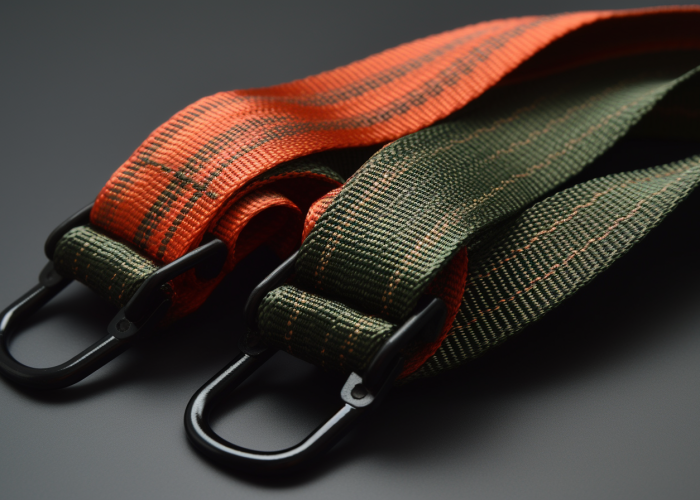
Parachute webbing that fails field testing can sometimes be salvaged if the issue lies in coating, conditioning, or edge finishing—not in the core fibers. Controlled re-drying or re-heat-setting can restore strength when degradation is surface-level.
However, once fiber fracture or warp distortion occurs, recovery is unsafe. These structural changes shorten fatigue life even when static pull tests look acceptable. A retained-sample pull test identifies whether re-conditioning is feasible or replacement is mandatory.
Sourcing insight: Before discarding failed rolls, request a limited re-test. If only surface defects are found, re-conditioning can recover up to 80–90 % of rated strength and keep your delivery schedule on track.
Failed batch? We can check your spec for hidden process issues in 24 hours.
Uneven weaving tension causes field variation because it changes load distribution across the webbing width, creating overstressed and under-stressed lanes. These zones stretch at different rates, doubling elongation variance and accelerating fatigue.
Lab samples rarely expose this since short test lengths average out local strain. In real assemblies, minor tension drift or humidity shifts on the loom produce long-term misalignment that appears only after repeated loading.
Sourcing insight: Confirm whether your supplier monitors tension continuously or checks manually. Automated tension control reduces elongation scatter and ensures consistent modulus from roll to roll—critical for flight-rated webbings
Fiber quality and conditioning determine long-term reliability because moisture and thermal balance directly affect polymer elasticity and creep. Over-dried yarns become brittle; moisture-laden fibers stretch excessively under sustained load.
Pre-conditioning each lot to a consistent humidity and temperature keeps elongation stable and prevents residual stress. Without it, identical-looking webbings age differently and fail unpredictably in storage or service.
Sourcing insight: When auditing suppliers, verify that fiber conditioning records exist for each production lot. Controlled storage and moisture stabilization are simple indicators of a supplier capable of producing repeatable, flight-safe webbings.

Improper heat-setting reduces parachute webbing fatigue life because uneven thermal stabilization locks residual stress or over-relaxes polymer chains, weakening elastic recovery. Nylon typically stabilizes near 180–200 °C; below that, tension remains, while above 210 °C the crystalline structure softens and modulus drops.
These subtle shifts explain why one batch maintains its load curve and another creeps after repeated flex cycles. Under-set lots shrink unpredictably, and over-set ones stretch permanently—both still “meeting spec” on static pull tests.
Process variation usually comes from non-uniform airflow, roll tension, or dwell-time drift inside the stenter. Consistent tension and ±3 °C thermal uniformity keep modulus spread within a narrow range. Mature production lines log temperature and tension automatically during each cycle and flag deviations for review within one working day.
Sourcing insight: When evaluating suppliers, request documented heat-set controls—temperature bands, dwell-time stability, and how deviations are verified. Lines that maintain repeatable heat-setting deliver longer fatigue life and cut re-qualification or scrap risk by up to a third.
Coating and colorant defects compromise MIL-spec durability by undermining the webbing’s protection against friction, moisture, and UV exposure. Uneven or poorly cured coatings crack during flexing, while over-pigmented or low-pH colorants attack the fiber surface and reduce long-term strength.
When adhesion fails, moisture penetrates yarn bundles, raising elongation drift and lowering fatigue resistance. These issues are invisible in one-time tensile tests but appear quickly in cyclic or humidity aging. The cause is almost always inconsistent curing temperature or solvent balance—especially on manual drying lines where heat control fluctuates widely.
Controlled ovens with feedback sensors keep temperature uniform across the width and verify coating adhesion on representative samples from each lot. Results are logged and reviewed before shipment, ensuring that every roll meets identical durability parameters.
Sourcing insight: Ask suppliers to provide adhesion-test results with curing-temperature records. Those maintaining closed-loop curing control consistently double UV-exposure life and eliminate most coating-related field rejections.
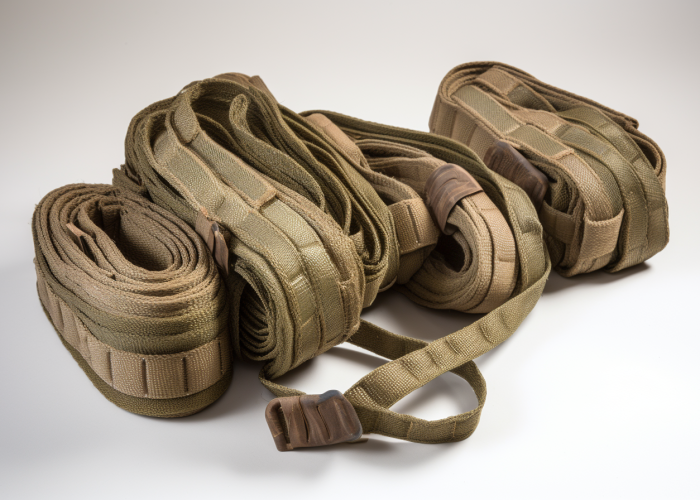
Poor edge finishing shortens webbing service life because exposed or overheated filaments initiate cracks and fray propagation under bending. The edge carries concentrated stress during deployment; once damaged, it accelerates width loss and reduces total breaking strength.
Hot-knife sealing that overheats the margin stiffens and embrittles nylon, while under-sealed edges separate after only a few thousand flex cycles. In contrast, controlled ultrasonic or woven-selvedge finishing maintains flexible, sealed edges that distribute stress evenly.
Quality systems typically inspect edge integrity at regular roll intervals and perform flex-retention sampling before final packing. These checkpoints reveal micro-fray or melt defects early, long before they trigger in-service failure.
Sourcing insight: During audits, confirm that suppliers record edge-finish parameters and perform periodic flex-retention testing. Consistent, well-sealed edges extend fatigue life by 30–40 % and signal a production line capable of aerospace-grade repeatability.
UV and humidity degrade parachute webbing after testing because the field environment triggers polymer oxidation and hydrolysis far beyond what MIL-W-4088 laboratory conditioning simulates. Prolonged sunlight breaks molecular chains in nylon and polyester, while absorbed moisture weakens hydrogen bonding and lowers tensile recovery.
Even small increases in relative humidity—above 65 % for nylon—can raise elongation by 4–6 % and cut load retention within weeks. Standard tensile tests, performed at 21 °C and 65 % RH, don’t reveal these progressive shifts. Once deployed, cyclic wet-dry exposure amplifies creep and color fading.
Coatings and stabilizers slow this process only if they’re evenly cured and UV-resistant. Inconsistent film thickness or unbalanced dye carriers accelerate surface cracking, allowing more light and water to penetrate the yarn bundle.
Sourcing insight: Ask for post-exposure retention data—tensile strength after 100 h UV and 72 h humidity cycling—rather than relying on base MIL certificates. Suppliers maintaining in-house weathering chambers or third-party UV tests deliver webbing with proven stability in outdoor or airborne service.
Confirm your supplier’s tension and heat-set control before the next lot.
Consistent parachute-webbing performance between batches depends on process repeatability—controlled tension, heat-set temperature, fiber conditioning, and coating uniformity logged for every lot. Variation in any one of these causes measurable drift in modulus and elongation even when materials and tooling are identical.
Reliable lines maintain digital production records linking loom ID, yarn batch, and finishing parameters to final tensile results. That traceability allows engineers to identify any deviation immediately instead of after field failure. Less-controlled mills rely on manual checks and visual inspection, leading to unseen drift between orders.
Reproducibility improves when suppliers perform routine statistical checks—averaging results over multiple rolls to confirm coefficient of variation under 3 %. Modern QA software flags anomalies for re-test within a single shift.
Sourcing insight: When reviewing quotes, request each supplier’s process-control report showing batch traceability and variation data. Shops providing full parameter logs and statistical summaries offer predictable repeatability and simplify qualification audits for aerospace buyers.
Before approving a parachute-webbing supplier, engineers should evaluate process capability, documentation transparency, and turnaround reliability—not just price or MIL compliance. Many “certified” shops meet the letter of MIL-W-4088 yet lack stable humidity control, tension logging, or in-house testing.
A credible partner provides:
Comparing these data points reveals whether a supplier operates under real process discipline or passes audits through paperwork alone.
Sourcing insight: Use a pre-approval checklist covering process logs, re-test turnaround, and exposure-retention reports. Suppliers who share full documentation upfront typically cut qualification delays by 30 % and maintain lower rejection rates across consecutive orders
Parachute webbing failures rarely come from design flaws—they stem from inconsistent manufacturing control. Stable tension, heat-setting, and conditioning ensure repeatable strength and fatigue life. Upload your specification for process verification—consistent, traceable production data prevent requalification delays and keep flight hardware on schedule.
Each lot should include:
Parachute webbing should be stored at 20–25 °C and 50–60 % RH in sealed, UV-shielded packaging. These conditions prevent moisture imbalance and photodegradation. Extended exposure to high humidity (> 70 %) can raise elongation by 3–5 %, while dry storage below 40 % RH increases brittleness.
Aerospace programs typically re-test retained samples every 12 months or after any material or process change. Periodic cyclic-load and UV/humidity tests verify that stored rolls maintain tensile and elongation properties within ±5 % of baseline results.
Thread and needle setup directly influence joint efficiency and local heat damage. Using bonded Nylon 6,6 thread T-90 or T-135 with a rounded-tip needle minimizes fiber cutting. Excess needle heat (> 180 °C) can melt edge filaments and reduce seam strength up to 8 %.
For suppliers with in-house tensile and environmental labs, 24–48 hours is realistic for re-testing or data verification on existing lots. External third-party testing typically requires 3–5 days. Fast internal verification shortens re-qualification delays and prevents schedule impact on flight hardware.
Recycled nylon 6,6 and RPET can meet MIL-W-4088 tensile values only when polymer viscosity and denier control match virgin fiber tolerances. Inconsistent re-polymerization often lowers breaking strength by 10–15 %. Such yarns are generally suitable for training gear, not certified flight harnesses.
We will contact you within 1 working day, please pay attention to the email with the suffix “@anmyda.com”.