
You receive a webbing roll marked for safety belts—and halfway through, there’s a splice. The supplier says it’s “normal in long rolls.” In reality, any splice in safety belt webbing is an immediate safety failure, no matter how cleanly it’s joined.
Splices are not allowed in safety belt webbing. Every major standard—FMVSS 209, ECE R16, ISO 6683—explicitly forbids them because a joined section creates a weak point that can rupture under impact or fatigue loading. Safety webbing must be woven continuously and documented as splice-free from loom to shipment.
Next, we’ll break down why splices compromise strength, how they appear in supplier rolls, and what inspection and documentation steps ensure your RFQ and production stay fully compliant.


Webbing manufacturing expert with 15+ years of experience helping product developers build high-performance straps for industrial, medical, and outdoor use.
Splices are never acceptable in safety belt webbing because they interrupt the continuous load path and drastically reduce tensile strength. The belt’s strength depends on unbroken warp yarns sharing load evenly. A splice turns that load path into two separate pieces joined by a weak bridge — one that can fail suddenly under tension.
Even experienced buyers get caught off-guard when general textile suppliers say “splices are normal.” In decorative or packaging webbings, they are. But in restraint systems, any splice is a structural defect that invalidates the roll for safety use. The risk isn’t theoretical; tests show spliced sections can lose more than half their rated capacity once dynamic force peaks.
Professional safety-grade weaving prevents this entirely through continuous production monitoring, tension sensors, and full roll traceability. Quality teams record loom stops, verify yarn integrity, and flag any potential joint before cutting. That documentation — not just a visual check — is what certifies a roll as splice-free.
Action Point: If you receive webbing with a splice or unclear traceability, isolate it and request the inspection record. A compliant supplier should be able to prove continuous production, not just promise it.
When a splice is used in load-bearing webbing, the joint becomes the first failure point under tension. Stress concentrates where the yarn continuity ends, causing uneven stretch, heat buildup, and fiber separation. Under sudden load, the belt doesn’t elongate uniformly — it snaps at the splice.
We’ve seen this firsthand in rejected batches where spliced polyester webbing tore at 40–70 % of its rated strength. To the naked eye, the join looked clean; under load, it failed instantly. That’s why major safety standards treat any splice as a disqualifying defect — it removes the predictability engineers rely on for restraint performance.
Reliable production avoids this by ensuring continuous filament integrity from the moment weaving starts to the final roll inspection. Each roll is logged with a splice-free verification record so QA teams can trace back every meter of belt used in assembly.
Action Point: If a splice is found during incoming inspection, stop cutting immediately. Record the defect, request the supplier’s roll documentation, and insist on replacement from a verified splice-free batch before production continues.
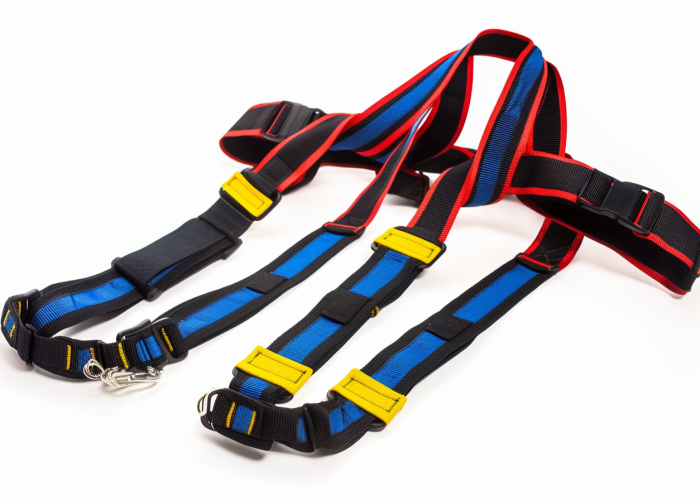
All major restraint standards explicitly forbid spliced or joined webbing in safety-critical systems. Regulations such as FMVSS 209 for automotive seat belts, ECE R16 for vehicle restraints, and ISO 6683 for off-road machinery all require the webbing to be woven in one continuous length. Any sewn, overlapped, or bonded joint is treated as a non-compliant defect.
These rules exist because a splice can’t be tested consistently under dynamic crash or drop conditions. A joint that survives one load may fail in the next due to slight misalignment or heat buildup. Certification labs therefore reject any sample that contains even a single discontinuity in its tensile section.
If you’ve ever had a supplier insist that “everyone does this,” you can point to these standards directly — they make it clear that splice-free construction is not a preference but a safety requirement.
Action Point: When reviewing quotes or inspection reports, confirm that the supplier cites these standards and documents continuous-length production. It’s the simplest way to verify they understand true restraint-grade compliance, not just textile manufacturing.
Upload your spec or roll photo for a 24-hour manufacturability check
Splices appear in bulk webbing rolls because general weaving lines prioritize throughput, not structural continuity. When a warp yarn breaks or a roll ends, operators often join the next roll with a quick adhesive or overlap to avoid downtime. In commodity textiles, that’s standard practice — in safety webbing, it’s a critical flaw.
Even reputable mills can produce rolls with hidden joins if monitoring systems aren’t set to halt the loom automatically. A splice might be only a few millimeters long and nearly invisible after dyeing or coating, yet it breaks under load long before the webbing’s rated capacity.
Buyers usually discover this too late — during cutting or, worse, after stitching assemblies — because the splice hides inside the wound layers. The problem isn’t intent; it’s control. Most suppliers simply lack automated stop systems and dedicated safety-grade QC.
Action Point: If your supplier provides bulk rolls, specify “no joined sections permitted” on the purchase order and request a roll-length continuity certificate. That single line prevents costly rework and makes responsibility clear before production begins.
Professional safety-grade weaving lines prevent splices through real-time monitoring and strict process discipline. Automated warp-break detectors stop the loom the instant tension drops or a filament snaps, allowing operators to fix the yarn before weaving resumes. This ensures every roll remains a single, unbroken structure.
Instead of joining rolls manually, controlled production schedules limit run lengths and restart only after a full equipment check. Tension sensors, optical scanners, and continuous log recording make any potential join traceable to the second it could occur.
This level of control might seem excessive to general textile suppliers, but it’s what guarantees consistency in safety-critical restraint belts, cargo tie-downs, and fall-arrest webbings. It also reduces waste and inspection time later, since every roll ships with verified continuity data.
Action Point: When auditing a supplier, ask to see their warp-break detection or loom-stop system in operation. A true safety-grade facility should demonstrate automatic halts and maintain production logs showing zero joins across entire runs.
If you’re developing a new restraint or safety-belt project and need splice-free webbing specifications or inspection guidance, share your requirements with our team — we can review your spec and recommend suitable construction or quality-control options.
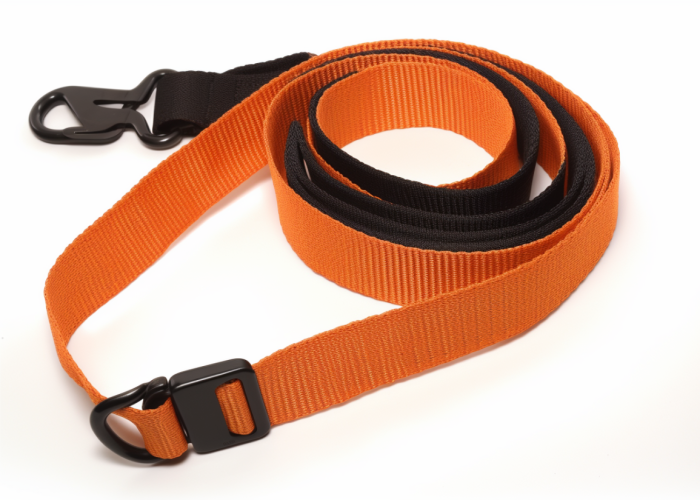
Before any cutting or sewing, the webbing must be verified as splice-free through both physical inspection and documentation review. Relying only on a quick visual check is risky — splices often hide in the first few layers of a tightly wound roll.
Start by unwinding several meters of each roll to check for weave irregularities, tone shifts, or slightly thicker areas that suggest a join. Under light tension, a splice may feel stiffer or show a faint cross-line. Then review the lot documentation — inspection logs should confirm “zero joins” or note any loom stops.
Many teams skip this step under deadline pressure, but a five-minute check can prevent a full production halt later. Even without optical scanners, keeping a brief roll-ID log and visual notes builds traceability for future audits.
Action Point: Add a short checklist item to your incoming QC form: verify splice-free status and record roll ID. If anything looks inconsistent, isolate the roll and request the supplier’s inspection record before fabrication continues.
Splice-free certification depends on traceable records, not verbal assurance. Every safety-grade roll should link loom data, inspection results, and shipment IDs in a clear trail of accountability.
Check that suppliers provide:
These documents prove each roll was woven and inspected as one continuous structure. If your supplier hesitates or delays sharing them, it usually means the records don’t exist — and that’s reason enough to pause procurement.
Action Point: During quotation or first-article review, request sample copies of roll inspection and traceability records. Reliable suppliers will provide them upfront, giving you confidence that compliance is designed into their process, not promised afterward.
If a splice is found in any safety webbing, treat it as a critical non-conformance and stop use immediately. Cutting around the splice or saving “good” sections doesn’t restore compliance — once continuity is broken, certification is void.
First, isolate the roll and record its batch and supplier details. Take clear photos of the splice area and note its position within the roll. Then file a non-conformance report with evidence. Keep the tone factual — this encourages faster supplier response and resolution.
Professional manufacturers trace each splice incident back to loom data to confirm cause and prevent recurrence. Feeding that report into your supplier-qualification records strengthens your sourcing decisions long-term.
Action Point: Follow a quick-response routine: quarantine → document → report → replace. If the replacement delay threatens production, share your webbing specification with a verified safety-grade manufacturer who can provide compliant rolls quickly from existing inventory.
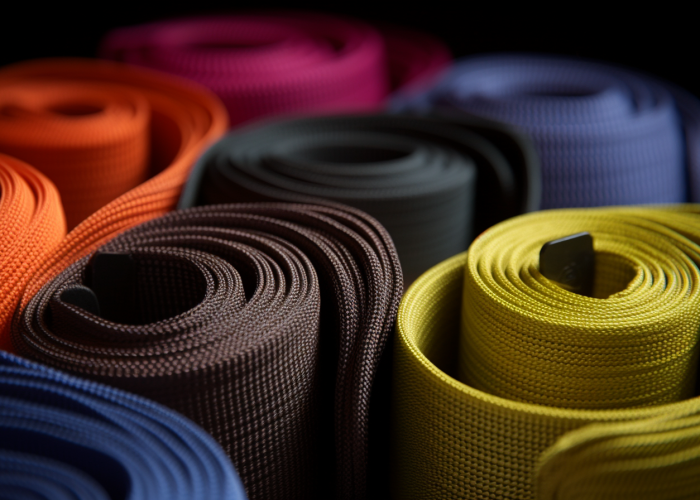
Adding “no splice allowed” to your RFQ is the fastest way to filter unqualified suppliers before quoting begins. Many textile mills assume joins are acceptable unless the customer states otherwise. That single omission can turn into roll rejection, rework, and delivery delays.
In general textile production, splices save material. In restraint manufacturing, they destroy compliance. If your RFQ doesn’t specify continuous weaving, the supplier may quote using ordinary looms that allow roll joins — then discover mid-production they can’t meet safety standards. At that point, you’re facing both a missed schedule and a restart cost.
Here’s what that difference looks like in practice:
Capability | General Textile Supplier | Safety-Grade Webbing Manufacturer |
Splice Control | Manual joins during roll change | Automatic loom stop, zero joins |
Quote Accuracy | Varies ±30 % after QC | Stable; same spec from start to ship |
Lead-Time Risk | Hidden rework after inspection | Predictable timeline, traceable rolls |
Continuous-weaving suppliers may quote 1–2 days slower, but they prevent 2–3 weeks of rework later.
Action Point: Add a clear “webbing shall be woven in one continuous length, no splice permitted” clause to every RFQ and drawing. This simple line acts as a supplier-qualification tool — only true safety-grade producers will quote confidently.
Clear communication turns a compliance rule into a supplier-evaluation tool. Many sourcing teams assume the drawing alone is enough — but without context, even capable mills can misunderstand the end use.
State the requirement in two ways:
Follow up by asking suppliers to confirm:
Their answers reveal capability immediately — a qualified safety-grade producer will show monitoring data within 24–48 hours, while general mills may take a week and still provide no records.
Action Point: When updating specifications or sending new RFQs, share them for review. We can help refine your documentation language and confirm whether potential suppliers’ processes meet true safety-grade expectations before you commit to production.
Splices in safety belt webbing are never acceptable — they signal a process, not a material, failure. Clear “no splice” language, inspection proof, and supplier traceability protect both compliance and timelines. Before cutting or quoting, verify continuity; before production, work only with suppliers who can document it.
No. Reinforcement doesn’t restore fiber continuity — the yarns still terminate at the join. Extra stitching adds bulk and stress concentration without regaining tensile strength. Safety standards treat any splice as a structural break, regardless of reinforcement method.
Look for a subtle gloss or density change across the width. Heat-set coatings highlight splice lines, and the area may feel stiffer. Under light tension, joined areas stretch unevenly. Roll documentation or lot traceability should always confirm continuous weaving if you’re unsure.
Yes. Polyurethane, PVC, or solution-dyed finishes can conceal small joins. That’s why visual checks alone are unreliable. Verified suppliers use tension sensors and automated optical scanning before coating to confirm each roll’s integrity prior to surface finishing.
Note roll ID, date, inspector name, and the phrase “splice-free confirmed through first 3 m check.” Retain at least one photo of the roll start. This record supports compliance documentation and protects you during audits or warranty reviews.
Every batch. Even long-term suppliers must re-verify because loom maintenance, yarn tension, and operator shifts can change over time. Routine verification ensures ongoing compliance and prevents unnoticed production shortcuts.
The assemblies must be quarantined and re-inspected. If the splice lies within the load path, the item is non-compliant and must be scrapped or re-made with certified material. Good documentation minimizes loss claims by proving when and where the defect originated.
We will contact you within 1 working day, please pay attention to the email with the suffix “@anmyda.com”.