
Many elastic webbings lose stretch or turn brittle after just a few sterilization cycles. Engineers often blame design, but the real issue is material composition and coating choice—most suppliers use blends never meant for repeated autoclaving or chemical cleaning.
Elastic webbings built from polyester or specially formulated TPU-laminated fibers maintain tension and flexibility through dozens of sterilization cycles, unlike standard spandex or rubber blends. These materials resist hydrolysis, thermal shrinkage, and oxidation—the main causes of elastic degradation.
Next, we’ll show how different sterilization methods affect webbing strength, which fibers truly survive repeated exposure, and how to specify sterilization-resistant elastic webbing for reliable, compliant medical designs.
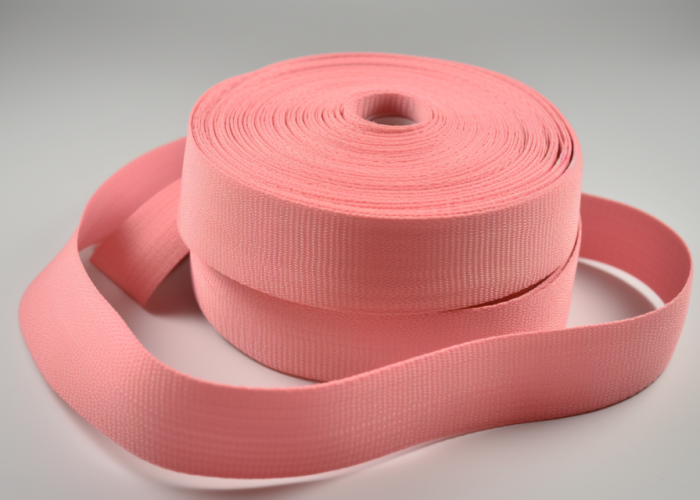
Sterilization weakens elastic webbing because heat, pressure, and moisture attack the stretch fibers inside the strap, breaking the bonds that let it recover. That’s why a webbing that looks perfect after autoclaving often feels stiff or shorter — the inner core has already lost its tension memory.
If your last batch of elastic webbing failed after a few sterilization cycles, you’re not alone. Most of these failures come from un-stabilized spandex or rubber cores that absorb steam or chemicals and degrade from hydrolysis. General textile suppliers often skip heat-setting or moisture-barrier steps because they’re built for apparel, not medical devices.
Elastic that’s heat-stabilized or laminated with thin TPU layers withstands repeated sterilization because it resists water absorption and thermal fatigue. You don’t need exotic materials — just proper pre-stabilization during extrusion and controlled curing above 120 °C.
Diagnostic Check:
Ask your supplier what temperature their elastic yarn is heat-set to and whether it includes a barrier lamination. If they can’t answer, the webbing will likely fail after a few sterilization runs.
Autoclave and chemical sterilization put the greatest stress on elastic webbing because they combine heat, pressure, and chemical oxidation that break down polymer chains. These conditions destroy elasticity much faster than UV or gamma sterilization, which mainly fade surface coatings.
If your straps come back brittle or lose stretch consistency after testing, it’s likely the sterilization method doesn’t match the fiber and coating. Steam sterilization forces moisture deep into elastic cores, while EtO or hydrogen-peroxide gas attacks them chemically. Using a single “medical-grade” blend for every process is a common reason for early failure.
Webbings made from polyester or TPU-laminated fibers survive high-temperature steam, while polypropylene and solution-dyed polyester handle chemical or radiation sterilization better due to oxidation resistance. Matching the polymer to the method is far more effective than adding extra thickness.
Procurement Tip:
When requesting samples or quotes, include the exact sterilization process and expected cycle count. A capable supplier will confirm compatibility or suggest alternate materials instead of quoting blindly — that response alone tells you who understands sterilization-grade manufacturing.
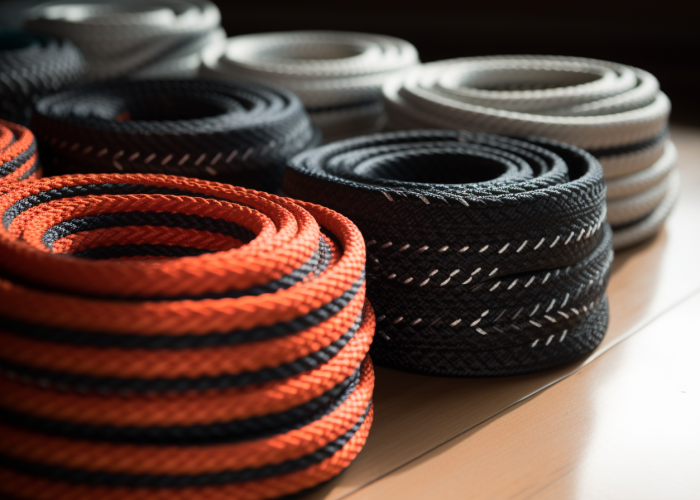
Polyester maintains its strength and stretch after repeated sterilization, while nylon weakens from moisture absorption and polypropylene softens under heat.
If your sterilized straps came back warped or brittle, the fiber blend likely wasn’t matched to the sterilization method.
Nylon absorbs water and loses hydrogen-bond strength once exposed to heat, leading to dimensional change and early fatigue. Polypropylene resists many chemicals but starts softening near 120 °C, making it unreliable for autoclaves. Polyester’s lower moisture uptake and higher glass-transition temperature allow it to retain 95 %+ of its tensile strength after 20 autoclave cycles — the most stable base fiber for sterilization-resistant webbing.
Most rejected RFQs trace back to material mismatch, not bad design. Using stabilized polyester cores eliminates those failures before testing.
Property | Typical Textile Webbing | Sterilization-Ready Polyester Webbing |
Heat Resistance | Up to 110 °C | Up to 140 °C |
Strength Retention (10 cycles) | –25 % avg | –5 % avg |
Quote Turnaround | 1–2 weeks | 24 – 48 hours (validated data ready) |
Sourcing Check:
Ask suppliers for their tensile-retention data after sterilization or at least the yarn’s heat-set temperature. A qualified partner will provide those figures immediately — not “we’ll check with our mill.”
If your sample failed validation due to fiber breakdown, share the drawing or spec sheet — we can confirm the right polymer match before you repeat testing.
Send your failed sample — we’ll identify the issue in 48 hours.
Standard spandex and rubber cannot survive repeated autoclave cycles because steam and pressure destroy their elastic cores.
If your straps stiffened or shrank after sterilization, that’s polymer fatigue — not a manufacturing defect.
Spandex hydrolyzes when moisture and heat exceed its cross-link tolerance, while rubber oxidizes and cracks, leaving a chalky surface. Even “high-temp” apparel elastics degrade after fewer than five autoclave runs, forcing engineers to redo validation tests and resubmit documentation.
Encapsulated versions — spandex with TPU or silicone barriers — can handle short sterilization sequences but remain limited-life materials. For reusable medical devices, laminated polyester or polyether-TPU elastic performs consistently across 20 + cycles without loss of rebound.
Supplier Evaluation Tip:
Ask whether the elastic yarn was tested for recovery beyond five sterilization cycles and request the cycle data. Vendors without that record are quoting unverified materials.
If you’re redesigning after failed elastic tests, you can share the strap layout — we’ll suggest sterilization-safe replacements that preserve flexibility without altering your assembly.
Sterilization-resistant medical elastics use polyester, polyether-TPU, or silicone-based composites engineered to maintain flexibility, color, and texture after repeated cleaning.
These materials combine hydrolysis resistance, high heat tolerance, and low surface porosity — key for reusable hospital straps and patient-contact devices.
Polyester provides the structural backbone; polyether-TPU ensures soft, lasting stretch; silicone coatings add chemical durability and smoothness for skin comfort. Each construction undergoes pre-stabilization and 20 – 30-cycle testing before approval, so their performance is predictable, not estimated.
Material Type | Ideal Sterilization Method | Typical Lifespan (Cycles) |
Polyester + TPU Laminate | Steam / Chemical | 20 – 30 |
Polyether TPU Core | Steam / Gas | 15 – 25 |
Silicone-Coated Elastic | Chemical / UV | 30 + |
If a supplier markets “medical-grade” elastic but can’t show cycle data or test results, assume it hasn’t been validated. Real medical elastics are certified by testing, not terminology.
Specification Tip:
Request data such as “no visible degradation after 20 autoclave cycles at 121 °C.” That single metric distinguishes sterilization-ready webbing from generic textiles.
If you’re finalizing materials for your next verification run, send your drawing or sterilization specs — we can confirm which polymer-coating system will meet your cycle target before you quote again.
Yes. Repeated sterilization gradually weakens both stretch recovery and tensile strength as heat and moisture fatigue the elastic core.
Many engineers pass initial tests, then fail at validation when straps lose rebound after several sterilization cycles—the fibers haven’t broken, but their internal tension memory has relaxed.
Steam and chemical sterilization accelerate hydrolysis and thermal aging, especially in blends that aren’t fully heat-set. Even high-grade polyester systems can lose 5–10 % elasticity after 20 cycles if the yarn or coating isn’t stabilized. Each re-test can add 1–2 weeks of validation delay and new sample costs, making early verification critical.
Property | Typical Textile Elastic | Sterilization-Ready Elastic |
Recovery After 10 Cycles | –12 % to –18 % | –4 % to –6 % |
Typical Validation Impact | Re-test required | Approved on first run |
Quality Check:
Track both load-to-elongation and recovery percentage after each cycle. A drop beyond 8 % means polymer fatigue—not production error—so upgrade to pre-stabilized polyester-TPU or silicone-laminated constructions before full build.
TPU, silicone, and fluoropolymer laminations provide the strongest resistance to moisture, heat, and chemical sterilization.
If your straps turned sticky, faded, or stiff after testing, the coating likely absorbed moisture or oxidized under heat. These failures are the most common cause of late-stage rejections in medical strap projects.
Coating Type | Typical Failure (10 Cycles) | Verified Performance (20 Cycles) |
Finishing-Grade PU | Peeling / Yellowing | — |
TPU Laminate | Slight haze | No mechanical loss |
Silicone Layer | Softness retained | Minor gloss change |
A robust lamination prevents re-sampling and shortens validation by up to 2 weeks, since parts need fewer re-tests. Always ask suppliers for adhesion and cycle-retention data—if they can’t provide it, the coating isn’t sterilization-validated.
If your current coating failed before validation, share the strap drawing—we can review which lamination fits your sterilization method without altering dimensions or comfort profile.
Repeated sterilization can fade color, harden texture, and reduce comfort as surface coatings oxidize and fibers compress.
Engineers often meet strength specs but fail usability reviews because straps become harsh or yellow after testing—signals of polymer surface breakdown.
Steam and chemical sterilization fade dyes and alter surface feel through cross-linking and pigment bond loss. Using solution-dyed polyester or silicone top layers minimizes this damage: color remains consistent, and texture stays flexible even after 30 + cycles.
Property | Typical Textile Strap | Sterilization-Stable Strap |
Color Shift (10 Cycles) | Visible fading / yellowing | No visible change |
Surface Feel | Hardens | Soft recovery retained |
Design Consideration:
Specify solution-dyed fibers or laminated finishes in RFQs, not just “color-fast materials.” Appearance and comfort retention are measurable performance factors, not cosmetic extras—and ignoring them can cost another validation round.
Upload your spec — we’ll confirm if it survives your sterilization cycle.
Durability after sterilization is proven through cyclic tensile, elongation-recovery, and surface-inspection tests conducted before and after multiple sterilization cycles.
These tests reproduce the real stresses—heat, moisture, and chemical exposure—that webbing faces in clinical use, not just single pull tests many shops rely on.
Qualified manufacturers use 10-, 20-, or 30-cycle validation protocols, tracking:
Typical textile suppliers stop at one-cycle testing. Sterilization-ready webbing shows <5 % variation even after 20+ cycles—enough to pass device validation on the first attempt. Each failed validation run can delay product release by 2–3 weeks, so verified materials protect both schedule and budget.
Test Parameter | General Textile Shop | Sterilization-Ready Manufacturer |
Test Cycles | 1–2 | 20–30 |
Metrics Measured | Tensile only | Tensile + Recovery + Color |
Report Turnaround | ~2 weeks | 2–3 days summary |
Trust Indicator:
Reliable partners share full pre- and post-cycle data with photos and dimensions.
If a supplier can’t show that within a day, assume the test data doesn’t exist.
State the sterilization method, cycle count, and performance targets clearly in your RFQ to ensure accurate quotes and manufacturability confirmation.
Precise specs prevent “not manufacturable” responses and misquotes later in the project.
Include these essential lines:
Specification Detail | Why It Matters |
Cycle Count | Confirms long-term elasticity |
Coating Type | Matches sterilization method |
Test Data | Proves validated performance |
A responsive manufacturer will confirm feasibility within 24 hours and provide verified cycle-test data or comparable references within 72 hours—avoiding the multi-week back-and-forth common with general textile vendors.
If you’re preparing or revising an RFQ, you can share your current drawing. We’ll review it confidentially and confirm whether your chosen elastic and coating system can meet sterilization-cycle goals before you resubmit.
Repeated sterilization failures rarely come from design—they stem from material mismatch and unverified coatings. Using heat-stabilized polyester or TPU systems validated through cycle testing prevents costly retests and delays. Share your strap design for a confidential review—we’ll confirm sterilization compatibility and quote within 24 hours.
No. TPU and silicone laminations are formulated for medical wearables; they remain flexible and skin-safe after repeated cycles. Unlike heavy finishing coats, they don’t trap heat or stiffen. Always request tactile samples to confirm comfort alongside sterilization performance.
Send the rejected sample or drawing. We’ll assess material composition, identify why it degraded, and propose a validated replacement — often within 48 hours. Most “failures” come from unstabilized fibers, not design flaws, and can be solved without altering dimensions.
Request the supplier’s pre- and post-cycle tensile and recovery data. A qualified partner provides a 2–3 day report showing performance change per cycle. If that data isn’t available, testing hasn’t been done — assume the material isn’t validated for sterilization.
For reusable medical straps, 20 autoclave or chemical cycles is the typical minimum. Premium polyester-TPU or silicone composites can exceed 30 cycles with less than 5 % strength loss. Lower-grade elastics often fail within 5–8 cycles, triggering new validation runs and delays.
Yes. If you share your drawing and sterilization method, we can identify the right polymer and coating combination from pre-tested data. For most standard constructions, we issue compatibility confirmation within 24 hours and supply sample references within 72 hours for verification.
Many general webbing shops avoid high-temperature or chemical-resistant projects because they lack stabilized extrusion and cycle-testing equipment. A specialist manufacturer already maintains those setups, so your spec isn’t “impossible” — it just needs the right fiber and coating system.
We will contact you within 1 working day, please pay attention to the email with the suffix “@anmyda.com”.