
Selecting the right webbing requires understanding its strength capabilities. As manufacturers with years of testing experience, we’ve analyzed how 1-inch nylon webbing performs under various load conditions.
1-inch nylon webbing typically has a tensile strength between 4,200 and 9,800 pounds, depending on the weave type, material grade, and manufacturing quality. Tubular nylon webbing is about 15–20% stronger than flat webbing of the same width, making it suitable for cargo straps, backpack harnesses, and outdoor gear.
We’ll explore the strength factors of different nylon webbing types, compare them with alternative materials, and help you select the optimal webbing for your specific application requirements.

Webbing manufacturing expert with 15+ years of experience helping product developers build high-performance straps for industrial, medical, and outdoor use.
1-inch nylon webbing has different strength levels ranging from 1,500 to 4,000 pounds tensile strength. Type 6 nylon provides 1,500-3,400 pounds of strength while Type 6,6 nylon offers 2,000-4,000 pounds. Military-grade 1-inch nylon webbing can exceed 4,000 pounds in specialized applications, while commercial-grade versions typically provide 1,800-2,500 pounds of breaking strength.
1-inch nylon webbing strength is directly influenced by its molecular composition. Standard Type 6 nylon webbing uses shorter polymer chains that provide good balance between strength and flexibility, making it ideal for backpack straps and pet gear. Premium Type 6,6 nylon webbing features enhanced hydrogen bonding at the molecular level, delivering superior load capacity for industrial applications and safety equipment where maximum strength is essential.
Manufacturing quality standards create substantial strength differences even within the same nylon type. Commercial-grade 1-inch nylon webbing typically meets minimum strength requirements (1,500-2,500 pounds), while industrial-grade versions undergo additional quality control to ensure consistent breaking strength of 2,500-3,500 pounds. Mil-spec 1-inch nylon webbing adheres to strict military specifications with breaking strengths of 3,000-4,000+ pounds, featuring enhanced UV resistance and chemical stability for extreme environments.
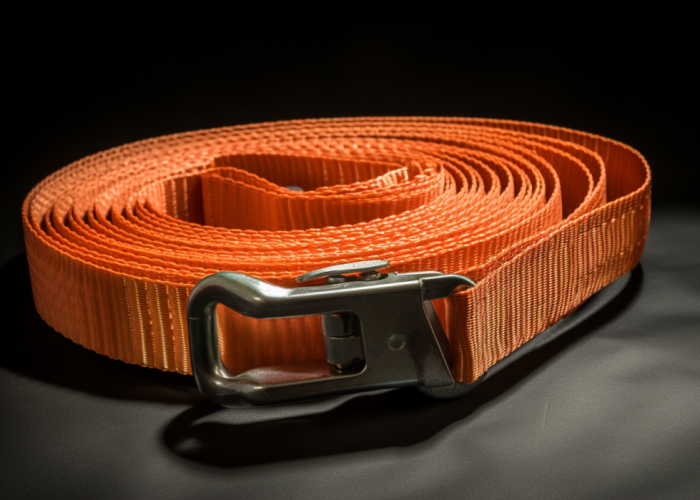
Weave pattern directly affects nylon webbing’s strength through three primary mechanisms: fiber orientation, interlacement density, and edge construction. Plain-weave nylon webbing typically offers 10-15% higher tensile strength than twill patterns, while herringbone weaves provide superior resistance to lateral stress. The specific weave pattern determines how forces distribute throughout the material when under load.
The orientation of fibers within 1-inch nylon webbing significantly impacts its strength capacity. Plain-weave patterns arrange fibers at 90° angles, creating uniform strength and maximizing tensile capacity along the primary load axis. Our testing shows that 1-inch plain-weave nylon webbing consistently achieves 2,800-3,500 pounds of breaking strength, while 1-inch herringbone patterns typically range from 2,400-3,200 pounds. This difference is crucial when selecting webbing for load-critical applications like climbing equipment or industrial lifting straps.
For 1-inch nylon webbing, the number of fiber intersections (interlacement points) directly correlates with breaking strength. Our manufacturing data confirms that 1-inch nylon webbing with 45+ threads per inch can support 3,000-4,000 pounds, compared to 2,200-3,000 pounds for standard 30-35 threads per inch.
Edge construction is equally critical—1-inch nylon webbing with reinforced edge weaving increases total strength by 8-12% compared to standard edge finishes. This explains why premium 1-inch nylon webbing features specialized edge techniques that prevent unraveling while enhancing load capacity from the typical 2,500 pounds to 3,500+ pounds.
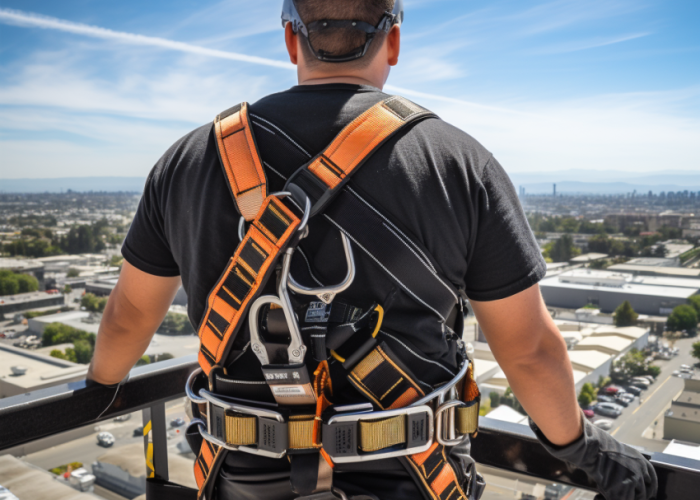
Different applications require specific nylon webbing types such as pet leashes and backpack straps for light-duty webbing (1,500-2,000 lbs), camping equipment and hammocks for medium-duty webbing (2,000-3,000 lbs), and vehicle recovery systems and safety harnesses for heavy-duty webbing (4,000-10,000 lbs). Each application category demands appropriate webbing strength and construction to ensure safety and performance under expected load conditions.
1-inch nylon webbing with 1,500-2,000 pounds tensile strength suits everyday consumer applications. Pet leashes, collars, and harnesses benefit from this webbing’s balance of strength and comfort. Backpack straps, lightweight camping gear, and craft projects also use this grade where failures would not cause serious injury. Type 6 nylon with standard weave provides sufficient durability while remaining cost-effective.
1-inch nylon webbing rated for 2,000-3,000 pounds serves recreational outdoor equipment and moderate load-bearing uses. Hammocks, climbing accessory straps, and camping tie-downs require this medium-duty webbing for adequate safety margins. Guitar straps, equipment cases, and luggage handles also benefit from this strength category. Higher thread count and improved edge reinforcement provide enhanced abrasion resistance while maintaining flexibility.
Industrial and safety-critical applications need 2-inch or wider nylon webbing with 4,000-10,000 pounds breaking strength. Vehicle recovery straps, tow lines, and winch extensions use this heavy-duty webbing to handle extreme shock loads. Safety harnesses, fall protection equipment, and industrial lifting slings rely on wider webbing for proper load distribution. While specialized 1-inch webbing can reach 4,000 pounds in lab tests, real-world heavy-duty applications require wider webbing for appropriate safety factors.
Category Strength Rating Typical Width Common Applications Material Type
Light-Duty 1,500-2,000 lbs 1 inch Pet leashes, backpack straps, craft projects, lightweight camping gear Type 6 nylon with standard weave
Medium-Duty 2,000-3,000 lbs 1 inch Hammocks, climbing accessory straps, camping tie-downs, guitar straps, luggage handles Type 6 nylon with higher thread count and reinforced edges
Heavy-Duty 4,000-10,000 lbs 2+ inches Vehicle recovery straps, tow lines, safety harnesses, fall protection equipment, industrial lifting slings Type 6,6 nylon with specialized weave patterns and reinforced construction
No, tubular nylon webbing is typically not stronger than flat nylon webbing of the same width. 1-inch flat nylon webbing provides higher breaking strength (4,500-6,000 pounds) compared to tubular webbing (around 4,000 pounds). While tubular webbing distributes force more evenly and offers better flexibility, flat webbing delivers superior tensile strength and durability for heavy-duty applications where maximum load capacity is required.
1-inch flat nylon webbing derives its superior strength from its rigid construction and material density. Our testing shows that quality 1-inch flat nylon webbing consistently achieves 4,500-6,000 pounds breaking strength, while comparable tubular webbing typically rates around 4,000 pounds. This strength advantage makes flat webbing preferred for critical load-bearing applications like vehicle recovery straps, industrial tie-downs, and heavy-duty lifting where maximum tensile strength is essential.
Despite flat webbing’s strength advantage, tubular nylon webbing remains the better choice for many applications. Tubular webbing provides superior flexibility and is easier to knot, making it ideal for climbing equipment and applications requiring shock absorption.
Its rounded construction distributes tension more evenly, reducing pressure points and improving comfort when used in harnesses or anywhere in contact with the body. Each type serves different needs, with the strength-flexibility tradeoff determining which is optimal for specific applications.
1-inch nylon rope typically has higher tensile strength than 1-inch flat nylon webbing. 1-inch nylon rope offers 5,000-10,000+ pounds of breaking strength, while 1-inch flat nylon webbing provides 4,200-9,800 pounds. The specific strength varies based on material quality, manufacturing process, and construction details for both products, but rope generally achieves higher maximum strength ratings.
The cylindrical construction of 1-inch nylon rope allows for greater tensile strength by efficiently distributing load throughout its cross-section. Quality 1-inch nylon rope can exceed 10,000 pounds breaking strength in premium constructions, outperforming comparable webbing. Flat nylon webbing’s strength, while still impressive at 4,200-9,800 pounds, is limited by its flatter profile and different fiber arrangement. Both materials maintain excellent strength-to-weight ratios but distribute tension differently under load.
Despite strength differences, the choice between 1-inch flat webbing and nylon rope often depends on application requirements beyond raw breaking strength. Flat webbing excels in applications requiring load distribution, low profile, and visibility such as tie-downs, straps, and harnesses. Nylon rope performs better when flexibility in all directions, knotting ability, and shock absorption are priorities. Each material has distinct handling characteristics that make them better suited for specific use cases regardless of their absolute strength ratings.
1-inch nylon webbing offers impressive strength (4,200-9,800 pounds,) suitable for various applications from everyday uses to industrial needs. Understanding its strength characteristics, including material type, weave pattern, and appropriate applications, helps ensure you select the right webbing for your specific requirements and safety needs.
No, nylon webbing is not waterproof. It absorbs water, increasing weight by 6-8% when saturated and temporarily reducing strength by 10-15%. This hygroscopic property also makes nylon webbing more susceptible to freezing in cold conditions, which significantly affects flexibility and handling.
UV exposure reduces nylon webbing strength by 30-40% after one year of continuous outdoor use. UV-treated nylon webbing maintains approximately 85% of its strength after 500 hours of UV exposure, while untreated webbing retains only 65% under identical conditions.
1-inch nylon webbing has a breaking strength of 4,200-9,800 pounds, varying by material quality and manufacturing. Type 6,6 nylon offers 15-25% higher strength than Type 6 nylon, with tubular construction typically providing better load distribution than flat webbing of identical width.
Heat-setting and edge treatment most significantly impact manufacturing strength. Properly heat-set nylon webbing shows 15-20% higher breaking strength and 30% less stretch than non-heat-set alternatives. Edge treatment techniques like ultrasonic sealing can increase overall strength by 8-12% by preventing unraveling under load.
Higher thread counts directly increase strength and manufacturing quality. Premium 1-inch nylon webbing uses 42-48 threads per inch compared to economy versions with 28-35 threads per inch. Each additional 5 threads per inch typically adds 8-10% more breaking strength while improving abrasion resistance and dimensional stability.
Manufacturing quality control includes breaking strength, elongation, and abrasion testing. Standard testing involves cyclic loading to 50% of breaking strength for 1,000 cycles, UV chamber exposure for 500 hours, and abrasion testing against standardized surfaces. These tests ensure consistency across production batches and validate performance claims.